Unveiling Nano Silica: A Microscopic Marvel for India's Future

In the rapidly evolving landscape of materials science, nano silica stands out as a revolutionary material with immense potential, particularly for a developing nation like India. These ultra-fine particles of silicon dioxide, typically ranging from 1 to 100 nanometers, possess unique physical and chemical properties that differ significantly from their bulk counterparts. Their exceptionally high surface area, enhanced reactivity, and tunable surface chemistry open doors to unprecedented advancements in various sectors, from robust infrastructure to cutting-edge healthcare. For Indian researchers and professionals, understanding and harnessing the power of nano silica powder is not just an academic pursuit but a strategic imperative to drive innovation, improve product performance, and foster sustainable development across the nation. The ability of nano silica to interact at a molecular level with other materials makes it an invaluable additive, offering solutions to long-standing challenges in material engineering.

The relevance of nano silica in construction cannot be overstated. As India embarks on ambitious infrastructure projects, including smart cities, high-speed rail networks, and resilient housing, the demand for high-performance, durable, and sustainable construction materials is at an all-time high. Nano silica offers a cost-effective and environmentally friendly solution to significantly enhance the mechanical properties, impermeability, and overall durability of concrete, cement, and other building components. Its pozzolanic activity refines the microstructure of cementitious composites, leading to denser, stronger, and more resistant materials. Beyond construction, its versatility extends to areas like advanced coatings, next-generation electronics, functional textiles, and even sophisticated biomedicine, making it a critical focus for multidisciplinary research and industrial application across the subcontinent. This comprehensive blog delves deep into the fascinating world of nano silica, exploring its fundamental properties, diverse applications, and the vast opportunities it presents for India's scientific and industrial communities to lead in the global nanotechnology revolution.

Transformative Benefits of Nano Silica for Researchers and Industry

Enhanced Material Performance

Researchers can achieve superior mechanical strength, durability, and chemical resistance in composites, concretes, and coatings by incorporating nano silica particles. This allows for the development of next-generation materials with extended lifespans.

Sustainable and Green Solutions

Nano silica production often involves eco-friendly processes, and its use can lead to reduced material consumption and energy efficiency in various applications, aligning with India's sustainable development goals.

Cost-Effectiveness and Efficiency

Despite its advanced nature, nano silica can be a cost-effective additive. Its ability to improve material properties significantly means less material is often needed, leading to overall project savings and enhanced efficiency.

Versatile Application Spectrum

From advanced ceramics to biomedical devices, the diverse nano silica applications provide researchers with a broad platform for interdisciplinary studies and product development, fostering innovation across multiple sectors.

Improved Rheology and Workability

In concrete and other fluid mixtures, nano silica powder can act as a rheology modifier, improving flow characteristics and reducing segregation, which is crucial for complex construction designs and efficient material placement.

Enhanced Durability Against Environmental Factors

Materials fortified with nano silica exhibit superior resistance to aggressive environments, including sulfate attack, chloride penetration, and alkali-silica reaction, which are common challenges in Indian climatic conditions.

Key Applications of Nano Silica Across Indian Industries

Advanced Construction Materials

Nano silica in construction significantly improves concrete strength, reduces permeability, and enhances durability against environmental degradation. It's vital for high-performance concrete, self-compacting concrete, and sustainable building materials, crucial for India's infrastructure development.
High-Performance Coatings & Adhesives

Incorporating nano silica properties into paints and coatings leads to enhanced scratch resistance, UV stability, and anti-corrosion properties. This is critical for protective coatings in industrial, automotive, and marine applications in India.

Advanced Electronics & Optics

Nano silica particles are integral to the electronics industry for their insulating properties, use in chemical-mechanical planarization (CMP) slurries, and as additives in optical materials, supporting India's growing tech sector.

Reinforcement in Rubber & Plastics

As a reinforcing filler, nano silica enhances the mechanical strength, wear resistance, and thermal stability of rubber and plastic products, leading to more durable tires, seals, and various polymer composites.

Functional Textiles

Nano silica applications in textiles include imparting water repellency, UV protection, flame retardancy, and enhanced durability to fabrics, creating smart textiles for various uses, from sportswear to protective gear.

Biomedical & Healthcare

In the biomedical field, nano silica is explored for drug delivery systems, biosensors, and tissue engineering scaffolds due to its biocompatibility and tunable surface properties, promising advancements in Indian healthcare research.

Frequently Asked Questions About Nano Silica

Nano silica refers to silicon dioxide particles with dimensions typically between 1 and 100 nanometers. The primary difference from conventional silica lies in its extremely small particle size, which leads to a significantly higher surface area-to-volume ratio, increased reactivity, and unique quantum mechanical properties. These characteristics enable nano silica to offer superior performance enhancements in various materials compared to micron-sized silica.

In construction, nano silica in construction acts as a highly effective pozzolanic material. It significantly enhances the compressive strength, flexural strength, and durability of concrete by filling nano-scale pores, refining the pore structure, and promoting additional C-S-H gel formation. This leads to reduced permeability, increased resistance to chemical attacks (like sulfate and chloride), and improved abrasion resistance, making structures more robust and long-lasting.

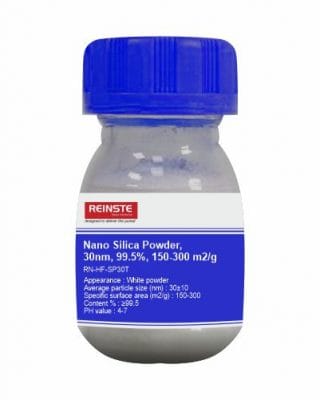
Yes, nano silica powder comes in various forms, primarily differing in particle size (e.g., 5nm, 30nm, 100nm), surface area, purity, and surface treatment. Some are hydrophilic (water-loving), while others are hydrophobic (water-repelling) due to surface modifications. These variations dictate their suitability for different nano silica applications, such as in aqueous solutions, organic solvents, or specific polymer matrices.

Nano silica benefits sustainable development by enabling the creation of more durable and longer-lasting materials, thus reducing the need for frequent repairs or replacements. In concrete, it can partially replace cement, a major contributor to CO2 emissions, thereby lowering the carbon footprint of construction projects. Furthermore, some nano silica production methods utilize industrial by-products or agricultural waste, promoting a circular economy and reducing waste.

Ready to Innovate with Nano Silica?

Partner with us to explore high-quality nano silica solutions tailored for your research and industrial needs.

Get in Touch Today

Contact Us