Nano Silica for Sensors: Revolutionizing Detection in Indian R&D
Explore how these advanced nanoparticles are transforming sensor development, offering enhanced sensitivity, selectivity, and stability for diverse applications across Indian industries and research.
Explore Our Nano Silica Solutions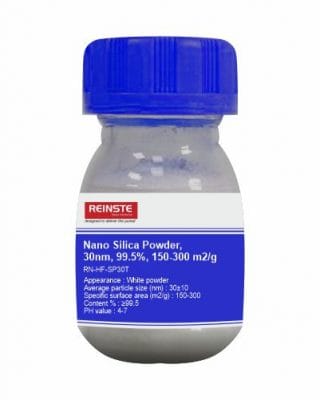
The Dawn of a New Era: Nano Silica in Indian Sensor Technology
In the rapidly evolving landscape of scientific research and industrial innovation, nano silica stands out as a material with immense potential, especially in the realm of sensor technology. These ultra-fine particles of silicon dioxide, typically ranging from 1 to 100 nanometers, possess unique physicochemical properties that are revolutionizing how we detect, measure, and monitor various parameters. For Indian researchers and professionals, the integration of nano silica for sensors offers a pathway to developing next-generation devices that are more sensitive, selective, and robust, addressing critical needs across diverse sectors.
The fundamental science behind nano silica's efficacy lies in its extraordinary surface area-to-volume ratio. This characteristic allows for a significantly higher number of active sites for interaction with target analytes, leading to enhanced signal transduction and ultimately, superior sensor performance. Furthermore, the ability to precisely control the particle size, morphology, and surface chemistry during nano silica production enables the tailoring of its nano silica properties for specific sensing applications, from gas detection to biomolecular recognition.
The growing emphasis on indigenous innovation, coupled with advancements in nanotechnology, positions India at the forefront of leveraging nano silica for advanced sensor applications. From environmental monitoring to sophisticated biomedical diagnostics, nano silica provides a versatile platform to enhance sensor performance, reduce costs, and enable the miniaturization of devices. This blog delves into the transformative impact of nano silica, exploring its properties, diverse nano silica applications, and the burgeoning opportunities it presents for India's scientific and industrial future, fostering an environment ripe for innovation and self-reliance in advanced materials.
Unlocking Superior Performance: Key Benefits of Nano Silica for Researchers
Enhanced Sensitivity and Selectivity
Nano silica's exceptionally high surface area and tunable surface chemistry allow for a greater number of active sites, enabling stronger interactions with target analytes. This leads to significantly improved detection limits, allowing sensors to identify substances at extremely low concentrations. Moreover, precise surface functionalization facilitates the development of highly selective sensors capable of distinguishing target molecules even in complex mixtures, minimizing false positives and enhancing reliability.
Improved Stability and Durability
Integrating nano silica into sensor matrices can significantly enhance their mechanical strength, thermal stability, and resistance to harsh chemical environments. This robust nature extends the operational lifespan of the devices, making them suitable for long-term deployment in challenging conditions without degradation in performance. The inherent inertness of silica also contributes to the overall stability of the sensor platform.
Miniaturization of Sensor Devices
The nanoscale dimensions of silica particles facilitate the development of smaller, more portable, and less invasive sensors. This miniaturization is crucial for applications like point-of-care diagnostics, wearable health monitors, and distributed environmental sensing networks, where space and weight are critical factors. Smaller sensors also often require less sample volume and can offer faster response times.
Cost-Effective Production
Compared to some other advanced nanomaterials, nano silica can be produced at a relatively lower cost using scalable methods such as sol-gel, precipitation, and flame pyrolysis. This economic viability makes advanced sensor technology more accessible and affordable for widespread adoption, particularly important for emerging markets and large-scale applications in India where cost-effectiveness is a key driver for technological uptake.
Biocompatibility for Biomedical Applications
Many forms of nano silica exhibit excellent biocompatibility, meaning they are well-tolerated by biological systems. This property makes them ideal candidates for biosensors, drug delivery systems, and other in-vivo diagnostic and therapeutic tools without eliciting adverse biological reactions. Their non-toxic nature is a significant advantage for medical and pharmaceutical research.
Versatile Surface Functionalization
The surface of nano silica is rich in silanol groups, which can be easily modified with various chemical groups, polymers, antibodies, enzymes, or other biomolecules. This versatile surface functionalization allows for precise tuning of sensor properties to target specific analytes with high precision and affinity, enabling the creation of highly specialized sensors for diverse chemical and biological targets.
Broadening Horizons: Nano Silica Applications in Indian Industries
Environmental Monitoring
Nano silica-based sensors are crucial for addressing India's environmental challenges. They are being developed for highly sensitive detection of air pollutants such as carbon monoxide (CO), nitrogen dioxide (NO2), volatile organic compounds (VOCs), and particulate matter. In water quality, these sensors can identify heavy metals, pesticides, and microbial contaminants, providing real-time data essential for public health and sustainable resource management. Their ability to operate in harsh conditions makes them ideal for remote sensing applications.
Healthcare & Diagnostics
The Indian healthcare sector is witnessing a revolution with nano silica. Biosensors incorporating nano silica are enabling early and accurate detection of diseases, including cancer biomarkers, infectious agents, and chronic conditions like diabetes through advanced glucose monitoring. Their biocompatibility allows for integration into implantable devices and point-of-care diagnostic kits, making healthcare more accessible and efficient, especially in remote areas.
Industrial Safety & Process Control
In India's burgeoning manufacturing and chemical industries, nano silica sensors are vital for ensuring worker safety and optimizing production. They provide real-time monitoring of hazardous gases (e.g., methane, ammonia), chemical leaks, and temperature fluctuations. Furthermore, these sensors contribute to structural health monitoring of critical infrastructure like bridges and pipelines, preventing failures and reducing maintenance costs, thereby bolstering industrial resilience and efficiency.
Agriculture & Food Safety
For India's vast agricultural sector, nano silica sensors are a game-changer for precision farming. They are employed to monitor soil moisture levels, nutrient content (e.g., nitrogen, phosphorus, potassium), and detect plant diseases or pathogen outbreaks early. In food safety, these sensors help identify contaminants, adulterants, and assess food freshness along the supply chain, ensuring consumer health and reducing food waste, which is crucial for a populous nation.
Automotive & Transportation
The automotive industry in India is increasingly integrating advanced sensors for smart vehicles. Nano silica-enhanced sensors contribute to efficient exhaust gas monitoring, advanced driver-assistance systems (ADAS), tire pressure monitoring systems (TPMS), and even structural health monitoring of transportation infrastructure. These advancements lead to improved fuel efficiency, reduced emissions, and enhanced safety for commuters across the country.
Defense & Security
In the defense and security sectors, nano silica-based sensors are being developed for critical applications such as the detection of chemical and biological warfare agents, explosives, and radiation. Their high sensitivity and rapid response times are vital for early warning systems and surveillance. These advanced capabilities contribute significantly to national security, protecting personnel and critical assets from various threats.
India's Nano Silica Landscape: Opportunities and Emerging Trends
India is witnessing a significant surge in research and development activities focused on nanomaterials, with nano silica at the forefront. Government initiatives like "Make in India," "Digital India," and the National Nanotechnology Mission are providing substantial impetus for indigenous production and application of advanced materials. This creates a fertile ground for the growth of nano silica for sensors development, particularly in areas critical to national priorities such as smart cities, clean energy, and public health infrastructure. The focus is on creating self-reliant and technologically advanced solutions tailored for the Indian context.
One prominent trend is the increasing collaboration between academic institutions and industrial partners to translate laboratory research into commercial products. Leading Indian universities and research institutes, including IITs, IISc, and various CSIR laboratories, are actively exploring novel synthesis routes for nano silica production with tailored nano silica properties. This includes developing methods for large-scale, cost-effective synthesis, and optimizing the physical and chemical characteristics of nano silica for specific sensor applications. The demand for robust, affordable, and accurate sensors for smart cities, rural health, and environmental protection is a major driver of this innovation, pushing the boundaries of what nano silica can achieve.
The nano silica market in India is also experiencing robust expansion, with a growing number of domestic and international nano silica suppliers providing a diverse range of products. This includes specialized grades of nano silica for high-performance sensors, surface-modified variants, and different particle sizes to meet varied industrial and research demands. Beyond sensors, the versatility of nano silica applications is widely recognized. It is increasingly being adopted in construction for nano silica for concrete to enhance strength and durability, in the cosmetic industry for improved formulations (nano silica in cosmetics), and in agriculture for controlled release of agrochemicals and soil conditioning (nano silica in agriculture). This broad utility across multiple sectors ensures a stable demand and continuous investment in nano silica research and manufacturing, promising a vibrant and impactful future for sensor technology and advanced materials in India.
Frequently Asked Questions about Nano Silica for Sensors
Ready to Advance Your Sensor Research?
Discover our premium range of nano silica products, meticulously crafted for high-performance applications in sensor development and beyond.
View All Nano Silica Products