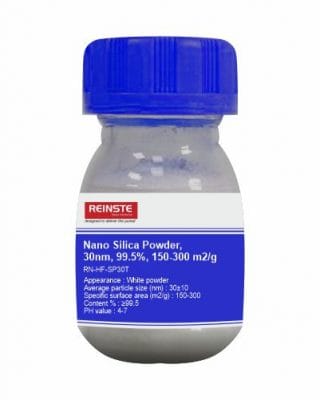
The Dawn of a New Era in Carbon Capture: Nano Silica's Promise for India

As India continues its rapid economic and industrial expansion, the imperative to address climate change and reduce carbon emissions becomes increasingly critical. Carbon Dioxide (CO2) capture technologies are at the forefront of this battle, offering a pathway to mitigate the environmental impact of various industries. Among the array of innovative solutions, nano silica has emerged as a particularly promising material, captivating the attention of researchers and professionals across the nation. Its unique properties at the nanoscale present an unprecedented opportunity to develop highly efficient, cost-effective, and sustainable CO2 capture systems tailored for India's specific industrial landscape.

Nano silica, or silicon dioxide (SiO2) in its nanoscale form, boasts an extraordinary surface area and tunable pore structure, making it an ideal adsorbent for gases. Unlike bulk silica, the nanoscale dimensions of these particles dramatically enhance their reactivity and adsorption capacity. For Indian researchers and industries, this means a potential leap forward in developing advanced materials that can selectively capture CO2 from complex gas mixtures, such as those emitted from power plants, cement factories, and steel mills. The versatility of nano silica also allows for various modifications and functionalizations, further optimizing its performance for different CO2 capture scenarios, from post-combustion capture to direct air capture.

This blog post delves into the transformative potential of nano silica in CO2 capture, exploring its fundamental advantages, diverse applications, and the exciting opportunities it presents for India's scientific community and industrial sector. We will examine how this remarkable nanomaterial is not just a scientific curiosity but a practical solution poised to contribute significantly to India's environmental sustainability goals and its journey towards a greener future.

Unlocking Efficiency: Key Benefits of Nano Silica for CO2 Adsorption

Nano silica offers a compelling suite of advantages that make it an attractive material for advanced CO2 capture technologies, especially for researchers and engineers in India looking for innovative and sustainable solutions.

  • Exceptional Adsorption Capacity: Due to its incredibly high surface area and vast network of nanopores, nano silica can adsorb a significantly larger volume of CO2 compared to conventional adsorbents. This translates to more efficient capture processes with smaller material requirements.
  • Tunable Pore Structure and Surface Chemistry: Researchers can precisely control the pore size distribution and surface functionalization of nano silica during synthesis. This allows for tailored materials that exhibit high selectivity for CO2 even in the presence of other gases like nitrogen or oxygen, crucial for post-combustion flue gas treatment.
  • High Reusability and Stability: Nano silica materials are known for their excellent thermal and chemical stability, enabling them to withstand multiple adsorption-desorption cycles without significant degradation in performance. This reusability reduces operational costs and environmental footprint.
  • Low Energy Regeneration: The weak physisorption interactions between CO2 and some nano silica surfaces allow for regeneration at lower temperatures or with less energy input, making the overall carbon capture process more energy-efficient and economically viable.
  • Environmental Friendliness: Silica is an abundant, non-toxic, and biocompatible material, making nano silica a safe and environmentally benign option for large-scale industrial applications. This is a significant advantage over some other chemical adsorbents.
  • Cost-Effectiveness and Scalability: The raw materials for nano silica are relatively inexpensive, and its synthesis methods are becoming increasingly scalable. This offers a path towards cost-effective large-scale deployment of CO2 capture technologies, crucial for industries in developing economies like India.
  • Versatility in Formulations: Nano silica can be incorporated into various forms, including powders, membranes, and composites, allowing for flexible integration into different capture system designs and industrial processes.

Transforming Industries: Key Applications of Nano Silica in CO2 Capture

The unique properties of nano silica position it as a versatile material with significant potential across various industrial sectors for effective carbon capture and utilization.

Post-Combustion CO2 Capture in Power Plants

Thermal power plants are among the largest stationary sources of CO2 emissions globally. Nano silica-based adsorbents can be deployed for post-combustion capture, effectively scrubbing CO2 from flue gases before they are released into the atmosphere. Their high selectivity and regenerability make them an excellent candidate for improving the efficiency and reducing the environmental footprint of these critical energy infrastructures.

Inquire Now →

Industrial Flue Gas Treatment (Cement, Steel, Chemical)

Beyond power generation, industries like cement production, steel manufacturing, and various chemical processes release substantial amounts of CO2. Nano silica adsorbents offer a robust solution for treating these diverse industrial flue gases, which often have varying compositions and temperatures. Their stability ensures reliable performance in harsh industrial environments.

Explore Solutions →

Direct Air Capture (DAC) Technologies

Direct Air Capture (DAC) aims to remove CO2 directly from the ambient atmosphere, offering a path to negative emissions. Nano silica's high adsorption capacity at low CO2 concentrations, coupled with its excellent regenerability, makes it a promising material for developing next-generation DAC systems. This application holds immense potential for large-scale climate intervention.

Discover More →

Biogas Upgrading and Purification

Biogas, produced from organic matter, is a mixture primarily of methane and CO2. For it to be used as a high-quality fuel (biomethane), CO2 needs to be efficiently removed. Nano silica adsorbents can selectively separate CO2 from methane, thus upgrading biogas to pipeline quality or vehicle fuel, contributing to renewable energy initiatives.

Get Details →

Chemical and Petrochemical Industries

These industries often have processes that generate concentrated streams of CO2 or require CO2 separation for product purity. Nano silica can be utilized for CO2 removal in various chemical synthesis processes, gas purification, and recovery of CO2 for enhanced oil recovery or other industrial uses, promoting a circular carbon economy.

Contact Experts →

Integration into CCUS Value Chains

Nano silica plays a crucial role in enabling various stages of Carbon Capture, Utilization, and Storage (CCUS) value chains. From efficient capture at the source to facilitating the purification of captured CO2 for utilization in products like building materials, fuels, or chemicals, and ultimately for secure geological storage, nano silica enhances the feasibility and economic viability of these comprehensive climate solutions.

Discover CCUS →

Frequently Asked Questions about Nano Silica and CO2 Capture

Ready to Advance Your CO2 Capture Research?

Connect with our experts to find the perfect nano silica solutions for your specific needs. Reinste is committed to empowering innovation in sustainable technologies.

Get in Touch Today

Contact Us

Have questions or need a custom quote for nano silica products? Fill out the form below and our team will get back to you promptly.