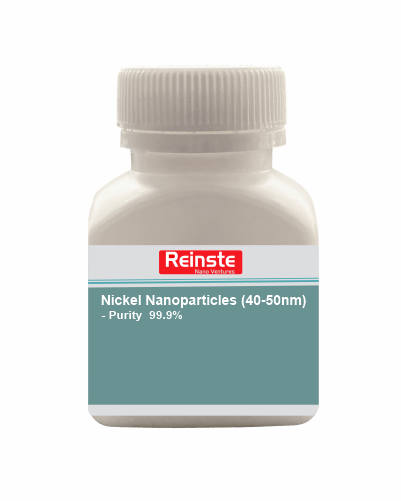
The advantages offered by nano nickel are manifold, making it a highly sought-after material in various high-tech industries. Its nanoscale structure imparts a suite of superior characteristics that far surpass those of conventional nickel. These nano nickel benefits are driving innovation and enabling the development of more efficient, durable, and compact products.
-
•
Enhanced Catalytic Activity: Due to its high surface area, nano nickel exhibits significantly improved catalytic performance, making it invaluable in various chemical reactions and industrial processes, including hydrogen production and organic synthesis.
-
•
Superior Electrical and Thermal Conductivity: Nano nickel particles possess excellent electrical and thermal conductivity, crucial for applications in advanced electronics, heat dissipation materials, and nano conductive materials. This property is vital for miniaturization without compromising performance.
-
•
Increased Mechanical Strength and Hardness: When incorporated into composites or alloys, nano nickel significantly enhances the mechanical strength, hardness, and wear resistance of materials, leading to more durable components. This is especially relevant for nano nickel alloy development.
-
•
Improved Corrosion Resistance: Coatings containing nano nickel can offer superior protection against corrosion and oxidation, extending the lifespan of materials and reducing maintenance costs, particularly beneficial in harsh industrial environments.
-
•
Magnetic Properties: Nano nickel exhibits unique magnetic properties, making it suitable for applications in magnetic recording media, biomedical imaging, and magnetic fluids. These nano nickel properties are distinct from bulk nickel.
-
•
Miniaturization and Efficiency: The ability of nano nickel to perform effectively at smaller scales enables the development of compact and highly efficient devices, aligning with the global trend towards miniaturization in technology.
These multifaceted benefits underscore why nano nickel is not just another material, but a foundational element for the next generation of technological advancements, offering solutions to complex engineering challenges across various sectors.