
Unlocking the Future: Nano Nickel's Transformative Power in Concrete Strengthening and Beyond
Delve into the revolutionary world of nano nickel and nickel nanomaterials, exploring their profound impact on enhancing concrete durability and opening new frontiers in advanced material science for Indian researchers and industries.
Explore ApplicationsIntroduction to Nano Nickel: A Game Changer for Indian R&D and Industry
In the rapidly evolving landscape of material science, nano nickel and nickel nanomaterials have emerged as pivotal innovations, promising to redefine the capabilities of traditional materials. For Indian researchers and professionals, understanding the nuances of these advanced materials is not just academic; it's a strategic imperative for fostering innovation, enhancing infrastructure, and driving industrial growth. This blog post delves deep into the world of nano nickel, exploring its unique properties, diverse applications, and the immense potential it holds for various sectors, with a special focus on its transformative role in concrete strengthening.
India, with its ambitious infrastructure projects and a burgeoning research and development ecosystem, stands at the cusp of a materials revolution. The integration of nano nickel for concrete, for instance, offers a sustainable and highly effective solution to challenges like material degradation, seismic resilience, and the need for long-lasting structures. Beyond construction, the versatility of nano nickel applications spans across electronics, catalysis, energy, and healthcare, making it a subject of intense global and local research interest. Join us as we uncover how these tiny particles are making a colossal impact.
Unveiling the Advantages: Key Benefits of Nano Nickel for Researchers and Industries
Enhanced Mechanical Properties
Nano nickel strength is unparalleled, significantly boosting the compressive strength, tensile strength, and flexural strength of composites like concrete. This leads to more robust and durable structures capable of withstanding extreme conditions.
Superior Durability and Longevity
Incorporating nickel nanomaterials improves resistance to corrosion, abrasion, and chemical attacks, extending the lifespan of materials and reducing maintenance costs, a critical factor for infrastructure projects in diverse Indian climates.
Advanced Catalytic Activity
The high surface-area-to-volume ratio of nano nickel chemicals makes them excellent catalysts for a wide range of chemical reactions, crucial for industries like petrochemicals and environmental remediation.
Thermal and Electrical Conductivity
Nano nickel properties include enhanced thermal and electrical conductivity, making them ideal for advanced electronic components, heat dissipation materials, and energy storage devices.
Miniaturization and Efficiency
The nanoscale nature allows for the creation of smaller, more efficient devices and materials, leading to breakthroughs in fields requiring high precision and compact designs.
Cost-Effectiveness in Long Run
While initial investment might be higher, the extended lifespan, reduced maintenance, and superior performance offered by nano nickel benefits translate into significant long-term cost savings for various applications.
Diverse Frontiers: Key Applications of Nano Nickel Across Industries
Concrete Strengthening Materials
The most significant application for India: nano nickel in concrete strengthening materials dramatically enhances the structural integrity, crack resistance, and longevity of concrete, vital for robust infrastructure development. It improves ductility and reduces permeability.
- Increased compressive and tensile strength
- Improved resistance to cracking and wear
- Enhanced durability against environmental factors
Advanced Catalysis
Nickel nanomaterials are widely used as catalysts in chemical reactions, including hydrogenation, oxidation, and organic synthesis, due to their high surface area and unique electronic properties. This is crucial for efficient industrial processes.
- High efficiency in various chemical processes
- Reduced reaction times and energy consumption
- Environmentally friendly catalytic solutions
Electronics and Magnetic Devices
Due to their excellent electrical conductivity and magnetic properties, nickel nanomaterials are integral to the production of conductive inks, sensors, data storage devices, and miniaturized electronic components.
- Components for advanced sensors
- High-density magnetic recording media
- Flexible electronics and printed circuits
Energy Storage Solutions
Nano nickel plays a vital role in next-generation energy storage technologies, including high-performance batteries (Ni-MH, Li-ion), supercapacitors, and fuel cells, contributing to greener energy solutions.
- Improved battery capacity and cycle life
- Efficient hydrogen storage
- Enhanced performance of fuel cell electrodes
Biomedical and Healthcare
In the biomedical field, nickel nanomaterials are being researched for targeted drug delivery, biosensors, and magnetic resonance imaging (MRI) contrast agents, leveraging their unique physical and chemical properties.
- Advanced diagnostic tools
- Targeted therapeutic applications
- Biocompatible coatings and implants (with careful consideration)
Protective Coatings and Films
Nano nickel applications extend to creating highly durable and corrosion-resistant coatings for various surfaces, enhancing their performance and extending their operational life in harsh environments.
- Anti-corrosion and wear-resistant coatings
- Lubricious films for reduced friction
- Decorative and functional finishes
India's Nanotechnology Horizon: Opportunities and Trends in Nano Nickel
The Indian scientific community and industrial sector are increasingly recognizing the strategic importance of nickel nanomaterials. Government initiatives, coupled with a thriving academic research environment, are propelling the exploration of nano nickel production and its scalable applications. The demand for advanced materials in sectors like construction, automotive, and electronics is creating a fertile ground for the nano nickel market to flourish in India.
One significant trend is the focus on sustainable and green synthesis methods for nano nickel chemicals, aligning with India's commitment to environmental stewardship. Researchers are actively developing cost-effective and eco-friendly techniques for synthesizing high-purity nano nickel, making it more accessible for widespread industrial adoption. Furthermore, the emphasis on indigenous innovation means a growing number of startups and research labs are venturing into specialized nano nickel applications, from enhancing the longevity of rural infrastructure to developing cutting-edge medical devices.
The future of nano nickel in concrete strengthening materials in India looks particularly promising. With rapid urbanization and the need for resilient infrastructure, the ability of nano nickel to impart superior nano nickel strength and durability to concrete is invaluable. Collaborative projects between academia and industry are crucial to translate laboratory breakthroughs into real-world solutions, ensuring India remains at the forefront of nanotechnology innovation.
Frequently Asked Questions about Nano Nickel
Nano nickel refers to nickel in its nanoscale form, typically particles ranging from 1 to 100 nanometers. Its exceptional properties, such as high surface area, catalytic activity, and unique mechanical strength, make it a crucial additive for enhancing the performance of various materials, especially concrete. In concrete, nano nickel can significantly improve compressive strength, ductility, and durability by reinforcing the material at a molecular level.
When incorporated into concrete, nano nickel particles act as nucleation sites for cement hydration, leading to a denser and more homogeneous microstructure. They also fill nanoscale pores, reducing permeability and increasing resistance to chemical attacks and freeze-thaw cycles. Furthermore, the high tensile strength of nano nickel can bridge micro-cracks, preventing their propagation and significantly improving the overall mechanical performance and longevity of concrete structures.
Beyond concrete strengthening, nickel nanomaterials find extensive applications across various industries. These include catalysis (due to high surface area and reactivity), electronics (conductive inks, sensors), energy storage (batteries, fuel cells), magnetic materials, and even in biomedical fields. Their versatility stems from their unique size-dependent properties, opening doors for innovation in advanced materials and technologies.
For Indian construction and research, incorporating nano nickel presents significant opportunities, especially in infrastructure development and sustainable building. Key considerations include cost-effectiveness, local availability of raw materials, and adherence to environmental regulations. Researchers in India are actively exploring optimal dispersion techniques, dosage rates, and long-term performance evaluations to integrate nano nickel effectively into indigenous construction practices and material science advancements.
Explore Our Nano Nickel Products


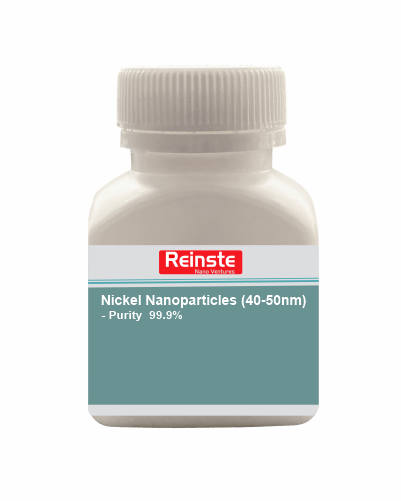
Ready to Innovate with Nano Nickel?
Whether you're a researcher pushing the boundaries of material science or an industry professional seeking to enhance product performance, Reinste and Hiyka offer a comprehensive range of high-quality nano nickel products and expert support. Let's build the future together.
Get in Touch Today