Unlocking the Future: Nano Nickel in Thermoelectric Materials Research for Indian Innovators
Explore the transformative potential of nano nickel in advancing thermoelectric technologies, offering new avenues for energy harvesting and sustainable solutions for researchers and professionals in India.
Explore Nano Nickel Research
Introduction to Nano Nickel and its Significance in Thermoelectric Research
In the rapidly evolving landscape of materials science and sustainable energy, nano nickel emerges as a material of profound significance, holding immense potential, particularly within the domain of thermoelectric technologies. For the vibrant community of Indian researchers and dedicated professionals, delving into the intricacies of nano nickel and effectively harnessing its unique properties can catalyze groundbreaking innovations in energy harvesting and conversion. Thermoelectric materials, which possess the remarkable ability to directly convert heat into electrical energy and vice-versa, are not merely scientific curiosities but crucial components for achieving sustainable development goals globally. Nano nickel, distinguished by its superior electrical conductivity and the unprecedented ability to tune its thermal properties at the nanoscale, presents a highly promising pathway. This allows for a substantial enhancement in the efficiency and broaden the applicability of these vital materials, thereby vigorously driving forward India's extensive research and industrial capabilities in advanced, eco-friendly energy solutions. This article will explore the multifaceted aspects of nano nickel, from its fundamental properties to its transformative applications, specifically tailored for the Indian context.
Key Benefits for Indian Researchers and Professionals
-
Enhanced Thermoelectric Efficiency
The nanoscale dimensions of nickel introduce unique quantum and surface effects that significantly improve the Seebeck coefficient and electrical conductivity. Simultaneously, the increased phonon scattering at numerous interfaces and grain boundaries within nano nickel structures effectively reduces thermal conductivity. This dual advantage leads to a remarkable increase in the thermoelectric figure of merit (ZT), a critical parameter for evaluating thermoelectric material performance. For Indian industries, this translates directly into more efficient energy recovery from waste heat, a substantial step towards energy independence and reduced operational costs.
-
Cost-Effectiveness and Abundance
Unlike many exotic materials currently used in high-performance thermoelectrics, nickel is a relatively abundant and globally accessible metal. This inherent affordability, coupled with advanced nanoscale synthesis techniques, makes nano nickel a highly viable option for developing cost-effective and scalable thermoelectric devices. This economic advantage is particularly crucial for widespread adoption and industrialization in a price-sensitive market like India, ensuring that cutting-edge technology is accessible and sustainable for broader societal benefit.
-
Versatile Applications
The adaptability of nano nickel-based thermoelectrics opens doors to a plethora of applications across diverse sectors. From compact power generators designed for remote environmental sensors and Internet of Things (IoT) devices, to highly efficient cooling systems and robust waste heat recovery units in heavy industrial settings, the possibilities are vast. Specific sectors poised for transformation include the automotive industry for enhanced fuel efficiency, aerospace and defense for lightweight power solutions, and consumer electronics for extended battery life and passive cooling.
-
Indigenous Innovation and Self-Reliance
A strategic focus on nano nickel thermoelectric research empowers Indian scientists, engineers, and entrepreneurs to develop cutting-edge materials and technologies domestically. This fosters a strong sense of self-reliance and significantly reduces dependence on imported solutions, aligning perfectly with India's ambitious 'Make in India' and 'Atmanirbhar Bharat' (Self-Reliant India) initiatives. Such indigenous development not only boosts national pride but also creates high-value jobs and intellectual property within the country.
-
Contribution to Sustainable Energy
By enabling the more efficient capture and conversion of previously wasted heat energy, nano nickel plays a pivotal and proactive role in promoting sustainable energy practices. This directly contributes to reducing carbon footprints across industries, mitigating climate change, and accelerating the transition towards a greener, more environmentally responsible future for India and the world. It’s a key material for a circular economy approach to energy.
-
Advanced Material Properties
The precise control over the size, shape, and morphology of nano nickel particles, achievable through advanced synthesis routes, allows for an unprecedented fine-tuning of its electrical, thermal, and mechanical properties. This level of control opens up entirely new avenues for material design and optimization, enabling the creation of bespoke thermoelectric solutions previously unattainable with traditional bulk materials. This flexibility is invaluable for tailoring materials to specific application requirements.
Transformative Applications of Nano Nickel in Indian Industries
Waste Heat Recovery Systems
Indian industries, ranging from steel manufacturing and cement production to power generation and chemical processing, are significant producers of waste heat. Implementing nano nickel thermoelectrics in these sectors can lead to the efficient conversion of this otherwise untapped thermal energy into usable electricity. This not only improves overall energy efficiency and reduces the operational costs for businesses but also contributes substantially to national energy conservation efforts and a cleaner industrial footprint.
Automotive Sector
The global automotive industry, including India's rapidly growing market, is under immense pressure to develop more fuel-efficient and environmentally friendly vehicles. Nano nickel-based thermoelectric generators can be ingeniously integrated into vehicle exhaust systems. Here, they can convert the waste heat from engine operation into electrical power, which can then be used to assist in charging the vehicle's battery, power auxiliary electronic systems, or even reduce the load on the alternator. This directly enhances fuel economy and significantly reduces emissions.
Consumer Electronics
The relentless drive towards miniaturization and the ever-increasing power demands of portable electronic devices, such as smartphones, wearables, and laptops, pose a constant challenge for battery life. Nano nickel thermoelectrics offer an innovative solution by potentially harvesting ambient heat from the device itself, the user's body heat, or its immediate surroundings. This harvested energy can extend battery life, reduce the frequency of charging, or even provide a continuous, passive power source for low-power applications, enhancing user experience and device autonomy.
Aerospace and Defense
Lightweight, robust, and efficient power sources are critical for aerospace and defense applications. Nano nickel-based thermoelectric generators can offer reliable power in extreme environments, reducing reliance on conventional power systems.
Advanced Sensor Technology
Thermoelectric sensors capable of detecting minute temperature gradients and converting them into precise electrical signals are becoming increasingly vital across various industrial, environmental, and medical monitoring applications. Nano nickel's exceptional sensitivity, rapid response time, and long-term stability make it an ideal candidate for next-generation thermoelectric sensors. These sensors can be deployed in diverse settings for everything from industrial process control to early warning systems for environmental changes, offering unparalleled accuracy and reliability.
Emerging Opportunities and Trends in Nano Nickel Research in India
India is currently experiencing a profound technological revolution, characterized by a significant and strategic emphasis on advanced materials research and the development of sustainable energy solutions. Within this dynamic environment, the nano nickel for thermoelectric materials research domain presents truly significant and burgeoning Nano Nickel Market India opportunities. Proactive government initiatives, such as the widely recognized National Nanotechnology Mission, alongside numerous research grants and funding programs, are actively promoting and incentivizing Nano Nickel Research and development across the nation. There is a palpable and growing trend towards robust academic-industrial collaborations, which are effectively fostering an innovative ecosystem for Nano Nickel Innovations India. Researchers are diligently exploring novel and more efficient synthesis methods for tailoring Nano Nickel Properties and discovering new Nano Nickel Uses, all aimed at optimizing thermoelectric performance to unprecedented levels. The demand for highly efficient Nano Nickel Thermoelectric devices is not just growing, but is expected to surge dramatically in the coming years, a trend primarily driven by pressing national energy security concerns and increasingly stringent environmental mandates. This creates an exceptionally fertile ground for Indian professionals, scientists, and entrepreneurs to contribute significantly to global Nano Nickel Industry trends and, crucially, to establish India as a recognized leader in this critical and rapidly advancing field of advanced materials and energy technology.
Frequently Asked Questions about Nano Nickel Thermoelectrics
Nano nickel refers to nickel particles with dimensions typically ranging from 1 to 100 nanometers. At this incredibly small scale, nickel exhibits unique physical and chemical properties that are markedly different from its bulk form. These include an extraordinarily enhanced surface area-to-volume ratio, the manifestation of quantum confinement effects, and significantly altered electrical and thermal conductivities. These distinct characteristics make nano nickel an exceptionally valuable material for a wide array of advanced material applications, particularly in catalysis, magnetic storage, and energy conversion technologies.
Nano nickel improves thermoelectric performance by strategically addressing the two key parameters that dictate efficiency: simultaneously enhancing electrical conductivity and reducing thermal conductivity. Its nanoscale structure is adept at creating numerous interfaces and grain boundaries. These features are highly effective in scattering phonons (which are the primary carriers of heat), thereby significantly lowering the material's thermal conductivity. Concurrently, the inherent metallic nature of nickel ensures robust electrical transport. This synergistic combination of high electrical conductivity and low thermal conductivity leads to a substantially higher thermoelectric figure of merit (ZT), making nano nickel an excellent candidate for advanced thermoelectric devices.
Despite its immense potential, several key challenges must be overcome in nano nickel thermoelectric research. These include achieving uniform and highly stable nano nickel synthesis with precise control over particle size and distribution, preventing particle aggregation during processing and application, ensuring long-term material stability at the high operating temperatures often encountered in thermoelectric devices, and effectively integrating nano nickel into composite thermoelectric materials without compromising overall performance or scalability. Furthermore, developing cost-effective, large-scale production methods remains a significant hurdle for commercial viability.
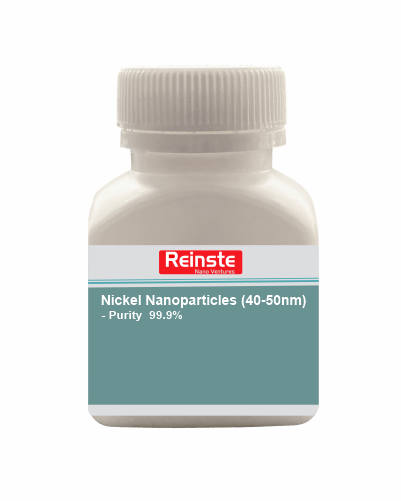
For researchers and professionals in India, sourcing high-quality nano nickel is paramount for reliable experimental results. Reputable suppliers like Reinste and Hiyka specialize in providing a diverse range of high-purity nano materials, including various forms and sizes of nano nickel. It is absolutely crucial to choose suppliers who offer comprehensive material specifications, detailed characterization data (e.g., SEM, TEM, XRD), and reliable customer support. This ensures the consistency, purity, and quality of your research materials, which are fundamental to the success and reproducibility of your thermoelectric innovations.
Explore Related Nano Nickel Products for Your Research

Ready to Advance Your Research?
Discover high-quality nano nickel products and expert support for your thermoelectric material innovations.
Contact Our Experts