
Introduction: Navigating the Nano Nickel Landscape in India
Nanotechnology stands at the forefront of scientific innovation, promising revolutionary advancements across countless sectors, from medicine and electronics to energy and environmental remediation. At the heart of many of these innovations lies nano nickel, a material with unique properties due to its minuscule size. Its high surface area-to-volume ratio, enhanced catalytic activity, and distinct magnetic and electrical characteristics make it an indispensable component in various high-tech applications. However, as the production and application of nano nickel continue to expand globally, particularly in rapidly developing economies like India, a critical question arises: what are the potential health effects and environmental risks associated with these advanced materials?
For Indian researchers, scientists, and industrial professionals, understanding the multifaceted aspects of nano nickel toxicity is not merely an academic exercise; it's a fundamental requirement for responsible innovation and sustainable growth. India's vibrant research and development ecosystem, coupled with its ambitious industrialization goals, means that exposure to novel nanomaterials like nano nickel is becoming increasingly prevalent. From laboratories synthesizing new materials to manufacturing units integrating them into final products, the need for comprehensive knowledge regarding nano nickel health effects, robust nano nickel research protocols, and stringent nano nickel risk assessment frameworks is paramount.
This blog post delves deep into the complex world of nano nickel toxicity, exploring the mechanisms by which these nanoparticles interact with biological systems, the potential health hazards they pose, and the current state of global and Indian research efforts to mitigate these risks. We aim to provide a humanized, informative, and accessible resource that empowers Indian professionals to navigate the challenges and opportunities presented by nano nickel safely and effectively, ensuring that technological progress does not come at the expense of human health or environmental well-being.
The unique properties of nano nickel, such as its small size (typically 1-100 nm), high reactivity, and ability to translocate within biological systems, distinguish its toxicological profile from that of bulk nickel. These characteristics necessitate specialized studies to understand its behavior in different biological matrices and its potential to induce oxidative stress, inflammation, genotoxicity, and other adverse cellular responses. As India positions itself as a global leader in scientific and industrial innovation, a proactive approach to understanding and managing the risks associated with materials like nano nickel is crucial for fostering a culture of safety and responsibility.
Why Understanding Nano Nickel Toxicity is Crucial for Indian Researchers
For the bustling community of Indian researchers and scientists engaged in nanotechnology, a deep understanding of nano nickel toxicity offers numerous benefits, paving the way for safer and more impactful scientific contributions:
- Informed Material Design: Knowledge of nano nickel health effects allows researchers to design safer nanomaterials from the outset, incorporating principles of "Safe-by-Design" to minimize inherent toxicity while retaining desired functional properties.
- Enhanced Research Safety: Implementing robust safety protocols in laboratories and research facilities becomes more effective with a clear understanding of potential hazards, protecting researchers and technical staff from undue exposure. This is vital for any nano nickel research project.
- Compliance with Evolving Regulations: As global and national regulatory frameworks for nanomaterials mature, researchers equipped with toxicity knowledge are better positioned to ensure their work complies with current and future guidelines, facilitating easier commercialization and application.
- Accurate Risk Assessment: Contributing to and utilizing accurate nano nickel risk assessment studies helps in identifying vulnerable populations, determining safe exposure limits, and developing effective mitigation strategies.
- Ethical Innovation: A commitment to understanding and addressing toxicity reflects an ethical approach to scientific advancement, building public trust and ensuring that technological progress serves societal well-being without unforeseen consequences.
- Competitive Edge in Global Research: Indian researchers who prioritize safety and conduct thorough toxicity studies can gain a competitive advantage, attracting international collaborations and funding for high-quality, responsible nanotechnology projects.
- Developing Remediation Strategies: Understanding how nano nickel interacts with biological systems can also lead to the development of effective strategies for environmental remediation in case of accidental release or contamination, addressing broader ecological concerns.
By integrating toxicity considerations into every stage of their work, Indian researchers can not only safeguard health but also contribute to a more sustainable and responsible future for nanotechnology, ensuring the long-term viability and public acceptance of nano nickel applications.
Nano Nickel in Industry: Balancing Innovation with Safety
Nano nickel's exceptional properties have led to its widespread adoption across various industrial sectors. However, this industrial integration necessitates a careful balance between leveraging its benefits and managing the associated risks, especially concerning nano nickel toxicity. Here are some key industrial applications and the safety considerations:
Catalysis and Chemical Industry
Nano nickel is a superior catalyst in numerous chemical reactions, including hydrogenation, oxidation, and organic synthesis. Its high surface area significantly boosts reaction efficiency. In India, this is crucial for the pharmaceutical, petrochemical, and fine chemical industries. However, workers handling nano nickel catalysts must be protected from inhalation exposure, as fine particles can pose respiratory risks. Proper ventilation, personal protective equipment (PPE), and controlled environments are essential to mitigate nano nickel health effects.
Electronics and Magnetic Devices
Due to its unique magnetic properties, nano nickel is used in magnetic recording media, sensors, and electromagnetic shielding. The electronics manufacturing sector in India is rapidly expanding, leading to increased demand for such materials. During the fabrication and disposal phases, there's a potential for worker exposure. Rigorous waste management protocols and safe handling procedures are vital to prevent environmental contamination and human exposure to nano nickel toxicity, ensuring sustainable growth in the nano nickel market.
Energy Storage and Conversion
Nano nickel plays a role in advanced battery technologies (e.g., NiMH batteries), fuel cells, and supercapacitors, enhancing energy density and charge-discharge cycles. As India pushes for renewable energy and electric vehicles, the demand for these components will surge. During the nano nickel production and integration into energy devices, controlling airborne particles and preventing skin contact are critical. Long-term studies on the environmental impact of discarded nano nickel-containing products are also part of comprehensive nano nickel risk assessment.
Protective Coatings and Composites
Nano nickel is incorporated into coatings for corrosion resistance, hardness, and wear resistance, and in composites for enhanced mechanical properties. These applications are relevant for automotive, aerospace, and construction industries in India. While the nanoparticles are typically encapsulated within a matrix, potential exposure can occur during manufacturing processes (e.g., spraying, mixing) or if the material degrades. Ensuring the stability of these composites and understanding their lifecycle impact is crucial for mitigating any latent nano nickel toxicity.
India's Nano Nickel Horizon: Opportunities, Trends, and Ethical Considerations
India is rapidly emerging as a global hub for nanotechnology research and development, with significant investments in advanced materials science. This burgeoning landscape presents immense opportunities for nano nickel research, nano nickel applications, and the development of a robust nano nickel industry. However, this growth must be carefully managed with a strong emphasis on safety and ethical considerations, particularly concerning nano nickel toxicity.
One of the key trends in India is the increasing focus on indigenous innovation and manufacturing. This includes the localized production of advanced materials like nano nickel, which can reduce import dependency and foster self-reliance. Research institutions across India are actively exploring novel synthesis methods for nano nickel properties, aiming for cost-effective and scalable production. This push for local nano nickel production also brings the responsibility of establishing national standards and guidelines for safe handling and disposal, drawing from international best practices in nano nickel safety.
Furthermore, the Indian government's initiatives, such as "Make in India" and "Startup India," are providing a conducive environment for startups to innovate in areas like advanced materials. This includes companies leveraging nano nickel for applications in renewable energy, healthcare diagnostics, and advanced manufacturing. As these enterprises scale, understanding and addressing nano nickel health effects will be critical for their long-term success and market acceptance, especially given the global scrutiny on nanomaterial safety.
The academic sector in India is also witnessing a surge in interdisciplinary research on nanomaterials. Collaborations between material scientists, toxicologists, environmental scientists, and medical professionals are becoming more common, aiming to provide a holistic understanding of nano nickel risk assessment. This integrated approach is vital for developing comprehensive safety protocols and informing future policy decisions. There's a growing interest in exploring the long-term environmental fate of nano nickel and its potential impact on biodiversity, further broadening the scope of nano nickel research.
In conclusion, India's journey in nanotechnology, particularly with materials like nano nickel, is filled with promise. By proactively addressing the challenges of nano nickel toxicity through rigorous research, responsible industrial practices, and informed policy-making, India can ensure that its technological advancements contribute positively to both economic prosperity and public health, setting a benchmark for sustainable innovation in the global nano nickel market.
Frequently Asked Questions about Nano Nickel Toxicity
Nano nickel refers to nickel particles with at least one dimension less than 100 nanometers. Its primary difference from bulk nickel lies in its significantly higher surface area-to-volume ratio and quantum effects, which lead to enhanced reactivity, different magnetic properties, and distinct biological interactions. These unique nano nickel properties influence its toxicity profile.
Exposure to nano nickel can lead to various nano nickel health effects, primarily through inhalation, ingestion, or skin contact. Studies suggest potential for oxidative stress, inflammation, genotoxicity, and damage to organs like the lungs, liver, and kidneys. It's also linked to allergic reactions and, in some forms, carcinogenicity. The severity depends on particle size, dose, exposure duration, and individual susceptibility.
Ensuring nano nickel safety involves a multi-pronged approach: using appropriate personal protective equipment (PPE) like respirators, gloves, and lab coats; working in well-ventilated areas or fume hoods; implementing engineering controls such as enclosed systems; following strict waste disposal protocols; and undergoing regular safety training. Comprehensive nano nickel risk assessment is crucial before commencing any work.
India is actively contributing to nano nickel toxicity studies research through various academic and government institutions. While specific regulations for nanomaterials are still evolving, there's a growing emphasis on developing national guidelines for safe nanotechnology practices. Indian researchers are also publishing significant work on nano nickel health effects and environmental impacts, contributing to the global body of knowledge and informing future policy.
Related Nano Nickel Products


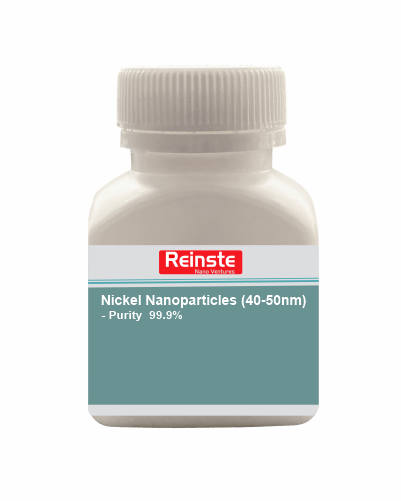
Advance Your Research with Reinste
Explore our extensive range of high-quality nanomaterials and chemical products designed for cutting-edge research and industrial applications. Partner with Reinste for your next breakthrough.
Explore Our Products