Nano Iron Oxide: Revolutionizing Environmental Solutions for Indian Researchers & Industries
Unlock the potential of advanced nanomaterials for a sustainable future, driving innovation in environmental engineering and chemical processes across India.
Learn MoreThe Dawn of Sustainable Nanotechnology: Nano Iron Oxide in India
In the rapidly evolving landscape of materials science, nano iron oxide stands out as a groundbreaking environmental nanomaterial with immense potential. For Indian researchers and professionals, understanding its unique properties and diverse iron oxide applications is crucial for addressing pressing environmental challenges and fostering sustainable nanotechnology. From purifying water to enhancing energy systems, these `nanoparticles` are paving the way for a greener future. This blog delves into the transformative role of `nano iron oxide`, highlighting its significance in `environmental engineering` and `nano chemical engineering` within the Indian context.
India, with its vast and growing industrial landscape, faces significant environmental concerns, particularly regarding water and air pollution. Traditional remediation methods often fall short in efficacy and cost-effectiveness. This is where the advent of `nano iron oxide for environmental engineering` becomes a game-changer. The nanoscale dimensions of these `nano materials` bestow them with extraordinary characteristics, including a high surface-area-to-volume ratio, enhanced reactivity, and unique magnetic properties. These attributes make them exceptionally efficient in interacting with and removing a wide spectrum of pollutants.
The journey into the world of `nano iron solutions` begins with a deep dive into `iron oxide properties`. These properties are not merely academic; they dictate the practical utility of `nano iron oxide` in real-world scenarios. For instance, their superparamagnetic nature allows for easy separation from treated media using external magnetic fields, significantly simplifying post-treatment processes and reducing operational costs. This characteristic is particularly appealing for large-scale industrial applications and remote site remediation efforts, where complex filtration systems might be impractical.
Furthermore, the ability to functionalize the surface of `nano iron oxide` opens up avenues for creating advanced `nano composites`. By integrating `nano iron oxide` with other materials, researchers can tailor their properties to target specific pollutants or enhance their stability and longevity in challenging environments. This adaptability is critical for developing bespoke solutions for India's diverse ecological and industrial needs, from urban wastewater treatment plants to rural agricultural runoff management. The commitment to `sustainable nanotechnology` in India is not just about adopting new materials, but about innovating solutions that are both effective and environmentally responsible.
Key Benefits for Indian Researchers & Professionals
- Enhanced Remediation Efficiency: `Nano iron oxide` offers superior adsorption and catalytic capabilities, leading to more effective removal of heavy metals, organic dyes, and persistent organic pollutants from water and soil, crucial for `environmental nanomaterials` research.
- Cost-Effectiveness: The magnetic separability of `iron oxide nanoparticles` reduces the need for expensive filtration systems, lowering operational costs in large-scale `iron oxide applications` for water treatment and industrial processes.
- Versatility in Applications: From wastewater treatment to catalysis and drug delivery, the diverse `iron oxide properties` allow for broad utility, driving innovation in `nano chemical engineering`.
- Reduced Environmental Footprint: By enabling efficient pollutant removal and supporting material recovery, `nano iron oxide` contributes significantly to `sustainable nanotechnology` practices, minimizing waste and resource consumption.
- Innovation in `Nano Composites`: The ability to combine `nano iron oxide` with other `nano materials` allows for the creation of advanced `nano composites` with tailored properties, opening new research frontiers for Indian scientists.
- Addressing Local Challenges: Provides effective solutions for India-specific environmental issues, such as arsenic contamination in groundwater and industrial effluent treatment, making `nano iron solutions` highly relevant.
Diverse Applications of Nano Iron Oxide in Indian Industries
Advanced Water Purification
`Nano iron oxide` is at the forefront of advanced water treatment technologies in India. Its exceptional ability to adsorb and degrade pollutants makes it ideal for removing heavy metals (like arsenic and lead), organic dyes, pesticides, and pharmaceutical residues from industrial wastewater and drinking water sources. The magnetic `iron oxide properties` allow for easy separation, making `nano iron solutions` a highly efficient and reusable option for sustainable water management. This is a critical area for `environmental nanomaterials`.
Effective Soil Decontamination
Contaminated soil poses a significant threat to agriculture and public health. `Nano iron oxide` offers an innovative approach to soil remediation by immobilizing or degrading contaminants such as chlorinated hydrocarbons, heavy metals, and petroleum hydrocarbons. Its high reactivity and mobility in soil matrices enable targeted treatment, contributing to healthier ecosystems and promoting `sustainable nanotechnology` practices in agriculture.
Catalysis & `Nano Chemical Engineering`
Beyond environmental cleanup, `nano iron oxide` serves as a potent catalyst and photocatalyst in various chemical reactions. Its large surface area and unique electronic structure enhance reaction rates and selectivity, making it invaluable in `nano chemical engineering` for producing fine chemicals, biofuels, and in industrial processes requiring efficient and green catalytic pathways. These `iron oxide applications` are expanding rapidly.
Energy Storage & Conversion
The `nanoparticles` of iron oxide are also being explored for next-generation energy solutions. They show promise in supercapacitors, lithium-ion batteries, and fuel cells due to their excellent electrochemical properties. As `nano materials`, they contribute to developing more efficient and sustainable energy storage and conversion devices, aligning with India's renewable energy goals and `sustainable nanotechnology` initiatives.
Biomedical & Sensing
While primarily focused on environmental aspects, the magnetic `iron oxide properties` also make `nano iron oxide` valuable in biomedical fields for targeted drug delivery, MRI contrast agents, and hyperthermia treatments. Furthermore, they are used in highly sensitive sensors for detecting pollutants and biomarkers, showcasing the broad impact of `environmental nanomaterials` beyond their direct application.
Air Pollution Control
`Nano iron oxide` can also play a role in mitigating air pollution. Its catalytic activity can be harnessed to break down harmful volatile organic compounds (VOCs) and nitrogen oxides (NOx) in industrial emissions. Developing efficient `nano composites` for air filters and catalytic converters presents a promising avenue for `nano chemical engineering` to improve urban air quality in India.
India's Nano Future: Opportunities & Emerging Trends
The landscape for `nano iron oxide` research and development in India is vibrant and full of opportunities. With a strong emphasis on indigenous innovation and sustainable development, Indian institutions and industries are increasingly investing in `environmental nanomaterials`. There's a growing trend towards synthesizing `nano iron oxide` from waste materials, aligning with circular economy principles and reducing production costs. This approach not only makes `nano iron solutions` more accessible but also tackles waste management challenges simultaneously.
Collaboration between academia and industry is another key trend, accelerating the translation of laboratory research into scalable `iron oxide applications`. Indian researchers are actively exploring the integration of `nano iron oxide` with other advanced `nano materials` to create highly functional `nano composites` for specific environmental remediation tasks. For example, combining `nano iron oxide` with graphene or carbon nanotubes can significantly enhance its stability, dispersibility, and reactive surface area, leading to even more potent `nanoparticles` for pollution control.
Furthermore, the development of smart `nano iron oxide` systems, capable of responding to environmental stimuli or self-reporting their performance, represents a cutting-edge area of `sustainable nanotechnology`. These intelligent `nano materials` could revolutionize monitoring and treatment processes, offering real-time insights and automated responses to environmental fluctuations. The focus on developing robust and economically viable `nano chemical engineering` processes for large-scale production of `nano iron oxide` is also paramount to meet the growing demand in various sectors.
Policy support and funding initiatives from the Indian government are also playing a pivotal role in fostering research and commercialization of `nano iron oxide for environmental engineering`. This supportive ecosystem, coupled with the ingenuity of Indian scientists and engineers, positions the country to become a leader in `sustainable nanotechnology` solutions, particularly those leveraging the power of `nano iron oxide` to create a healthier and more sustainable future for all.
Frequently Asked Questions about Nano Iron Oxide
Explore Related Nano Iron Oxide Products
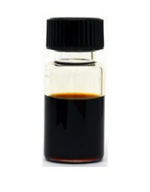
Iron Oxide Nanoparticles in Water 5nm, 10nm, 20nm
View Product
Iron Oxide Nanoparticles in Toluene 5nm, 10nm, 20nm
View Product
Iron Oxide Nanopowder, 80-100nm
View Product
Iron (III) oxide (4-8nm)
View ProductReady to Advance Your Research with Nano Iron Oxide?
Connect with Reinste to explore high-quality `environmental nanomaterials` and `nano iron solutions` tailored for your `sustainable nanotechnology` and `nano chemical engineering` projects.
Get in Touch Today