
The Urgent Need for Advanced Emission Control in India
India's rapid urbanization and economic growth have put millions of vehicles on the road, leading to a critical challenge: severe air pollution. Vehicular exhaust is a primary contributor, releasing toxic gases like nitrogen oxides (NOx), carbon monoxide (CO), and unburnt hydrocarbons that pose significant risks to public health and the environment. To combat this, the Indian government has implemented stringent emission standards, such as Bharat Stage VI (BS-VI), pushing the automotive industry to innovate.
Traditionally, the solution has been the three-way catalytic converter, which relies on costly and scarce precious metals like platinum, palladium, and rhodium. However, the high cost and volatile supply chain of these metals present a major barrier to widespread, affordable implementation. This is where the field of nanotechnology offers a groundbreaking alternative. The focus of intense research for both Indian and global scientists is now on **nano emission control**, a field leveraging the unique properties of nanomaterials to create more efficient and cost-effective solutions. At the forefront of this revolution is **catalytic copper oxide**, a material showing immense promise as a powerful, affordable, and highly effective **automotive catalyst**.
This article delves into the transformative potential of nano copper oxide in automotive catalytic converters, exploring its benefits, applications, and the burgeoning opportunities for researchers and industries in India. We will examine how this advanced **exhaust treatment tech** is not just a scientific curiosity but a viable path towards a cleaner, more sustainable automotive future.
Why Researchers are Turning to Catalytic Copper Oxide
The shift towards using nano copper oxide as a primary **copper catalytic agent** isn't just about cost. It offers a suite of scientific and practical advantages that make it superior in many aspects to its precious metal counterparts.
-
Exceptional Catalytic Activity
Thanks to its high surface area-to-volume ratio, nano-sized copper oxide provides a vast number of active sites for chemical reactions. This enhances its ability to convert harmful gases, making it a potent tool for **pollution control nano** strategies.
-
Lower Light-Off Temperature
A significant portion of vehicle emissions occurs during the first few minutes of operation, before the catalytic converter reaches its optimal working temperature. Nano copper oxide catalysts often have a lower "light-off" temperature, meaning they start working sooner, drastically reducing cold-start emissions.
-
Cost-Effectiveness and Abundance
Copper is thousands of times more abundant and significantly cheaper than platinum or rhodium. This cost advantage is crucial for the Indian market, enabling the production of affordable emission control systems for a wider range of vehicles, including two-wheelers and budget cars.
-
Enhanced Redox Properties
As an effective **nano redox agent**, copper oxide efficiently facilitates the oxidation-reduction reactions necessary to neutralize pollutants. It excels at oxidizing CO and hydrocarbons while simultaneously reducing NOx, the core function of a three-way **automotive catalyst**.
Key Industrial Applications in the Automotive Sector
The versatility of **catalytic copper oxide** opens up several application avenues within the automotive industry, each aimed at creating a more effective and efficient **car exhaust converter**.
Direct Replacement in Three-Way Catalysts (TWCs)
The most direct application is using nano copper oxide to partially or fully replace precious metals in conventional TWCs. Research focuses on developing stable copper-based formulations that can withstand high temperatures and resist poisoning from fuel contaminants, making it a viable **vehicle catalyst enhancer**.
Diesel Oxidation Catalysts (DOCs)
For diesel engines, copper-based catalysts are highly effective in oxidizing particulate matter (soot) and unburnt hydrocarbons. Integrating **nano copper oxide in automotive catalytic converters** for diesel vehicles is a key area of R&D to meet stringent BS-VI norms for particulate emissions.
Lean NOx Traps (LNTs)
In lean-burn engines, where excess oxygen makes NOx reduction difficult, copper oxide can be used in LNT systems. It helps adsorb NOx during lean operation and then reduces it to N2 during a brief rich cycle, showcasing its adaptability as a **copper-based emission** control agent.
Catalyst Enhancers and Promoters
Even in systems that still use precious metals, nano copper oxide can be added as a promoter. It can improve the overall efficiency, reduce the required amount of precious metals (a process called "thrifting"), and enhance the catalyst's thermal stability, acting as a powerful **vehicle catalyst enhancer**.
The Indian Market: A Hotbed for Copper-Based Emission Tech
The Indian automotive landscape presents a unique and fertile ground for the development and adoption of **nano emission control** technologies. Several converging factors make the use of **catalytic copper oxide** not just a possibility, but a strategic necessity.
The "Make in India" initiative, coupled with the push for self-reliance (Atmanirbhar Bharat), strongly encourages local R&D and manufacturing. Developing a domestic supply chain for **automotive catalyst** materials, moving away from imported precious metals, aligns perfectly with these national goals. Indian research institutions and private sector R&D labs are increasingly focusing on earth-abundant materials like copper. This creates a vibrant ecosystem for innovation in **exhaust treatment tech**, where scientists can collaborate with manufacturers to bring lab-scale discoveries to commercial production.
Furthermore, the economic imperative is undeniable. The two-wheeler and small car segments dominate the Indian market. For these price-sensitive categories, the cost of emission control is a significant factor. A **copper catalytic agent** offers a pathway to comply with strict environmental regulations without substantially increasing vehicle prices. This democratization of clean technology is vital for achieving widespread environmental impact. The successful implementation of **pollution control nano** solutions based on copper could become a benchmark for other developing economies facing similar challenges.
Recommended Materials for Your Research
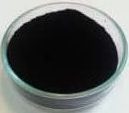
Copper Oxide Nanopowder Dry
View Product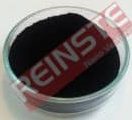
High Purity Copper oxide Nano Powder
View Product
Copper Oxide, Research Grade, 40nm
View Product
Copper Nanopowder (Dry)
View ProductFrequently Asked Questions
Nano emission control refers to the use of nanomaterials, such as catalytic copper oxide, to neutralize harmful pollutants in exhaust gases. These materials have a large surface area-to-volume ratio, making them highly effective as catalysts for converting toxic emissions like NOx, CO, and unburnt hydrocarbons into safer substances like nitrogen, carbon dioxide, and water.
Catalytic copper oxide is a promising alternative because it is significantly more abundant and less expensive than precious metals like platinum, palladium, and rhodium. It demonstrates excellent catalytic activity, particularly at lower temperatures (lower light-off temperature), which is crucial for reducing cold-start emissions. Its use as a copper catalytic agent can lead to more affordable and accessible pollution control nano solutions.
The main challenges include scaling up production of high-quality, consistent nano copper oxide, ensuring long-term durability and resistance to sulphur poisoning from fuel, and integrating this new technology into existing automotive manufacturing supply chains. Overcoming these hurdles requires focused R&D, strategic industry partnerships, and supportive government policies.
In an automotive catalyst, nano copper oxide acts as a nano redox agent. It facilitates oxidation-reduction reactions. For instance, it helps oxidize harmful carbon monoxide (CO) to carbon dioxide (CO2) and reduces nitrogen oxides (NOx) to harmless nitrogen gas (N2). Its nanostructure provides numerous active sites where these reactions can occur efficiently.
Ready to Advance Your Research in Emission Control?
Hiyka provides high-purity nano copper oxide and other advanced materials to fuel your innovation. Partner with us to develop the next generation of automotive catalysts.
Contact Our Experts