
A New Agricultural Dawn: The Role of Nano Ceramics
India's agricultural sector, the backbone of its economy, stands at a critical juncture. The dual pressures of feeding a burgeoning population and mitigating the environmental impact of conventional farming have catalyzed a search for innovative solutions. Enter the world of nanotechnology, a field that manipulates matter on an atomic and molecular scale. At the forefront of this revolution are Nano Ceramics, materials poised to redefine the paradigms of crop protection and management.
Ceramic nanoparticles, engineered materials with dimensions under 100 nanometers, exhibit unique physical and chemical properties vastly different from their larger counterparts. Their incredible surface-area-to-volume ratio, enhanced reactivity, and tunable characteristics make them ideal candidates for agricultural applications. For Indian researchers and professionals in the agro-tech industry, understanding and harnessing the power of these nanomaterials for agriculture is not just an academic pursuit—it's a national imperative.
This article delves into the transformative potential of nanotechnology in crop protection, focusing on how ceramic nanoparticles and nano coatings are being developed to create a more resilient, productive, and sustainable agricultural ecosystem in India. We will explore everything from nano-enhanced fertilizers that promise higher nutrient uptake to intelligent nano delivery systems that target pests with unprecedented precision, minimizing harm to the environment.
Why Researchers are Turning to Nano Ceramics
The adoption of nano ceramics in agricultural R&D offers a multitude of advantages over traditional methods, providing solutions that are more efficient, targeted, and environmentally conscious.
-
Enhanced Efficacy and Precision
Nano-sized carriers can deliver pesticides, herbicides, and fertilizers directly to the target site. This precision targeting, a core feature of nano delivery systems, drastically reduces the quantity of active ingredients required, lowering costs and minimizing chemical runoff into ecosystems.
-
Improved Nutrient Management
Nano-enhanced fertilizers utilize porous ceramic nanoparticles to encapsulate nutrients like nitrogen and phosphorus. These nutrients are released slowly and in a controlled manner, matching the plant's absorption rate. This prevents nutrient leaching, improves soil health, and ensures the crop gets what it needs, when it needs it.
-
Superior Plant and Seed Protection
Applying nano coatings to seeds and leaves creates a protective barrier. These coatings can shield against pathogens, reduce water loss through transpiration, and even offer protection from UV radiation. This leads to higher germination rates and healthier, more robust plants.
-
Promotion of Sustainable Nanotechnology
A significant focus for Indian R&D is the development of biodegradable nanoceramics from materials like silica and clay. These materials break down harmlessly in the soil, aligning with the principles of a circular economy and addressing concerns about the long-term environmental impact of nanomaterials.
Key Applications in Indian Agriculture
Smart Nano-Pesticides
Nano ceramics act as carriers for pesticides, protecting them from premature degradation by UV light and rain. These smart systems release their payload only when specific triggers are present (e.g., pH change caused by an insect bite), ensuring that the treatment is applied only where needed. This drastically reduces the impact on beneficial insects and the surrounding environment.
Controlled-Release Fertilizers
Porous ceramic nanocomposites are loaded with essential macronutrients and micronutrients. When applied to the soil, they release these nutrients gradually, preventing the "burst effect" of conventional fertilizers which leads to waste and water pollution. This is particularly crucial for Indian agriculture, where optimizing fertilizer use is key to profitability and sustainability.
Antimicrobial Nano Coatings
Nano coatings containing silver or zinc oxide nanoparticles exhibit powerful antimicrobial properties. When applied to crops, they can prevent the growth of fungal and bacterial diseases that often plague Indian farmers, such as blight and mildew. This reduces the need for chemical fungicides, leading to safer produce.
Nanosensors for Soil Health
Researchers are developing nano-ceramic based sensors that can be deployed in the field to provide real-time data on soil conditions. These sensors can detect nutrient deficiencies, moisture levels, and the presence of contaminants, allowing farmers to make data-driven decisions for irrigation and fertilization, practicing precision agriculture.
Water Purification and Management
Nano-ceramic filters are being engineered for highly efficient water purification systems. For agriculture, this means contaminated water sources can be made safe for irrigation, and water can be recycled more effectively. This is a game-changer for arid and semi-arid regions across India, promoting water security in farming.
Enhanced Seed Germination
Treating seeds with a thin layer of ceramic nanoparticles (a process called nano-priming) can significantly improve germination rates and seedling vigor. The nano coating protects the seed and can be infused with growth promoters, giving the crop a stronger start and leading to more uniform and higher yields.
Opportunities and Trends: The Indian Landscape
The landscape for nanotechnology in crop protection is rapidly evolving in India, driven by government support, academic excellence, and a growing startup ecosystem. The "National Mission on Nano Science and Technology" (Nano Mission) has been instrumental in funding research and infrastructure, creating a fertile ground for innovation. Indian research institutions like the Indian Agricultural Research Institute (IARI) and various IITs are pioneering the synthesis of novel nanomaterials for agriculture.
A key trend is the focus on sustainable nanotechnology. The emphasis is not just on efficacy but on creating eco-friendly solutions. Researchers are exploring the use of green synthesis methods for creating ceramic nanoparticles, using plant extracts and other biological materials. This approach reduces the environmental footprint of the manufacturing process itself. Furthermore, the development of biodegradable nanoceramics is a top priority, ensuring that these advanced materials do not accumulate in the soil and disrupt delicate ecosystems.
For professionals and researchers, this translates into immense opportunities. There is a growing demand for experts in material science, toxicology, and agronomy who can bridge the gap between the lab and the field. Startups focused on creating scalable nano-enhanced fertilizers and biopesticides are attracting significant investment. The challenge—and the opportunity—lies in developing cost-effective nano ceramics for crop protection applications that are accessible to the small and marginal farmers who form the majority of India's agricultural workforce. Success in this area will not only boost the agricultural economy but also position India as a global leader in sustainable agro-nanotechnology.
Related Nano-Ceramic Products

Smart Coatings for Ceramic Surfaces
View Product
Special Antibacterial Self-cleaning Functional Additive for Ceramics
View Product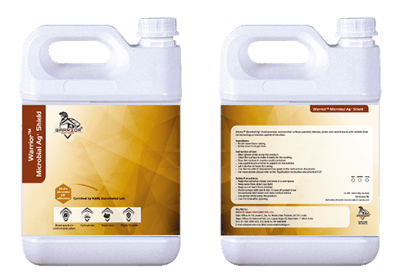
Warrior Microbial Ag Shield
View Product
Zirconium Oxide (ZrO2) Ceramics
View ProductFrequently Asked Questions
Nano ceramics are inorganic materials with particle sizes ranging from 1 to 100 nanometers. In agriculture, they are used as nano-pesticides, carriers for fertilizers, and protective nano coatings on seeds and leaves. Their high surface-area-to-volume ratio allows for more efficient delivery of active ingredients and enhanced interaction with plant systems, improving crop protection and nutrient uptake.
The safety of nano ceramics is a key area of research. Many nano ceramics, like those based on silica (SiO2) or zinc oxide (ZnO), are considered biocompatible and biodegradable nanoceramics. They can reduce the overall use of chemical pesticides and fertilizers, leading to a lower environmental footprint. However, rigorous testing and regulation, especially in the Indian context, are crucial to ensure long-term ecological and consumer safety.
Nano coatings, often made from ceramic nanoparticles like titanium dioxide (TiO2) or silica, form a thin, protective film on plant surfaces. This barrier can shield crops from harmful UV radiation, prevent water loss, and inhibit the growth of pathogens like fungi and bacteria. These coatings are designed to be porous enough to allow for gas exchange, ensuring the plant's normal physiological functions are not hindered.
Indian researchers are at the forefront of developing cost-effective and scalable nano-ceramic solutions tailored to local crops and climatic conditions. Institutions across India are working on synthesizing biodegradable nanoceramics, creating efficient nano delivery systems for nutrients, and studying the long-term impact of nanomaterials for agriculture on soil health. Their work is vital for translating lab-scale innovations into viable, on-field applications for Indian farmers.
Ready to Advance Your Research?
Connect with us to explore our range of high-purity nano ceramics and nanomaterials. Let's collaborate to build the future of sustainable agriculture in India.
Get in Touch