An Invisible Shield for Our Digital Lifeline
In an era where data is the new oil, the silent, unseen network of subsea cables forms the circulatory system of our global economy. For a nation like India, with its booming digital landscape and ambitious 'Digital India' program, these cables are not just infrastructure; they are the very bedrock of progress. They carry over 99% of our international communications, connecting us to the world. However, these vital arteries are constantly under threat from the harsh, unforgiving deep-sea environment. Corrosion from saltwater, abrasion from seabed currents, and accidental damage from shipping and fishing activities pose a continuous risk.
This is where the frontier of material science offers a groundbreaking solution: **nano ceramics in subsea cable protection**. By engineering materials at the atomic level, researchers and engineers are creating coatings that provide an unprecedented level of defense. **Nanotechnology in cable protection** is moving beyond traditional, bulky armoring to a smarter, more resilient paradigm. For Indian researchers and industries, this represents a monumental opportunity to innovate and lead in the development of **advanced ceramics in subsea** applications, securing our digital future from the depths of the ocean.
Why Nano Ceramics? The Researcher's Perspective
For the Indian R&D community, the shift towards **ceramic materials for subsea** use opens up exciting avenues for innovation and impact.
Superior Durability
The inherent hardness and chemical inertness of ceramics, enhanced at the nanoscale, offer extreme resistance to corrosion and abrasion, leading to longer cable lifecycles.
Lightweight Profile
Nano ceramic coatings are significantly lighter than traditional steel wire armor, reducing the overall cable weight and simplifying the complex logistics of transportation and deployment.
Enhanced Thermal Management
Ceramics possess excellent thermal stability, which is crucial for high-power subsea cables used in offshore energy projects, ensuring efficient heat dissipation and operational safety.
Reduced Biofouling
The smooth, inert surface of nano ceramic coatings can be engineered to resist the attachment of marine organisms, a phenomenon known as biofouling, which can degrade cable materials over time.
Customizable Properties
Nanotechnology allows for the precise tuning of material properties. Researchers can develop bespoke **nano coatings for cables** designed for specific depths, temperatures, and environmental challenges.
National Strategic Importance
Developing indigenous capabilities in advanced materials like nano ceramics strengthens India's self-reliance in critical subsea cable technology and manufacturing.
Industry Applications: Beyond the Horizon
Telecommunications
The primary application is in protecting fiber-optic cables that form the internet's backbone. The **durability of nano ceramics** ensures signal integrity by preventing physical damage and water ingress, which are catastrophic for fiber optics. This enhanced protection guarantees the high-speed data flow essential for India's digital services, from fintech to remote work.
Offshore Energy
Subsea power cables connecting offshore wind farms or oil and gas platforms to the mainland operate under high voltage and temperature. **Advanced ceramics in subsea** power cables provide not only physical protection but also superior electrical insulation and thermal management, improving the efficiency and safety of India's growing renewable energy infrastructure.
Defense and Surveillance
Naval and coastal surveillance operations rely on sophisticated sensor networks connected by subsea cables. The application of **nano ceramics** ensures the longevity and reliability of this critical defense infrastructure, protecting it from both environmental wear and potential tampering, thereby enhancing national security.
Scientific Research
Oceanographic research stations and deep-sea observatories use cabled networks to collect long-term data. Protecting these scientific instruments and their data links with robust **nano ceramic coatings** is vital for advancing our understanding of marine ecosystems, climate change, and seismic activity.
India-Specific Trends and Opportunities
The **nano ceramics industry trends** are converging with India's strategic goals, creating a fertile ground for growth. The 'Make in India' initiative provides a strong impetus for domestic manufacturing of high-tech materials. As the country expands its subsea cable network, with new landing stations being planned along its vast coastline, the demand for advanced protection solutions is set to soar. This is a prime opportunity for Indian material science companies and research institutions to reduce reliance on imports and establish a domestic supply chain for **ceramic materials for subsea** applications.
One of the key **advantages of nano ceramics in cables** is their long-term cost-effectiveness. While the initial R&D and material cost might be higher, the extended lifespan and reduced maintenance and replacement costs offer a significantly lower total cost of ownership. This is a compelling economic argument for both private telecom giants and government bodies investing in **subsea cable technology**. Researchers can focus on optimizing synthesis processes to bring down production costs, making these advanced materials more accessible.
Furthermore, the research into **nano coatings for cables** is not limited to just protection. There is a growing trend towards multifunctional coatings. Imagine a coating that not only protects but also includes embedded nanosensors to monitor cable integrity in real-time, detecting stress or micro-fractures before they become critical failures. This is the future of smart **nanotechnology in cable protection**, a field where Indian ingenuity can make a global impact.
Frequently Asked Questions
Nano ceramics are advanced materials engineered at the nanoscale (typically below 100 nanometers). This small particle size gives them superior properties compared to traditional ceramics, including enhanced hardness, thermal stability, and corrosion resistance, making them ideal for protective coatings.
Subsea cables are the backbone of India's digital economy, carrying over 99% of its international data traffic. Protecting these cables ensures uninterrupted internet connectivity, supports the 'Digital India' initiative, and secures critical infrastructure for economic and national security.
Nano ceramic coatings form a much denser, more uniform, and harder protective layer. They offer superior resistance to abrasion from seabed currents, corrosion from saltwater, and even damage from marine life. Their lightweight nature also simplifies the cable laying process compared to bulky traditional armor.
Absolutely. The field of advanced materials, particularly nanotechnology, is a growing focus for Indian R&D. There are significant opportunities for researchers to develop new nano ceramic formulations, test their long-term performance in marine environments, and collaborate with industry to commercialize these next-generation technologies.
Related Products & Materials
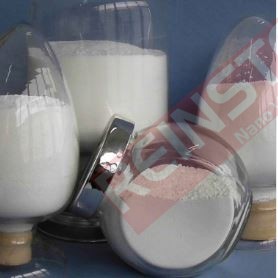
Zirconium Oxide (ZrO2) Ceramics
View Product →
Smart Coatings for Ceramic Surfaces
View Product →
Special Antibacterial Self-cleaning Functional Additive for Ceramics
View Product →
Warrior Dura Surface Shield
View Product →Ready to Advance Your Research?
Explore our extensive catalog of advanced nano ceramic powders, coatings, and functional additives to power your next innovation.
Discover Our Ceramic Solutions