Pioneering the Future: The Rise of Nano Ceramics in Aerospace
The quest for faster, lighter, and more efficient aircraft has perpetually driven innovation in material science. In this relentless pursuit, nano ceramics have emerged as a game-changing class of materials, poised to redefine the boundaries of aerospace engineering. By manipulating materials at the atomic level, nanotechnology ceramics offer a quantum leap in performance over their conventional counterparts. For India, a nation with burgeoning ambitions in aerospace and defense, understanding and harnessing the power of ceramics for aerospace applications is not just an opportunity—it's a strategic imperative.
This guide is tailored for Indian researchers, engineers, and industry professionals who are at the forefront of this revolution. We will delve into the intricacies of nano ceramics manufacturing, explore their diverse applications, and analyze the specific trends and opportunities within the Indian R&D landscape. From the scorching heat of jet engine turbines to the structural integrity of hypersonic vehicles, aerospace ceramics are the key to unlocking the next era of flight.
Why Nano Ceramics are a Game-Changer for Researchers
The unique properties of nano ceramics, derived from their fine-grained microstructure, provide significant advantages for high-stakes aerospace applications. These benefits are driving extensive research and development worldwide, including in India.
Exceptional Thermal Resistance
Nano ceramics can withstand extreme temperatures far exceeding those that metallic alloys can tolerate. This makes them indispensable for thermal barrier coatings (TBCs) on turbine blades and in exhaust systems, protecting critical components and improving engine efficiency.
Superior Strength-to-Weight Ratio
In aerospace, every gram matters. Nano ceramics are incredibly strong yet significantly lighter than the superalloys they often replace. This weight reduction translates directly into increased payload capacity, longer range, and better fuel efficiency for aircraft.
Unmatched Hardness & Wear Resistance
The fine nanostructure of these materials results in extreme hardness, making them highly resistant to wear, erosion, and corrosion. This durability extends the lifespan of critical components, reducing maintenance cycles and operational costs—a key focus for both commercial and military aviation.
Tailorable Electronic Properties
Beyond structural roles, certain nano ceramics possess unique dielectric and piezoelectric properties. This allows for the development of advanced sensors, antennas, and radomes (radar-transparent domes) that are integrated directly into the aircraft's structure, enhancing its electronic capabilities.
From Lab to Lift-off: Key Applications of Aerospace Ceramics
The theoretical benefits of nanotechnology ceramics translate into tangible, high-impact applications that are pushing the envelope of aerospace design. Here are some of the most critical areas where these advanced materials are being deployed.
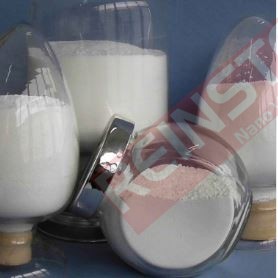
Thermal Barrier Coatings (TBCs)
Perhaps the most vital application, TBCs made from materials like Yttria-Stabilized Zirconia (YSZ) are applied to jet engine components. These nano-structured coatings insulate the underlying metal alloys from extreme temperatures, allowing engines to run hotter and more efficiently. This is a primary focus area for industrial nano ceramics in aviation.

Structural Components and Composites
Nano composites, which combine ceramic nanoparticles with a polymer or metal matrix, are used to create lightweight yet incredibly robust structural parts. Components like wing edges, control surfaces, and missile nose cones benefit from the high strength and low density of materials like Silicon Carbide (SiC) and Boron Carbide (B4C) ceramic composites.

Advanced Sensors and Electronics
The unique electrical properties of advanced ceramics like Barium Titanate (BaTiO3) are leveraged to create high-performance sensors for monitoring temperature, pressure, and structural strain in real-time. These sensors can be embedded within the aircraft structure, providing critical data for health monitoring systems and predictive maintenance.
The Indian Horizon: Trends in Nano Ceramics R&D
India's aerospace sector is on an upward trajectory, driven by both a growing commercial aviation market and the strategic imperative of self-reliance in defense. This growth creates a fertile ground for innovation in nano materials for aerospace components manufacturing. The 'Make in India' initiative, in particular, has provided a significant push for indigenous R&D in advanced materials, including nano ceramics for aerospace.
Leading research organizations such as the Defence Research and Development Organisation (DRDO), Hindustan Aeronautics Limited (HAL), and the Indian Space Research Organisation (ISRO) are actively working on developing domestic capabilities in nano ceramics manufacturing. Their focus is twofold: first, to create import substitutes for critical ceramic components, and second, to innovate next-generation materials for future platforms like the Advanced Medium Combat Aircraft (AMCA) and hypersonic systems. Academic institutions, including the IITs and IISc Bangalore, are crucial partners in this ecosystem, conducting fundamental research on nanoparticle synthesis, sintering techniques, and characterization of advanced ceramics. The key challenge and opportunity lie in bridging the gap between laboratory-scale success and large-scale, cost-effective industrial production.
Related Nano Ceramic Products


Frequently Asked Questions
Nano ceramics are advanced ceramic materials engineered at the nanoscale (typically below 100 nanometers). This small particle size gives them superior properties compared to conventional ceramics, including enhanced hardness, better thermal stability, and improved fracture toughness, making them ideal for high-performance applications like aerospace.
The aerospace industry demands materials that are lightweight, extremely strong, and resistant to high temperatures and corrosion. Nano ceramics meet these requirements perfectly. They are used in thermal barrier coatings (TBCs) for jet engines, lightweight structural components, and advanced sensors, leading to more fuel-efficient and durable aircraft.
The primary challenges include achieving a uniform dispersion of nanoparticles to avoid agglomeration, which can create weak points. Controlling grain growth during sintering (the process of compacting and forming a solid mass of material by heat or pressure) is also critical. For India, scaling up production from the lab to an industrial scale while maintaining quality and cost-effectiveness remains a key hurdle.
India is making significant strides through institutions like DRDO, ISRO, and various IITs. Initiatives like 'Make in India' are promoting indigenous development of advanced materials. Indian researchers are focused on developing cost-effective manufacturing processes for nano composites and advanced ceramics to reduce reliance on imports and support the nation's growing aerospace and defense sectors.
Ready to Innovate with Nano Materials?
Whether you are developing next-generation coatings or advanced structural components, our range of nano ceramic materials and expert consultation can accelerate your research. Connect with us to explore the possibilities.
Contact Our Experts