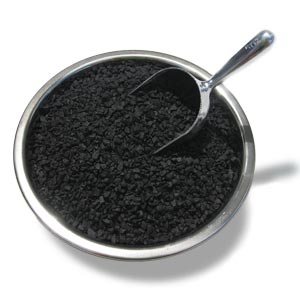
An Introduction to Nano Carbides: The Future of Materials Science
In the ever-evolving landscape of materials science, few areas hold as much promise as nanotechnology. Among the stars of this microscopic revolution are nano carbides, a class of materials poised to redefine industries from aerospace to medicine. These are not just smaller versions of conventional carbides; they are materials with fundamentally different and superior characteristics. For India, a nation rapidly ascending as a global hub for research and development (R&D) and high-tech manufacturing, understanding and harnessing the potential of nano carbide materials is not just an opportunity—it's a strategic imperative.
At their core, nano carbides are compounds of carbon and a metal or metalloid, with particle sizes typically under 100 nanometers. This nanoscale dimension is the key to their power. By shrinking materials to this size, we unlock a world of enhanced nano carbide chemical properties, including a massive increase in surface-area-to-volume ratio, quantum effects, and superior mechanical strength. This article serves as a comprehensive guide for Indian researchers, engineers, and industry professionals, delving into the chemical composition, production methods, and the burgeoning applications of these remarkable materials.
Why Should Indian Researchers Focus on Nano Carbides?
The push for innovation under initiatives like "Make in India" and "Aatmanirbhar Bharat" requires a strong foundation in advanced materials. Nano carbides offer a significant competitive edge. For researchers in Indian institutions, from IITs to CSIR labs, focusing on nano carbide research trends presents numerous benefits:
- Exceptional Hardness and Wear Resistance: Nano carbides like silicon carbide (SiC) and tungsten carbide (WC) are incredibly hard, making them ideal for developing next-generation cutting tools, abrasives, and protective coatings that last longer and perform better.
- High Thermal and Chemical Stability: These materials can withstand extreme temperatures and harsh chemical environments, opening doors for applications in high-performance crucibles, furnace linings, and catalysts in the chemical industry.
- Enhanced Catalytic Activity: The high surface area of nano carbide materials makes them excellent catalysts or catalyst supports. This is particularly relevant for India's chemical and petrochemical sectors, promising more efficient and sustainable chemical processes.
- Unique Electronic Properties: Certain nano carbides possess semiconductor properties, making them valuable for high-power, high-frequency electronics—a critical area for India's growing electronics manufacturing ecosystem.
- Lightweight Reinforcement: When incorporated into composites (e.g., with polymers or metals), nano carbides significantly enhance strength and stiffness without adding substantial weight, a crucial factor for the aerospace, defense, and automotive industries.
Industrial Applications: Where Nano Carbides are Making an Impact
The theoretical benefits of nano carbides translate into tangible, high-value industrial applications. As India aims to become a global manufacturing leader, leveraging these materials is key. Here’s a look at some of the most promising sectors for nano carbide applications.
Advanced Manufacturing & Tooling
The exceptional hardness of nano carbides is revolutionizing the machine tools industry. Coatings made from titanium carbide (TiC) or tungsten carbide (WC) nanoparticles extend the life of cutting tools, drills, and milling bits, allowing for faster, more precise machining of hard metals and alloys. This directly boosts productivity and quality in India's automotive and heavy engineering sectors.
Aerospace and Defense
Lightweight, high-strength composites are the holy grail for aerospace and defense. By reinforcing carbon fiber or metal matrices with silicon carbide (SiC) or boron carbide (B4C) nanoparticles, manufacturers can create components for aircraft, satellites, and ballistic protection that are stronger, stiffer, and more resistant to heat and impact. This aligns perfectly with India's ambitions in indigenous defense production.
Energy Storage and Conversion
The uses of nano carbides extend into the critical energy sector. Their high surface area and conductivity make them excellent materials for electrodes in supercapacitors and batteries, potentially leading to faster charging and longer-lasting energy storage solutions. They also show promise as catalysts in fuel cells, supporting the global transition to cleaner energy—a key focus for India.
Electronics and Semiconductors
Silicon carbide (SiC) nano-materials are at the forefront of the semiconductor industry. They are used to create power electronics that can operate at higher voltages, temperatures, and frequencies than traditional silicon-based devices. This is crucial for developing efficient power grids, electric vehicles (EVs), and 5G communication technology, all priority areas for India's technological growth.
Opportunities and Research Trends in the Indian Context
The nano carbides market overview indicates strong growth, driven by increasing demand from high-tech industries. For India, this presents a unique window of opportunity. The current nano carbide research trends are focused on optimizing production processes and exploring novel applications.
Focus on Sustainable Nano Carbide Production
A major trend is the development of green and cost-effective methods for nano carbide production. Traditional methods often require very high temperatures and energy consumption. Indian researchers are exploring innovative routes like microwave-assisted synthesis, sol-gel processes, and using bio-waste as carbon precursors. Success in this area would not only be environmentally friendly but also reduce production costs, making these advanced materials more accessible for local industries.
Chemical Composition Analysis and Customization
The ability to precisely control the nano carbides chemical composition analysis is critical. Researchers are working on doping nano carbides with other elements to tailor their properties for specific applications. For instance, creating nitrogen-doped carbide structures can enhance their catalytic performance. Advanced characterization techniques are essential for this, and Indian labs are increasingly equipping themselves with the necessary tools to compete globally.
Market Growth and Supplier Landscape
As demand grows, a reliable supply chain becomes crucial. The presence of specialized nano carbide suppliers like Hiyka in the Indian market is vital for R&D labs and industries. These suppliers provide access to high-purity, well-characterized materials, which is the foundation for any successful research or product development. The market is expected to expand as more industries recognize the performance benefits offered by nano carbides in industry, moving from niche applications to mainstream use.
Frequently Asked Questions (FAQ)
Key production methods for nano carbides include high-temperature synthesis like carbothermal reduction and direct carburization, chemical vapor deposition (CVD), plasma synthesis, and sol-gel methods. The choice of method depends on the desired particle size, purity, and specific type of nano carbide being produced.
Nano carbides exhibit unique chemical properties due to their high surface-area-to-volume ratio. This leads to enhanced catalytic activity, higher reactivity, and unique electronic properties compared to their bulk counterparts. Their nanoscale size also introduces quantum confinement effects, further altering their behavior.
Nano carbides are widely used in industries requiring high-performance materials. Their applications include manufacturing ultra-hard cutting tools, wear-resistant coatings, catalysts for chemical reactions, reinforcement materials in composites for aerospace, and as components in advanced energy storage systems like supercapacitors.
Like all nanomaterials, nano carbides require careful handling. Researchers should use personal protective equipment (PPE), including gloves, goggles, and respiratory protection, and work in well-ventilated areas or under a fume hood to minimize inhalation risk. Following established lab safety protocols for nanomaterials is crucial.
High-quality nano carbide suppliers like Hiyka provide a wide range of nano carbide materials for research and industrial purposes in India. They offer materials with varying specifications to meet the needs of different applications, ensuring purity and consistency for reliable results.