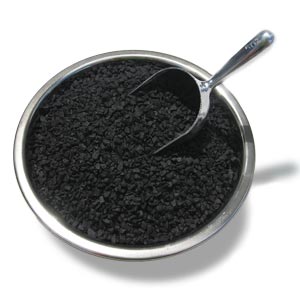
The Unseen Force: An Introduction to Nano Carbides in Modern Defense
In the high-stakes world of national security, the race for technological superiority is relentless. Victory is often determined not just by strategy, but by the very materials that constitute a nation's defense arsenal. Enter nano carbides for defense applications, a class of materials poised to redefine the boundaries of what's possible. These are not just incremental improvements; they represent a quantum leap in material science, offering unprecedented strength, resilience, and performance characteristics.
For Indian researchers and professionals in the defense and materials science sectors, understanding nano carbide technology is no longer optional—it's a strategic imperative. As India pushes forward with ambitious initiatives like 'Make in India' and 'Aatmanirbhar Bharat' (Self-Reliant India), the development and application of advanced materials like nano carbides are central to achieving true sovereign capability. These materials are the building blocks for next-generation armor, hypersonic missiles, stealth coatings, and ultra-durable components that can withstand the harshest battlefield conditions.
This article delves into the world of applications of nano carbides in defense, exploring their unique properties, manufacturing challenges, and the immense opportunities they present for the Indian R&D ecosystem. We will examine how this cutting-edge nano carbides material research is paving the way for a safer, stronger, and more technologically advanced future for the nation's defense forces.
Why Researchers are Turning to Nano Carbides: Key Advantages
The unique properties of nano carbides at the atomic level translate into tangible, game-changing benefits. For researchers and engineers, these materials unlock new design possibilities and performance benchmarks that were previously unattainable. Here are the core advantages driving the adoption of carbides in defense:
- Exceptional Hardness and Wear Resistance: Nano carbides, such as Silicon Carbide (SiC) and Boron Carbide (B4C), are among the hardest materials known. This makes them ideal for creating lightweight ceramic armor plates that can defeat high-velocity projectiles and for developing wear-resistant coatings that dramatically extend the lifespan of critical components like gun barrels and engine parts.
- High Thermal and Chemical Stability: Defense systems operate in extreme environments. Nano carbides maintain their structural integrity at incredibly high temperatures, making them perfect for applications like rocket nozzles, thermal protection systems for hypersonic vehicles, and brake discs for military aircraft. Their chemical inertness also protects against corrosion and chemical agents.
- Superior Strength-to-Weight Ratio: One of the most significant nano carbides advantages is their ability to provide immense strength at a fraction of the weight of traditional materials like steel or titanium alloys. This is critical for improving the mobility, fuel efficiency, and payload capacity of aircraft, vehicles, and even individual soldier equipment.
- Tailorable Electrical and Thermal Properties: The properties of nano carbides can be fine-tuned. For instance, some carbides can be engineered to absorb radar signals, contributing to stealth technology. Others offer excellent thermal conductivity, which is vital for heat dissipation in high-power electronics and laser systems.
- Enhanced Composite Performance: When integrated into polymer, metal, or ceramic matrices, even a small amount of nano carbides can drastically enhance the composite's overall performance. This synergy is a key focus of current nano carbides material research, leading to the development of multi-functional materials with tailored capabilities.
From Armor to Aerospace: Real-World Defense Applications
Advanced Armor Systems
Nano carbides like Boron Carbide and Silicon Carbide are integral to modern composite armor. Used in ceramic plates for personnel body armor, vehicle protection, and helicopter seats, they offer superior ballistic protection against armor-piercing rounds at a significantly lower weight than steel, enhancing soldier and vehicle mobility.
High-Performance Cutting Tools
The manufacturing of defense components requires tools that can machine superalloys and hardened materials. Tungsten Carbide and Titanium Carbide nanopowders are used to create cutting tools and inserts with exceptional hardness and longevity, crucial for precision engineering in the defense industry.
Aerospace and Hypersonic Components
The extreme temperature resistance of Zirconium Carbide and Titanium Carbide makes them ideal for leading edges, nose cones, and propulsion system components of hypersonic missiles and reusable space vehicles. This is a key area of nano carbide technology research for organizations like DRDO.
Wear-Resistant Coatings
Applying nano carbide coatings to components subject to high friction and wear, such as turbine blades, bearings, and landing gear, drastically increases their operational life and reliability. This reduces maintenance costs and improves the readiness of critical defense assets.
The Indian Horizon: Trends and Opportunities in Nano Carbide Research
The landscape for nano carbides material research in India is buzzing with potential. The government's focus on indigenous defense production has created a fertile ground for innovation. Key nano carbides market trends indicate a growing demand from both public sector defense undertakings (DPSUs) and a burgeoning private defense industry. Organizations like the Defence Research and Development Organisation (DRDO) are actively pursuing projects involving advanced ceramics and composites, where nano carbides play a pivotal role.
For Indian researchers, this translates into significant opportunities. There is a pressing need for developing cost-effective and scalable nano carbides manufacturing processes. Innovations in synthesis techniques like chemical vapor deposition (CVD), plasma synthesis, and sol-gel methods tailored to Indian industrial capabilities could be highly impactful. Furthermore, research into the dispersion of nano carbides within various matrices to create next-generation composites is a high-priority area. Collaborations between academic institutions like the IITs and NITs, national labs, and private players are essential to bridge the gap from lab-scale research to full-scale production. The effective nano carbides usage in these collaborations will be key to unlocking their full potential for India's strategic goals.
Frequently Asked Questions
Nano carbides are a class of advanced ceramic materials with particle sizes in the nanometer range (typically below 100 nm). This small size gives them exceptional properties like extreme hardness, high thermal stability, and superior wear resistance compared to their micro-scale counterparts.
For India, nano carbides are crucial for developing next-generation, domestically produced defense equipment under initiatives like 'Make in India.' They enable the creation of lighter, stronger armor, more effective munitions, and durable components for aircraft and naval vessels, reducing reliance on imports and enhancing national security.
The primary challenges include controlling particle size and purity during synthesis, preventing agglomeration (clumping) of nanoparticles, and scaling up production from laboratory to industrial levels cost-effectively. Ensuring uniform dispersion of nano carbides into a composite matrix is also a significant technical hurdle.
Like all nanomaterials, the environmental impact of nano carbides is an active area of research. While the materials themselves are generally stable and inert, potential risks related to the manufacturing process and end-of-life disposal need to be managed. Researchers are focused on developing green synthesis methods to minimize environmental footprints.
Pioneering the Future of Defense Materials
The journey into nano carbide technology is just beginning. For researchers, engineers, and defense professionals in India, this is a call to action. By harnessing the power of these advanced materials, we can build a more secure and self-reliant future. The path forward requires collaboration, innovation, and a commitment to pushing the boundaries of material science.
Are you ready to be a part of this revolution? Explore our range of high-purity nano carbide powders and start your next groundbreaking project today.