
Nano Carbides: A Comprehensive Guide to Synthesis, Properties, and Applications
Unlocking the potential of advanced materials, this guide offers Indian researchers and PhD students a deep dive into nano carbide technology, from synthesis to market trends.
Explore NowAn Introduction to the World of Nano Carbides
In the ever-evolving landscape of materials science, nano carbides have emerged as a class of materials with transformative potential. These compounds, which consist of carbon bonded to a metal or metalloid element at the nanoscale (typically below 100 nm), exhibit a remarkable combination of physical and chemical properties. Their extreme hardness, superior wear resistance, high melting points, and excellent thermal stability make them prime candidates for some of the most demanding industrial applications. For the vibrant research and development community in India, understanding the fundamentals of **nano carbide synthesis** and their properties is the first step toward innovation.
The significance of **nano carbide research** in the Indian context cannot be overstated. With national initiatives like 'Make in India' and 'Aatmanirbhar Bharat' pushing for indigenous development of advanced technologies, high-performance materials are in greater demand than ever. From aerospace and defense to electronics and energy, the applications of nano carbides are vast and varied. This article serves as a comprehensive resource for PhD research students and professionals in India, providing a foundational understanding of **nano carbides properties**, exploring their diverse **nano carbides applications**, and shedding light on the current research trends shaping the future of this exciting field.
Why Should Indian Researchers Focus on Nano Carbides?
For PhD students and scientists in India, delving into nano carbide research offers a pathway to high-impact work that aligns with national priorities. The field is ripe with opportunities for fundamental discoveries and practical innovations. Here are key benefits for researchers:
High-Impact Research Opportunities
Nano carbide research is at the forefront of materials science. Investigating novel synthesis techniques or uncovering new properties can lead to publications in prestigious journals and significant contributions to the scientific community.
Alignment with National Missions
Expertise in advanced materials like nano carbides directly supports strategic sectors such as defense, space exploration (ISRO), and renewable energy. This alignment can enhance funding prospects and collaborative opportunities with government labs like DRDO and CSIR.
Vast Application Spectrum
The wide range of **nano carbides applications**, from wear-resistant coatings to catalysts and energy storage, allows researchers to tailor their work towards areas of personal interest and industrial relevance, increasing the likelihood of technology transfer and commercialization.
Skill Development in Advanced Characterization
Working with nanomaterials necessitates proficiency in sophisticated characterization techniques like X-ray Diffraction (XRD), Scanning Electron Microscopy (SEM), and Transmission Electron Microscopy (TEM), skills that are highly valued in both academia and industry.
Key Industrial Applications of Nano Carbides
The unique properties of nano carbides translate into groundbreaking applications across numerous industries. Their adoption is a key driver of the growing **nano carbide market**. Here are some of the most significant areas where these advanced materials are making a difference:
Cutting Tools & Abrasives
Due to their extreme hardness and wear resistance, nano carbides like tungsten carbide (WC) and titanium carbide (TiC) are used to create superior cutting tools, drill bits, and grinding wheels. These tools last longer and perform better, especially when machining hard metals and alloys.
Wear-Resistant Coatings
Applying thin **nano carbide coatings** to industrial components (e.g., engine parts, bearings) drastically reduces friction and wear. Techniques like physical vapor deposition (PVD) are used to create these protective layers, extending the lifespan and efficiency of machinery.
Aerospace and Defense
Silicon carbide (SiC) and boron carbide (B4C) are lightweight yet incredibly strong. This makes them ideal for manufacturing components like armor plates, rocket nozzles, and parts for high-performance aircraft that require thermal stability and structural integrity at extreme temperatures.
Catalysis and Energy
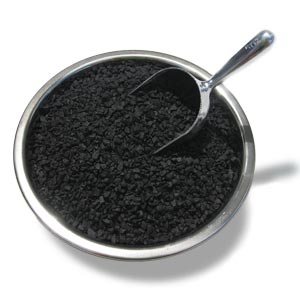
The high surface area of **nano carbide powders** makes them effective catalysts in various chemical reactions. They are also being explored for applications in hydrogen storage and as electrode materials in supercapacitors and batteries, contributing to advancements in clean energy technology.
Opportunities and Trends in Indian R&D
The landscape for **nano carbide research in India** is buzzing with potential. Several trends are shaping the future of this field, creating exciting opportunities for PhD students. A key area of focus is the development of green and cost-effective **nano carbide synthesis** methods. Traditional manufacturing processes can be energy-intensive and expensive. Indian researchers are actively exploring novel routes like sol-gel processes, microwave-assisted synthesis, and carbothermal reduction using locally available precursors. Success in this area will be crucial for large-scale **nano carbide manufacturing** in the country, making the technology more accessible for industrial applications.
Another significant trend is the development of nano carbide-based composites. By embedding **nano carbide powders** into polymer or metal matrices, researchers are creating next-generation materials with tailored properties. For example, reinforcing aluminum with silicon carbide nanoparticles can produce a lightweight composite with the strength of steel, a material highly sought after by the automotive and aerospace sectors. This research direction offers a vast playground for innovation, allowing students to explore the structure-property relationships in these advanced composites. The growing **nano carbide market** for these specialized materials underscores the commercial relevance of such research, providing a clear path from laboratory discovery to industrial impact.
Frequently Asked Questions (FAQ)
Nano carbides are a class of nanomaterials composed of carbon and a metal or metalloid, with particle sizes typically under 100 nanometers. Their importance stems from their exceptional properties like extreme hardness, high melting points, and excellent thermal and electrical conductivity, which are significantly enhanced at the nanoscale. These properties make them crucial for developing advanced materials in aerospace, electronics, and tooling industries.
For a typical university lab in India, the sol-gel method or carbothermal reduction are often the most accessible and cost-effective synthesis routes. These methods do not require the highly specialized and expensive equipment of techniques like Chemical Vapor Deposition (CVD) or plasma synthesis, while still offering good control over the final product's properties. They are ideal for **nano carbides for phd research students** beginning their work on nano carbide synthesis.
Key challenges in nano carbide research include achieving uniform particle size and morphology during synthesis, preventing agglomeration of nanoparticles, and scaling up production from lab to industrial levels cost-effectively. Another significant challenge is the potential for oxidation at high temperatures, which can degrade the material's properties. Overcoming these hurdles is a major focus of current **nano carbide technology** development.
The **nano carbide market** in India is in a high-growth phase, driven by the 'Make in India' initiative and increasing R&D investment in strategic sectors like defense, aerospace, and electronics manufacturing. There is a rising demand for high-performance materials, and nano carbides are perfectly positioned to meet this need. This creates significant opportunities for researchers and startups in **nano carbide manufacturing** and application development.
Related Products for Your Research



Ready to Advance Your Research?
Explore our wide range of high-purity nano carbide powders and materials to fuel your next discovery. Get the quality materials you need, delivered with expert support.
Browse Nano Carbides