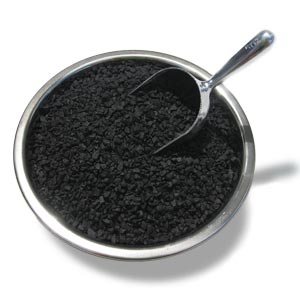
An Introduction to Nano Carbides and Their Thermal Significance
In the relentless pursuit of miniaturization and enhanced performance in electronics, aerospace, and energy systems, managing heat has become a critical bottleneck. As components become smaller and more powerful, the density of heat generated increases exponentially, threatening device reliability and lifespan. This is where the field of nanotechnology, particularly nanoceramics, offers groundbreaking solutions. Among these advanced materials, nano carbides have emerged as frontrunners, distinguished by their exceptional thermal, mechanical, and chemical properties.
Nano carbides are a class of ceramic materials with particle sizes in the nanometer range (typically below 100 nm). This nanoscale dimension imparts unique characteristics not seen in their bulk counterparts. For Indian researchers and professionals in materials science and chemical engineering, understanding the thermal conductivity of nanomaterials like nano carbides is paramount. These materials, including Silicon Carbide (SiC), Boron Carbide (B4C), and Zirconium Carbide (ZrC), possess inherently high thermal conductivity, making them perfect candidates for dissipating heat effectively.
The relevance to India's burgeoning R&D and industrial landscape cannot be overstated. With government initiatives like "Make in India" and a growing focus on domestic manufacturing of high-tech electronics and defense systems, the demand for advanced thermal management solutions is soaring. Enhancing thermal conductivity with nano carbides is not just an academic exercise; it's a strategic imperative for developing next-generation technologies, from faster semiconductors to more efficient electric vehicles. This article delves into the fundamental properties of nano carbides, their applications, and the immense opportunities they present for the Indian scientific community.
Key Benefits for Researchers and Innovators
Engaging with nano carbide research provides a multitude of advantages for scientists and engineers in India. These materials are not just incremental improvements; they represent a paradigm shift in how we approach material design for thermal applications.
- Superior Thermal Performance: Nano carbides exhibit thermal conductivities far exceeding those of traditional polymers and even some metals. This allows for the design of more compact and efficient cooling systems, a critical factor in modern electronics.
- Exceptional Mechanical Strength and Hardness: Materials like Boron Carbide are among the hardest known substances. This durability, combined with thermal stability, makes them suitable for applications in extreme environments, such as cutting tools and wear-resistant coatings.
- High Chemical Stability: The robust covalent bonding in nano carbides provides excellent resistance to corrosion and chemical attack. This is crucial for applications in the chemical processing industry and for ensuring long-term reliability in electronic components.
- Tunable Properties for Custom Applications: By controlling particle size, morphology, and composite formulation, researchers can tailor the properties of nano carbide-based materials. This opens up possibilities for creating bespoke solutions for specific thermal management challenges.
- Pioneering New Research Frontiers: The study of heat transport at the nanoscale is a vibrant and evolving field. Working with nano carbides allows Indian researchers to contribute to fundamental science while developing practical solutions for high-impact industrial problems.
Industrial Applications: Where Nano Carbides Make a Difference
Nano Carbides in Electronics
The electronics industry is arguably the largest beneficiary of nanoceramics for thermal management. Nano carbides are used as:
• Thermal Interface Materials (TIMs): Pastes and pads containing nano carbides fill microscopic gaps between a CPU and its heat sink, drastically improving heat transfer.
• Substrates for Power Electronics: SiC-based substrates are replacing traditional silicon in high-power inverters and converters, enabling higher operating temperatures and efficiency.
• Heat Spreaders: Composites with high nano carbide loading can rapidly spread heat away from localized hot spots in integrated circuits.
Aerospace & Defense
In aerospace, materials must be lightweight, strong, and resistant to extreme temperatures. Nano carbides are integral to:
• High-Temperature Structural Components: Used in rocket nozzles and leading edges of hypersonic vehicles that experience intense heat upon re-entry.
• Armor Systems: The hardness of Boron Carbide makes it a key component in lightweight ceramic armor for personnel and vehicles.
• Wear-Resistant Coatings: Protecting critical components in turbines and engines from wear and high-temperature corrosion.
Industrial & Chemical Engineering
The chemical stability of nano carbides makes them invaluable in harsh industrial settings. Applications include:
• Seals and Bearings: For pumps and machinery handling corrosive or abrasive fluids.
• Catalyst Supports: Their high surface area and thermal stability make them excellent supports for catalysts in high-temperature chemical reactions.
• Cutting Tools: Enhancing the life and performance of tools used for machining hard metals and composites.
Opportunities and Future Trends for Nano Carbides in India
The landscape for nanotechnology in chemical engineering and materials science within India is ripe with opportunity. The national push towards self-reliance in strategic sectors like semiconductor manufacturing (through the India Semiconductor Mission) and renewable energy creates a direct demand for advanced materials like nano carbides. Indian researchers can capitalize on this by focusing on domestic nano carbide synthesis methods, reducing reliance on imports and fostering indigenous innovation.
A significant trend is the development of nano carbide-polymer composites. By dispersing nano carbides into polymers, it's possible to create lightweight, easily processable materials with dramatically enhanced thermal conductivity. This is particularly relevant for electric vehicle (EV) battery packs, which require efficient thermal management to ensure safety and performance. Research into optimizing the dispersion and interface between the nano carbides and the polymer matrix is a key area where Indian institutions can excel.
Furthermore, the application of nanoceramics for thermal management extends to energy-efficient lighting (LEDs). As LEDs become more powerful, dissipating the generated heat is crucial for maintaining their efficiency and lifespan. Nano carbide-based substrates and encapsulants offer a superior solution. The convergence of material science and electronics engineering presents a fertile ground for interdisciplinary collaboration, driving forward the practical implementation of these advanced materials in commercial products manufactured in India.
Frequently Asked Questions
Nano carbides, such as Silicon Carbide (SiC) and Boron Carbide (B4C), exhibit high intrinsic thermal conductivity, exceptional mechanical strength, and chemical stability at high temperatures. Their nanoscale size creates a large surface area for heat dissipation and allows for the creation of advanced composite materials with tailored thermal properties, making them ideal for thermal management in demanding applications.
Measuring the thermal conductivity of nanomaterials is challenging and requires specialized techniques. Common methods include the 3-omega method, time-domain thermoreflectance (TDTR), and transient thermal grating (TTG) spectroscopy. These methods are designed to handle the small length scales and unique heat transport physics present in nanostructures.
Yes, nano carbides are being integrated into existing electronic systems as thermal interface materials (TIMs), heat spreaders, and substrates for power electronics. Their high thermal conductivity helps dissipate heat more effectively than traditional materials, improving device performance, reliability, and lifespan, especially in high-power and high-frequency applications.
The primary challenges in nano carbide synthesis include controlling particle size, achieving a narrow size distribution, preventing agglomeration, and ensuring high purity. Methods like chemical vapor deposition (CVD), sol-gel synthesis, and high-energy ball milling are used, but each requires precise control over reaction parameters to produce high-quality, consistent nanopowders.
Nano carbides are renowned for their exceptional chemical stability and resistance to corrosion, oxidation, and wear, even in harsh industrial environments. This chemical inertness makes them suitable for applications involving corrosive chemicals, high temperatures, and abrasive conditions, such as in chemical processing equipment and protective coatings.