
Unveiling the Future: Nano Calcium Carbonate in India's Research & Industry
Dive into the groundbreaking world of Nano CaCO3 and discover its transformative potential, propelling innovation across diverse sectors for Indian researchers and professionals.
Discover ApplicationsThe Rise of Nano Calcium Carbonate: A Paradigm Shift for India
In the dynamic landscape of materials science, Nano Calcium Carbonate (Nano CaCO3) has emerged as a revolutionary force, reshaping industries and opening unprecedented avenues for research and development. For Indian researchers and professionals, understanding and harnessing the power of these nanomaterials is not just an academic pursuit but a strategic imperative for national progress. Unlike its conventional micro-sized counterpart, Nano CaCO3 boasts particles ranging from 1 to 100 nanometers, leading to a dramatically increased surface area-to-volume ratio and unique quantum effects. This nanoscale dimension imbues it with superior properties, making it an indispensable component in advanced manufacturing, sustainable technologies, and even biomedical innovations.
India, with its burgeoning scientific community and a robust industrial base, is at the cusp of a nanotechnology revolution. The adoption of Nano CaCO3 is pivotal in this journey, offering solutions to long-standing material challenges and driving the development of next-generation products. From enhancing the durability of plastics to improving the performance of paints and coatings, the versatility of Calcium Carbonate nanoparticles is truly remarkable. This blog post delves deep into the multifaceted world of Nano CaCO3, exploring its fundamental characteristics, diverse applications, and the immense opportunities it presents for India's scientific and industrial future. We will also touch upon the crucial aspects of nano toxicology and the environmental impact, ensuring a holistic understanding for responsible innovation.
The journey into the nanoscale realm demands precision, innovation, and a keen understanding of material interactions. Nano CaCO3, often synthesized through sophisticated precipitation methods, can be tailored with various surface modifications to optimize its compatibility with different matrices. This adaptability makes it a preferred choice for creating high-performance nano composites and nano coatings, which are vital for sectors ranging from automotive to aerospace. As India increasingly focuses on indigenous research and manufacturing, the strategic importance of mastering materials like Nano CaCO3 cannot be overstated. It promises not only to elevate product quality but also to foster a culture of innovation that aligns with global standards of sustainability and technological advancement.
This detailed exploration aims to serve as a comprehensive guide for Indian researchers, engineers, and industry leaders, providing insights into leveraging Nano CaCO3 for competitive advantage. We will highlight how this material contributes to 'Green Nanotech' principles by enabling more efficient resource utilization and reduced environmental footprint, while also addressing the critical need for thorough research into its safety and long-term effects. The vision is clear: to position India at the forefront of nanomaterials research and application, driving economic growth and scientific excellence through responsible innovation.
Unlocking Potential: Key Benefits of Nano CaCO3 for Researchers
Enhanced Material Properties
Nano CaCO3 significantly improves the mechanical strength, stiffness, impact resistance, and thermal stability of polymers and composites. Its uniform dispersion at the nanoscale leads to superior reinforcement, allowing for the creation of lighter yet stronger materials. This is crucial for industries like automotive and construction aiming for high-performance and durable products.
Cost-Effectiveness & Sustainability
As a naturally abundant and relatively inexpensive material, Nano CaCO3 offers a cost-effective alternative to more expensive fillers and additives. Its ability to enhance properties at lower loading levels can reduce overall material consumption, aligning with 'Green Nanotech' principles and contributing to sustainable manufacturing practices. This also helps in mitigating the environmental impact of nano calcium carbonate by promoting resource efficiency.
Improved Performance in Coatings & Films
In paints, coatings, and films, Nano CaCO3 improves opacity, gloss, whiteness, and weatherability. Its fine particle size allows for the creation of smoother, more uniform surfaces and enhances barrier properties, extending the lifespan of coated products. This makes it invaluable for protective coatings in harsh Indian climatic conditions.
Versatility in Biomedical Applications
The biocompatibility and biodegradability of Bio Nanomaterials like Nano CaCO3 open new frontiers in biomedical research. It is being explored for targeted drug delivery systems, bone tissue engineering, and as a component in medical implants, offering promising solutions for healthcare challenges in India.
Rheology Control and Processing Aid
Nano CaCO3 acts as an excellent rheology modifier in various liquid systems, including adhesives, sealants, and inks. It can improve flow properties, reduce viscosity, and enhance processability, leading to more efficient manufacturing processes and superior end-product quality, especially in complex formulations.
Advancements in Green Nanotechnology
By enabling the development of more efficient and environmentally friendly products, Nano CaCO3 is a cornerstone of Green Nanotech. Its application often leads to reduced energy consumption during processing, decreased reliance on hazardous chemicals, and the creation of products with longer lifecycles, thereby minimizing the overall ecological footprint.
Transforming Industries: Diverse Applications of Nano Calcium Carbonate
Polymers & Plastics Industry
Nano CaCO3 is a game-changer in the plastics sector, serving as a superior filler and reinforcing agent. It significantly enhances the mechanical properties of various polymers, including PVC, PP, and PE, leading to improved tensile strength, flexural modulus, and impact resistance. This makes it ideal for automotive components, packaging films, pipes, and electrical insulation, where durability and performance are paramount. Its fine particle size ensures excellent dispersion and minimal impact on transparency in certain applications, pushing the boundaries of nano composites.
Paints & Coatings Sector
The paint and coatings industry benefits immensely from Nano Coatings based on Nano CaCO3. It acts as an excellent extender, improving opacity, brightness, and tint retention. More importantly, it enhances the scratch resistance, weatherability, and overall durability of paints, especially in exterior applications. Its ability to create a dense, uniform film contributes to better barrier properties, protecting surfaces from corrosion and environmental degradation, a critical factor in India's diverse climatic conditions.
Adhesives & Sealants
In adhesives and sealants, Nano CaCO3 plays a crucial role in rheology modification, controlling viscosity and improving sag resistance. It also contributes to enhanced bond strength and durability, making it suitable for high-performance applications in construction, automotive assembly, and electronics. The nanoparticles improve the cohesive strength of the cured material, leading to more robust and long-lasting bonds.
Paper Industry
The paper industry utilizes Nano CaCO3 as a high-performance filler, improving paper brightness, opacity, and printability. Its fine particle size allows for better sheet formation and reduced porosity, leading to smoother surfaces and enhanced ink absorption. This also contributes to weight reduction and cost savings, making the paper manufacturing process more efficient and environmentally friendly.
Rubber & Elastomers
As a reinforcing filler in rubber and elastomers, Nano CaCO3 improves tear strength, abrasion resistance, and tensile properties. It can replace or complement carbon black and silica in various rubber compounds, leading to products with enhanced performance and reduced density. This is particularly beneficial for tires, conveyor belts, and other industrial rubber goods requiring superior mechanical properties.
Construction Materials
In the construction sector, Nano CaCO3 is being explored to develop high-performance concrete and cementitious materials. It acts as a nucleating agent for cement hydration, leading to increased early strength and reduced permeability. This can result in more durable and sustainable construction, crucial for India's rapidly developing infrastructure, while also considering the overall impact of nano calcium carbonate on environment in building materials.
Biomedical & Healthcare
The biocompatibility of Bio Nanomaterials like Nano CaCO3 makes it highly attractive for biomedical applications. Research is ongoing into its use in drug delivery systems, where its porous structure can encapsulate and release therapeutic agents. It also shows promise in bone tissue engineering and as a component in dental materials due to its similarity to natural bone mineral, opening new avenues for medical advancements in India.
Agriculture & Environmental Remediation
Beyond industrial uses, Nano CaCO3 is being investigated for agricultural applications, such as soil amendment and nutrient delivery, and in environmental remediation for water purification and pollutant adsorption. Its high surface area makes it effective in removing heavy metals and organic pollutants from water, showcasing its potential for sustainable environmental solutions and mitigating any negative impact of nano calcium carbonate on environment through controlled application.
India's Nanotechnology Horizon: Opportunities and Emerging Trends
India is rapidly positioning itself as a global hub for nanotechnology research and development. Government initiatives, increased funding for scientific research, and a growing pool of skilled professionals are fueling this growth. The demand for advanced nanomaterials like Nano CaCO3 is soaring across various sectors, driven by the need for high-performance, lightweight, and sustainable solutions. Indian industries are keen to adopt innovative materials to enhance competitiveness and meet stringent global quality standards. This creates immense opportunities for manufacturers, researchers, and startups specializing in Calcium Carbonate nanoparticles.
One of the significant trends is the emphasis on Green Nanotech. There's a concerted effort to develop eco-friendly synthesis methods for Nano CaCO3 and to ensure its applications contribute to environmental sustainability. This includes exploring its role in reducing material consumption, enhancing energy efficiency, and facilitating recycling processes. Researchers are also focusing on understanding the impact of nano calcium carbonate on environment, particularly in terms of its lifecycle assessment and safe disposal, to ensure that technological advancements do not come at an ecological cost. The field of nano toxicology is gaining prominence, with studies aimed at evaluating the potential health and environmental risks associated with nanoparticles, paving the way for responsible innovation.
The rise of Bio Nanomaterials is another exciting trend, with Nano CaCO3 being explored for its biocompatibility and potential in medical and pharmaceutical applications. From drug delivery systems to tissue engineering scaffolds, the integration of Nano CaCO3 into biological systems promises revolutionary advancements in healthcare. Furthermore, the development of smart nano coatings and functional nano composites with tailored properties for specific applications, such as self-cleaning surfaces or advanced filtration membranes, represents a significant area of growth.
Collaboration between academia and industry is crucial for accelerating the commercialization of Nano CaCO3 technologies in India. Research institutions are actively partnering with manufacturing companies to bridge the gap between laboratory discoveries and industrial applications. This synergistic approach ensures that the benefits of Nano CaCO3 are realized efficiently, contributing to India's economic growth and technological self-reliance. As the understanding of nanomaterials deepens, so too will the innovative applications, making India a formidable player in the global nanotechnology arena.
Frequently Asked Questions about Nano Calcium Carbonate
Explore Related Nano Calcium Carbonate Products

Calcium Carbonate Nanoparticles (25g)
View Product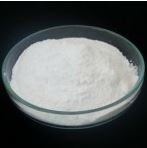
Calcium Carbonate nanoparticles (100g)
View Product
Calcium Carbonate Microparticles, ca. 3um
View Product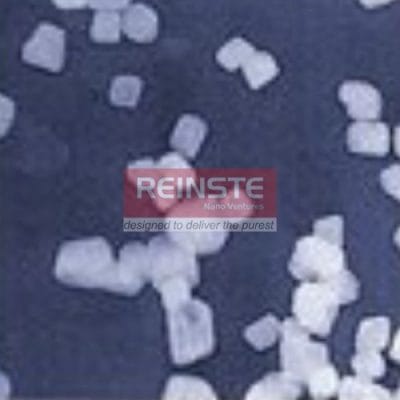
Calcium Carbonate microparticles (ca. 2-3 μm)
View ProductReady to Innovate with Nano Calcium Carbonate?
Whether you're a researcher exploring new applications or an industry professional seeking advanced materials, Reinste and Hiyka offer a comprehensive range of Nano CaCO3 solutions.
Get in Touch with Our Experts