
Unlocking the Potential: Nano CaCO3 as a Revolutionary Filler in Advanced Materials for Indian Industries
Explore how nano calcium carbonate is transforming various sectors, offering unparalleled performance enhancements and opening new avenues for research and industrial growth across India.
Explore Nano CaCO3 SolutionsIntroduction to Nano Calcium Carbonate: A Foundation for Innovation
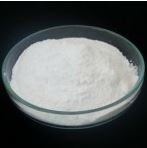
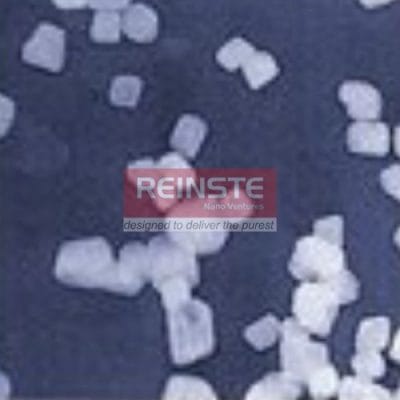
Nano Calcium Carbonate (Nano CaCO3) stands at the forefront of advanced material science, serving as an exceptionally versatile nano filler. Its distinctive properties, primarily derived from its minuscule, nanoscale dimensions (typically below 100 nanometers), empower it to impart significant enhancements to the performance characteristics of a wide array of composite materials and end-products. For the vibrant community of Indian researchers and industrial professionals, a deep understanding and strategic utilization of Nano CaCO3 are absolutely critical for fostering innovation across an extensive spectrum of industries. These include, but are not limited to, the burgeoning plastics and rubber sectors, the ever-evolving paints and coatings industry, and even specialized fields like pharmaceuticals and personal care. India's industrial landscape is currently experiencing rapid expansion, marked by a growing demand for high-performance, yet cost-effective, materials. This dynamic environment positions Nano CaCO3 as a subject of profound scientific interest and strategic economic importance. This comprehensive article aims to meticulously explore the multifaceted applications, inherent benefits, and future-forward trends associated with Nano CaCO3. Our focus will be on highlighting its transformative impact on contemporary material science and underscoring its pivotal role in catalyzing technological advancements and sustainable growth within the unique and challenging Indian context. We will delve into how this nanomaterial is not just an additive, but a key enabler for next-generation products and processes, offering solutions to complex material challenges faced by Indian industries today.
Key Benefits of Nano CaCO3 for Researchers and Industry
- Superior Mechanical Property Enhancement: Nano CaCO3 particles, with their high surface area, act as effective reinforcing agents. When properly dispersed, they significantly boost the tensile strength, flexural modulus, and impact resistance of polymers and composites. This leads to more robust and durable products, crucial for demanding applications in automotive and construction sectors.
- Exceptional Cost-Effectiveness: As a high-performance filler, Nano CaCO3 provides an economic advantage by allowing for the partial replacement of more expensive virgin polymers or other raw materials without compromising the desired performance attributes. This cost optimization is particularly attractive for price-sensitive markets like India, enabling manufacturers to produce competitive products.
- Optimized Processing Characteristics: The ultrafine nature of Nano CaCO3 facilitates better dispersion within polymer matrices, leading to more homogeneous mixtures. This often translates into improved flow properties during processing, reduced cycle times in molding operations, and a smoother surface finish for the final product, ultimately enhancing manufacturing efficiency.
- Enhanced Optical Clarity and Aesthetics: In specific formulations, particularly with surface-treated or transparent grades of Nano CaCO3, the material can maintain or even improve the optical properties of the host material. This is vital for applications requiring visual appeal, such as certain films, coatings, and clear plastics, where traditional fillers might cause opacity.
- Improved Dimensional Stability: By reducing the coefficient of thermal expansion and mitigating shrinkage during cooling, Nano CaCO3 helps in achieving superior dimensional stability in molded and extruded products. This minimizes warpage and distortion, ensuring product consistency and precision.
- Contribution to Flame Retardancy: While not a primary flame retardant, Nano CaCO3 can contribute to the flame retardant properties of materials by forming a char layer or diluting combustible gases, thereby enhancing fire safety in various applications.
- Environmental Sustainability: Sourced from abundant natural mineral reserves, Nano CaCO3 offers a more environmentally friendly and sustainable material solution compared to many synthetic alternatives. Its use can contribute to reducing the overall carbon footprint of products.
- Broad Versatility and Adaptability: Nano CaCO3 exhibits remarkable compatibility with a wide range of polymers, including PVC, polypropylene, polyethylene, and various elastomers. This versatility allows it to be tailored for numerous applications, making it a highly adaptable component in advanced material formulations.
- Surface Modification Potential: The surface of Nano CaCO3 can be chemically modified to further enhance its compatibility and dispersion within specific polymer systems, leading to even greater performance improvements and opening doors for highly specialized applications.
Diverse Applications of Nano CaCO3 Across Industries
Plastics & Polymers
Nano CaCO3 is a game-changer in the plastics industry, where it is extensively used as a functional filler. It significantly enhances the mechanical properties of various polymers, including Polyvinyl Chloride (PVC), polypropylene (PP), and polyethylene (PE). In PVC pipes and profiles, it improves stiffness, impact strength, and heat distortion temperature. For automotive parts, Nano CaCO3 contributes to lighter yet stronger components, improving fuel efficiency and safety. In packaging films and containers, it boosts barrier properties and rigidity. Its role as a nano filler helps in achieving superior surface finish and dimensional stability, making it indispensable for high-performance plastic products. Keywords: Polymer composites, PVC pipes, automotive plastics, plastic packaging, engineered plastics, thermoplastic reinforcement.
Paints & Coatings
In the paints and coatings sector, Nano CaCO3 acts as a multi-functional additive. It dramatically improves opacity and brightness, allowing for reduced usage of more expensive pigments like TiO2. Beyond aesthetics, it enhances the rheological properties of paints, leading to better flow and leveling. Critically, it boosts the scrub resistance and durability of paint films, extending the lifespan of coated surfaces. Its fine particle size ensures a smooth finish and prevents settling, making it a preferred choice for high-quality decorative and industrial coatings. Keywords: Paint fillers, coating additives, rheology modifiers, scrub resistance, architectural coatings, industrial paints.
Rubber & Elastomers
The rubber and elastomer industry benefits immensely from Nano CaCO3 as a reinforcing filler. It is crucial for increasing the tensile strength, tear resistance, and hardness of various rubber products. From automotive tires and conveyor belts to industrial seals and hoses, Nano CaCO3 enhances the overall mechanical performance and durability of elastomers. Its fine particles integrate effectively into the rubber matrix, leading to improved dynamic properties and extended service life, which is vital for high-stress applications. Keywords: Rubber reinforcement, elastomer fillers, tire manufacturing, industrial rubber, seals, gaskets, vulcanization.
Adhesives & Sealants
Nano CaCO3 plays a pivotal role in formulating high-performance adhesives and sealants. It is instrumental in controlling viscosity, which is essential for consistent application. Moreover, it significantly improves the mechanical strength, cohesion, and adhesion properties of these formulations. By reducing shrinkage during curing, it helps prevent cracking and ensures long-term bond integrity. Its versatility allows for use in a wide range of adhesive types, including construction, automotive, and general assembly applications. Keywords: Adhesive fillers, sealant additives, viscosity control, bonding solutions, construction adhesives, industrial sealants.
Paper Industry
In the paper industry, Nano CaCO3 serves as an excellent filler and coating pigment. As a filler, it improves paper brightness, opacity, and smoothness, while simultaneously reducing the consumption of more costly wood pulp, leading to economic and environmental benefits. When used in coatings, it enhances printability, ink absorption, and gloss, producing higher quality paper products suitable for various printing applications. Its fine particle size ensures uniform distribution and superior performance. Keywords: Paper fillers, paper coatings, printability enhancement, pulp reduction, fine paper, coated paper.
Pharmaceuticals & Cosmetics
Due to its high purity and fine particle size, Nano CaCO3 finds specialized applications in the pharmaceutical and cosmetic industries. In pharmaceuticals, it is commonly employed as a tablet excipient, providing bulk and aiding in tablet compression. It also functions as an effective antacid. In cosmetics, it is used as a mild abrasive in toothpastes, a filler in powders, and an opacifying agent in various personal care products, contributing to texture, stability, and appearance. Keywords: Pharmaceutical excipients, antacids, cosmetic fillers, personal care, tablet formulation, dental products.
Nano CaCO3 in India: Opportunities and Emerging Trends
India's dynamic economic growth and its strategic emphasis on domestic manufacturing through initiatives like "Make in India" are collectively creating an unprecedented landscape of opportunities for advanced materials, with Nano CaCO3 at its core. The Indian automotive sector, for instance, is undergoing a significant transformation, with a growing imperative to adopt lightweight and high-performance polymer composites. In this context, nano calcium carbonate emerges as a crucial nano filler, playing a vital role in enhancing the mechanical properties of components while simultaneously reducing vehicle weight. This dual benefit directly translates into improved fuel efficiency and reduced emissions, aligning with global sustainability goals and stringent regulatory standards. Concurrently, India's booming construction industry is characterized by an insatiable demand for durable, sustainable, and cost-effective building materials. Nano CaCO3 is increasingly becoming a preferred additive in the manufacturing of PVC pipes, profiles, and various paint formulations. Its inclusion boosts the longevity, structural integrity, and aesthetic appeal of construction materials, contributing to the development of resilient infrastructure. Beyond industrial applications, the landscape of research and development in nanotechnology across India is experiencing a remarkable surge. Leading academic institutions, national laboratories, and private industries are actively engaged in exploring novel and innovative applications of nanomaterials. This includes pioneering work in areas such as smart materials, functional coatings, and advanced drug delivery systems, where Nano CaCO3, with its modifiable surface chemistry, offers immense potential. Furthermore, the escalating global and national focus on sustainable and eco-friendly material solutions significantly propels the adoption of Nano CaCO3. Given its abundant natural origin and its capacity to reduce the reliance on synthetic and often energy-intensive materials, Nano CaCO3 aligns perfectly with India's environmental objectives. Emerging trends in the Indian market include the sophisticated development of surface-modified Nano CaCO3 variants. These modifications are specifically engineered to optimize compatibility and dispersion within diverse polymer matrices, leading to even greater performance enhancements and opening new avenues for highly specialized, tailor-made applications. The integration of Nano CaCO3 into next-generation smart materials, capable of responding to external stimuli, is also a promising area of research. The collective demand for high-quality nano calcium carbonate as a versatile filler is not merely expected to grow but to surge exponentially, firmly positioning India as a pivotal and influential player in the global advanced materials market. This sustained growth underscores Nano CaCO3's strategic importance in India's journey towards technological self-reliance and global leadership in material science.
Frequently Asked Questions about Nano CaCO3
Related Nano Calcium Carbonate Products


Ready to innovate with Nano CaCO3?
Contact us today to explore our range of advanced nanomaterials and find the perfect solution for your research or industrial needs.
Get in Touch