
Unlocking the Potential: Nano CaCO3 and its Revolutionary Applications for Indian Researchers and Industry
Delve into the cutting-edge world of Calcium Carbonate Nanoparticles and discover how these advanced nanomaterials are poised to transform diverse sectors, offering unprecedented opportunities for innovation in India's R&D landscape.
Explore Applications
Introduction to Nano CaCO3: A Game-Changer for Indian R&D
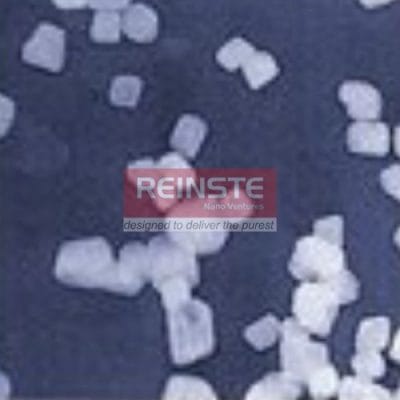
In the rapidly evolving landscape of material science and engineering, Nano CaCO3, or Calcium Carbonate Nanoparticles, has emerged as a truly transformative material with immense potential across a spectrum of industries. These ultra-fine particles, meticulously engineered to dimensions typically ranging from 1 to 100 nanometers, exhibit significantly enhanced and often novel properties when compared to their conventional micro-sized counterparts. This drastic reduction in particle size leads to a dramatic increase in the surface area-to-volume ratio, which in turn imparts unique mechanical, optical, and chemical characteristics that are fundamentally revolutionizing various industrial applications and pushing the boundaries of scientific research. The ability to precisely control particle morphology and size during CaCO3 Synthesis at the nanoscale is what makes these materials so versatile and impactful.
For Indian researchers and professionals, particularly those engaged in cutting-edge Nanomaterials Research and industrial innovation, understanding and effectively harnessing the power of Nano Calcium Applications is not merely an academic pursuit but a crucial imperative for driving national innovation, fostering technological self-reliance, and strengthening global competitiveness. From the development of advanced Nanocomposites for lightweight automotive components to the creation of high-performance coatings and specialized pharmaceutical excipients, Nano CaCO3 offers a versatile and cost-effective platform for both scientific exploration and tangible industrial advancement. Its role extends across numerous sectors, promising not only improved product performance and enhanced functionalities but also significant strides in cost-efficiency and the development of more sustainable solutions, all of which align perfectly with India's ambitious 'Atmanirbhar Bharat' (Self-Reliant India) vision and its strategic goals in advanced scientific and industrial development. The meticulous process of creating Precipitated CaCO3 at the nanoscale further allows for tailored material properties, addressing specific challenges with unprecedented precision.
This comprehensive blog post aims to delve deep into the fascinating world of Nano CaCO3, exploring its unique physicochemical properties, diverse and impactful applications across various industries, and the burgeoning opportunities it presents specifically for the dynamic Indian scientific and industrial community. Join us as we uncover how these incredibly tiny particles are poised to make a colossal and lasting impact on India's technological future.
Key Benefits of Nano CaCO3 for Indian Researchers
- Enhanced Material Properties: One of the most significant advantages is the dramatic improvement in the mechanical properties of materials. When incorporated into polymers, plastics, and coatings, Nano CaCO3 significantly boosts tensile strength, flexural modulus, impact resistance, and surface hardness. This is particularly vital for developing durable and high-performance materials required in sectors like automotive, construction, and packaging, where material integrity under stress is paramount. For instance, in PVC pipes, nano-fillers can prevent cracking and extend lifespan.
- Superior Optical Characteristics: Unlike conventional micron-sized fillers that often lead to opacity, the nanoscale dimensions of Calcium Carbonate Nanoparticles allow for excellent light transmission. This enables the creation of highly transparent films and coatings, making it an ideal additive for applications where optical clarity is crucial, such as in advanced display technologies, clear plastics, and specialized optical films.
- Improved Processability and Dispersion: The ultra-fine particle size and inherent uniformity of Nano CaCO3 facilitate superior dispersion within various matrices, including polymers, resins, and paints. This leads to better flow characteristics, reduced viscosity during processing, and easier integration into complex formulations. Improved processability translates directly into reduced energy consumption, faster production cycles, and enhanced manufacturing efficiency, which are key for competitive Indian industries utilizing Nanotechnology Chemicals.
- Cost-Effectiveness and Resource Optimization: As a high-performance functional filler, Nano CaCO3 can effectively replace a portion of more expensive raw materials while simultaneously enhancing or maintaining desired product properties. This leads to significant cost savings in production, a critical factor for manufacturers operating in price-sensitive markets. Furthermore, by improving material performance, it can extend product lifespans, contributing to resource optimization.
- Versatile Surface Modification Capabilities: The exceptionally high surface area of Precipitated CaCO3 nanoparticles allows for effective surface modification. This enables researchers to tailor the surface chemistry of the nanoparticles to achieve better compatibility with specific polymer matrices or to impart novel functionalities, such as hydrophobicity or antimicrobial properties, for targeted Nano Calcium Applications.
- Environmental Advantages and Sustainability: The application of Nano CaCO3 can contribute significantly to sustainable manufacturing practices. By enabling the development of lighter materials, it can reduce fuel consumption in transportation. Its ability to enhance durability can lead to longer product lifespans, reducing waste. Moreover, it can sometimes reduce the reliance on petroleum-based resources, aligning with global efforts towards greener chemistry and circular economy principles in Material Science Nano.
- Catalyst for Novel Application Development: The unique combination of properties offered by Nano CaCO3 opens entirely new avenues for developing innovative products and technologies. This fosters new research directions in Nano Chemistry and advanced materials, encouraging interdisciplinary collaboration and breakthrough discoveries that can position India as a leader in nanotechnology.
Transformative Industrial Applications of Nano CaCO3
Polymers and Plastics
Nano CaCO3 is an indispensable additive in the polymer industry, fundamentally transforming the properties of various plastics such as Polyvinyl Chloride (PVC), Polypropylene (PP), Polyethylene (PE), and ABS. Its fine particulate nature allows for superior dispersion, leading to significant enhancements in mechanical properties, including increased tensile strength, flexural modulus, and impact resistance. This makes plastics more robust and durable. Furthermore, it improves processability by reducing melt viscosity and enhancing flow characteristics during extrusion and injection molding, which translates to reduced energy consumption and faster production cycles. In applications like PVC pipes, films, automotive interior components, and packaging materials, Nano CaCO3 not only boosts performance but also offers a cost-effective alternative to more expensive polymer resins, allowing for the creation of advanced Nanocomposites with tailored properties.
Paints and Coatings
In the formulation of paints, coatings, and inks, Calcium Carbonate Nanoparticles act as highly effective functional fillers and extenders. They play a crucial role in improving the optical properties, such as opacity and brightness, while also enhancing the rheological characteristics, leading to better flow, leveling, and application consistency. Beyond aesthetics, Nano CaCO3 significantly improves the physical performance of coatings, offering superior scratch resistance, abrasion resistance, and weatherability. This ensures coatings last longer and maintain their integrity even in harsh environmental conditions, making them ideal for automotive finishes, architectural paints, and industrial protective coatings. The use of these specialized Nanotechnology Chemicals allows for thinner, yet more effective, coating layers.
Pharmaceuticals and Cosmetics
The high purity, biocompatibility, and controlled morphology of Precipitated CaCO3 at the nanoscale make it exceptionally suitable for sensitive pharmaceutical and cosmetic applications. In the pharmaceutical sector, it serves as an excellent excipient, a highly bioavailable calcium supplement, and is being explored for advanced drug delivery systems due to its high surface area for drug loading. In cosmetics, it is widely utilized in powders, creams, foundations, and toothpastes for its absorbent, abrasive, opacifying, and pH-buffering properties. Its fine texture provides a smooth feel and enhances product stability, underscoring its diverse and critical Nano Calcium Applications in health and beauty.
Paper and Rubber Industries
The traditional paper and rubber industries are also undergoing a transformation with the integration of Nano CaCO3. In paper manufacturing, these nanoparticles improve paper brightness, opacity, smoothness, and printability, while simultaneously allowing for a reduction in the consumption of costly wood pulp. This contributes to both economic and environmental benefits. For the rubber industry, Nano CaCO3 acts as a highly effective reinforcing filler, significantly enhancing the tensile strength, tear resistance, and abrasion resistance of rubber products. This leads to more durable and longer-lasting items such as tires, conveyor belts, seals, and gaskets, providing a performance edge in a competitive market.
Adhesives and Sealants
The performance of modern adhesives and sealants is greatly improved by the inclusion of Nano CaCO3. It is incorporated to precisely control rheology, preventing sagging and ensuring consistent application. Crucially, it enhances the mechanical strength, bond strength, and dimensional stability of cured adhesives and sealants. Its fine particle size ensures a smooth, uniform matrix, improving overall durability and resistance to environmental factors like moisture and temperature fluctuations. This makes Nano CaCO3 a valuable component in high-performance construction sealants, automotive adhesives, and specialized industrial bonding agents.
Construction Materials
In the construction sector, Nano CaCO3 is revolutionizing the properties of traditional building materials. When integrated into concrete, cement, mortars, and asphalt, it acts as a nano-filler that densifies the matrix, leading to improved compressive strength, reduced permeability, and enhanced durability against weathering and chemical attack. It also contributes to the development of self-healing concrete and other smart materials, making infrastructure projects more resilient and sustainable. This application highlights the profound impact of Material Science Nano in creating robust and long-lasting urban environments.
India's Growing Landscape: Opportunities and Trends in Nano CaCO3
India's dynamic economic growth, coupled with its ambitious 'Make in India' and 'Digital India' initiatives, presents an exceptionally fertile ground for the widespread adoption and groundbreaking innovation in Nano CaCO3. The nation's rapidly expanding manufacturing sector, coupled with significant governmental and private investments in advanced materials research and the production of Nanotechnology Chemicals, is creating an unprecedented demand for high-performance, yet cost-effective, additives like Calcium Carbonate Nanoparticles. Indian industries are increasingly seeking sophisticated solutions that offer both superior product performance and enhanced cost-efficiency, making Nano CaCO3 an incredibly attractive and strategic proposition.
A pivotal trend observed across the Indian industrial landscape is the escalating focus on sustainable, eco-friendly, and resource-efficient materials. Nano Calcium Applications are at the forefront of this shift, enabling the development of lighter, more durable, and energy-efficient products across diverse sectors, thereby significantly reducing the overall environmental footprint. For example, in the automotive sector, lightweight Nanocomposites containing Nano CaCO3 contribute to improved fuel efficiency. Furthermore, the burgeoning electric vehicle (EV) sector, the rapidly growing demand for advanced packaging solutions, and the push for smart infrastructure are creating entirely new and exciting avenues for innovative Nanocomposites. The meticulous control offered by Precipitated CaCO3 processes, allowing for precise property tuning, is particularly valuable in meeting the stringent requirements of these emerging industries.
Beyond industrial applications, academic and industrial collaborations are flourishing, fostering a vibrant and synergistic ecosystem for Nanomaterials Research across India. Leading universities, Indian Institutes of Technology (IITs), and national research institutions are actively engaged in exploring novel and more efficient CaCO3 Synthesis methods, investigating surface functionalization techniques, and expanding the application spectrum of these versatile nanoparticles. This collaborative spirit, combined with robust government support through various funding schemes and policy frameworks for scientific endeavors, is strategically positioning India as a prominent global player in harnessing the full potential of Material Science Nano. This collective effort is paving the way for a brighter, more innovative, and technologically advanced future for the nation.
Frequently Asked Questions about Nano CaCO3

Ready to Innovate with Nano CaCO3?
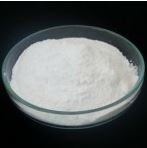
Discover high-quality Calcium Carbonate Nanoparticles and other Nanotechnology Chemicals for your research and industrial needs. Partner with Reinste to advance your material science projects.
Contact Our Experts Today