
Unlocking the Environmental Potential of Nano Calcium Carbonate: Innovations for a Sustainable India
Dive deep into the transformative environmental applications of CaCO3 Nanoparticles, offering sustainable solutions for Indian industries and research to foster a greener, healthier future.
Explore Our NanomaterialsThe Dawn of Sustainable Solutions: Nano Calcium Carbonate in India's Green Revolution
In an era defined by global climate challenges and the urgent need for sustainable development, the role of advanced materials in fostering environmental stewardship has become paramount. India, with its ambitious growth trajectory and a burgeoning focus on ecological balance, stands at the forefront of this green revolution. Within this dynamic landscape, Nano Calcium Carbonate (CaCO3 Nanoparticles) emerges as a highly promising and versatile material, poised to redefine environmental solutions across various sectors. Its unique attributes, derived from its nanoscale morphology, unlock unprecedented possibilities for pollution control, resource efficiency, and waste management. For the discerning Indian researcher, innovator, and industry professional, grasping the profound environmental benefits of nano CaCO3 is not merely academic; it is a strategic imperative for contributing to a resilient and sustainable future.
The inherent characteristics of CaCO3 Nanoparticles – including their high surface area, enhanced reactivity, and biocompatibility – make them ideal candidates for a wide array of nanoparticle environmental applications. From purifying contaminated water bodies to mitigating industrial air emissions and enriching agricultural soils, this sustainable nanomaterial offers efficient and often more economical alternatives to conventional approaches. This comprehensive blog aims to illuminate the scientific principles, practical implementations, and future potential of Nano Calcium Carbonate, with a specific emphasis on its relevance and impact within the Indian context. We will delve into how this remarkable nanomaterial can be strategically employed to address India's unique environmental challenges, simultaneously driving ecological preservation, public health improvements, and economic advancement, thereby solidifying India's position in the global nanotechnology research landscape.
Transformative Benefits for Indian Researchers and Industry Professionals
The strategic integration of Nano Calcium Carbonate into various research and industrial processes offers a multitude of distinct advantages, particularly relevant to India's developmental goals:
- Enhanced Reactivity and Adsorption Capacity: Due to their exceptionally high surface area-to-volume ratio, CaCO3 Nanoparticles exhibit significantly superior adsorption capabilities compared to their bulk counterparts. This makes them extraordinarily effective in selectively binding and removing a wide range of pollutants, including heavy metal ions, organic dyes, and pharmaceutical residues, from aqueous solutions and gaseous streams. This advanced property is a cornerstone for cutting-edge nanoparticle environmental applications, offering more efficient and rapid remediation processes critical for India's diverse industrial effluents.
- Cost-Effectiveness and Abundance: Derived from a naturally abundant mineral, calcium carbonate, the nano form presents an economically viable solution for numerous industrial and environmental challenges. The relatively low raw material cost, combined with the enhanced efficiency of Nano Calcium Carbonate in various processes, can significantly reduce operational expenditures for industries, making sustainable practices more accessible and scalable across India.
- Biocompatibility and Environmental Safety: Nano Calcium Carbonate is generally recognized for its excellent biocompatibility and low toxicity. This characteristic is crucial for applications in sensitive environmental contexts, such as soil remediation and water purification, where the introduction of harmful substances must be avoided. Its benign nature ensures that environmental solutions do not inadvertently create new ecological problems, aligning with India's stringent environmental regulations.
- Versatility Across Diverse Applications: The unique CaCO3 properties at the nanoscale enable its use across an incredibly broad spectrum of applications. Beyond environmental remediation, Calcium Carbonate Nano serves as a crucial filler in polymers and plastics, a pH regulator in chemical processes, an additive in paints and coatings, and even in biomedical applications. This versatility makes it a highly sought-after component in the realm of advanced nanomaterials.
- Improved Material Performance and Durability: When incorporated into polymer composites, Nano Calcium Carbonate significantly enhances mechanical properties such as tensile strength, impact resistance, and stiffness. It also improves thermal stability, optical clarity, and barrier functions, leading to the development of more durable, efficient, and longer-lasting products. This directly supports industries aiming for higher quality and more sustainable product lifecycles.
- Promotion of Sustainable Resource Utilization: By transforming a common mineral into a high-performance sustainable nanomaterial, the utilization of Nano Calcium Carbonate actively contributes to the principles of a circular economy. It champions the efficient use of resources and the reduction of waste, offering a pathway towards more sustainable industrial practices and a reduced environmental footprint, which is vital for India's resource management strategies.
Key Industrial Applications of Nano Calcium Carbonate in Environmental Stewardship
Advanced Wastewater Treatment
Nano Calcium Carbonate is revolutionizing industrial and municipal wastewater treatment. Its ultrafine particles provide an enormous surface area, making them exceptionally efficient in adsorbing and precipitating heavy metals (like lead, cadmium, and chromium), organic pollutants, dyes, and even emerging contaminants from water. This offers a highly effective, low-cost, and environmentally sound solution for water purification, directly addressing the critical need for clean water in India's rapidly urbanizing and industrializing regions. These nanoparticle environmental applications are key to sustainable water management.
Mitigating Air Pollution
In the battle against air pollution, CaCO3 Nanoparticles are proving invaluable. They are extensively used in flue gas desulfurization (FGD) systems, where their high reactivity enables the efficient capture of sulfur dioxide (SO2) and other acidic gases emitted from power plants and industrial facilities. By converting these harmful gases into benign calcium sulfates, Nano Calcium Carbonate plays a significant role in reducing atmospheric pollution and improving air quality, a major public health and environmental challenge in many Indian cities.
Soil Remediation & Sustainable Agriculture
For India's agrarian economy, Nano Calcium Carbonate offers dual benefits. In soil remediation, it helps immobilize heavy metals and other contaminants, preventing their uptake by plants and reducing their entry into the food chain. In sustainable agriculture, it can improve soil structure, regulate pH levels, and enhance nutrient availability and uptake by crops, leading to healthier yields and reduced reliance on synthetic fertilizers. This contributes to long-term soil health and food security, vital aspects of India's agricultural policy.
Sustainable Construction Materials
The construction sector benefits significantly from the inclusion of Nano Calcium Carbonate. When incorporated into concrete, cement, and other building materials, it enhances their strength, durability, and resistance to environmental degradation, such as carbonation and acid attack. This leads to the creation of more sustainable and resilient infrastructure, reducing the need for frequent repairs and minimizing the environmental footprint of construction activities, aligning with India's green building initiatives.
Green Polymer Composites & Packaging
As a high-performance filler, Calcium Carbonate Nano is instrumental in developing advanced polymer composites. It improves mechanical properties, thermal stability, and barrier performance of plastics, enabling the creation of lighter, stronger, and more durable products. In packaging, it can reduce the amount of virgin plastic required and enhance recyclability, contributing to a significant reduction in plastic waste and promoting a more circular economy for sustainable packaging solutions in India.
Carbon Capture and Utilization (CCU)
A frontier area in nanotechnology research involves utilizing Nano Calcium Carbonate for efficient carbon dioxide (CO2) capture and subsequent utilization. Research explores its potential as an adsorbent for direct air capture or post-combustion capture, offering innovative pathways for mitigating greenhouse gas emissions. This emerging application holds immense promise for combating climate change and developing carbon-neutral industrial processes, positioning India as a leader in sustainable chemical technologies.
India's Leap Forward: Trends and Opportunities in Nano Calcium Carbonate Research and Market
India is rapidly solidifying its position as a burgeoning hub for nanotechnology research and innovation, driven by a robust scientific community and supportive governmental policies. The escalating demand for Nano Calcium Carbonate is particularly fueled by the nation's unwavering commitment to achieving its sustainable development goals and the impactful 'Make in India' initiative. This initiative vigorously promotes the indigenous production of advanced materials and technologies, fostering self-reliance and technological leadership. Researchers across India's premier scientific institutions, including IITs and national laboratories, are actively engaged in pioneering nanomaterial synthesis, with a strong emphasis on developing scalable, energy-efficient, and environmentally benign methods for producing high-quality CaCO3 Nanoparticles. This includes exploring novel green chemistry routes that minimize waste generation and reduce the overall ecological footprint of production.
Current trends within the Indian market indicate a significant and growing interest in Nano Calcium Carbonate for its diverse and impactful nanoparticle applications across sectors critical to the nation's economic growth and environmental well-being. The automotive industry, for instance, is increasingly exploring its use in lightweight composites, which directly translates to improved fuel efficiency and a substantial reduction in vehicular emissions. Simultaneously, the burgeoning paint and coatings sector benefits immensely from its ability to enhance product durability, improve aesthetic finish, and facilitate the formulation of low-VOC (Volatile Organic Compound) paints, contributing to healthier indoor air quality. Furthermore, the pharmaceutical and biomedical fields are actively investigating CaCO3 Nanoparticles for innovative drug delivery systems, bone tissue engineering, and biocompatible medical implants, leveraging their unique CaCO3 properties and inherent safety profile.
The Indian government's proactive push for cleaner technologies, coupled with substantial funding allocations for nanotechnology research and development, is creating unprecedented opportunities for dynamic collaborations between academic institutions and industrial enterprises. This synergistic approach is absolutely vital for accelerating the translation of groundbreaking laboratory discoveries into commercially viable products and scalable industrial solutions. Such partnerships are instrumental in positioning India as a global leader in the production and application of advanced nanomaterials. The market for Nano Chemicals, particularly those offering significant environmental benefits of nano CaCO3, is projected for exponential growth, promising a future where cutting-edge science directly contributes to both ecological regeneration and robust economic prosperity. The readily available supply of high-purity Calcium Carbonate Powder as a foundational raw material further strengthens India's competitive advantage in this rapidly evolving and strategically important sector.
Frequently Asked Questions about Nano Calcium Carbonate
What exactly is Nano Calcium Carbonate?
How does Nano Calcium Carbonate contribute to environmental protection?
What are the primary industrial applications of CaCO3 Nanoparticles in India?
Where can I procure high-quality Nano Calcium Carbonate for my projects in India?
Explore Our Related Nano Calcium Carbonate Products

Calcium Carbonate Nanoparticles (25g)
View Product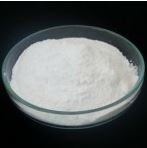
Calcium Carbonate nanoparticles (100g)
View Product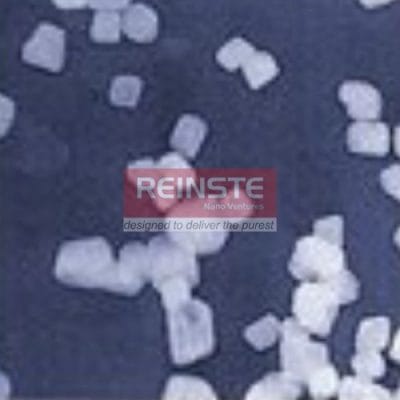
Calcium Carbonate microparticles (ca. 2-3 μm)
View Product
Calcium Carbonate Microparticles, ca. 3um
View ProductReady to Innovate with Advanced Nanomaterials?
Connect with Reinste to discover how our high-quality Nano Calcium Carbonate and other advanced nanomaterials can accelerate your ground-breaking research and industrial applications, driving sustainable progress in India.
Get in Touch Today