
Unlocking Superior Performance: The Role of Nano CaCO3 in Rubber Reinforcement and Polymer Nanocomposites for Indian Industry
Discover how Nano Calcium Carbonate is revolutionizing material science, enhancing the properties of rubber and polymers, and driving innovation across various sectors in India.
Explore NowIntroduction: Nano CaCO3 and its Impact on Indian R&D and Industry
In the dynamic landscape of material science, the quest for advanced materials with superior properties is relentless. Nano Calcium Carbonate (Nano CaCO3) has emerged as a groundbreaking solution, particularly in the realm of rubber reinforcement and polymer nanocomposites. These ultra-fine particles, typically less than 100 nanometers in size, offer a unique combination of high surface area, excellent dispersibility, and chemical inertness, making them an ideal filler for enhancing the performance of various polymeric materials.
For Indian researchers and professionals, understanding the potential of Nano CaCO3 is paramount. India's burgeoning manufacturing sector, coupled with a strong emphasis on indigenous research and development, presents a fertile ground for the adoption of such advanced nanomaterials. From automotive components to construction materials and consumer goods, the demand for high-performance, durable, and cost-effective polymeric products is ever-increasing. Nano CaCO3 provides a strategic advantage, enabling the development of next-generation materials that meet these stringent requirements while fostering innovation within the country's scientific community.
This article delves into the multifaceted aspects of Nano CaCO3, exploring its fundamental properties, the mechanisms by which it reinforces rubber and polymers, and its diverse applications. We will also highlight the specific opportunities and trends relevant to the Indian context, providing valuable insights for those looking to leverage nanotechnology for material advancement.
Key Benefits for Researchers and Industry Professionals
-
Enhanced Mechanical Properties:
Nano CaCO3 significantly boosts the tensile strength, tear resistance, and abrasion resistance of rubber and polymer composites. Its fine particle size allows for a larger surface area-to-volume ratio, facilitating stronger interfacial interactions with the polymer matrix. This leads to a more robust and durable material, crucial for applications requiring high performance under stress, such as tires, conveyor belts, and industrial seals. Researchers can achieve superior material performance with lower filler loading compared to traditional micro-fillers.
-
Improved Processability and Cost-Effectiveness:
The spherical morphology and fine particle size of Nano CaCO3 can improve the flow characteristics of polymer melts, leading to better processability during molding and extrusion. This can reduce processing times and energy consumption. Furthermore, as a relatively inexpensive filler compared to some other nanomaterials, Nano CaCO3 offers a cost-effective way to enhance material properties, providing a competitive edge for manufacturers in the Indian market. Its ability to replace more expensive reinforcing agents without compromising performance is a significant economic advantage.
-
Enhanced Thermal Stability and Flame Retardancy:
Incorporating Nano CaCO3 can contribute to improved thermal stability of polymer composites by acting as a heat sink and promoting char formation during combustion. This can enhance the flame retardant properties of the material, which is critical for applications in construction, electronics, and automotive interiors where safety standards are paramount. For Indian industries, this means developing products that not only perform better but also meet rigorous safety regulations, opening up new market opportunities.
-
Versatility Across Polymer Types:
Nano CaCO3 is highly versatile and can be effectively incorporated into a wide range of polymers, including natural rubber, synthetic rubbers (like SBR, NBR, EPDM), PVC, polypropylene, and polyethylene. This broad compatibility makes it a valuable additive across diverse industries. Researchers can explore its use in various polymer matrices to tailor specific properties, leading to innovative product development and material solutions for complex engineering challenges faced by Indian manufacturing units.
Diverse Applications in Indian Industries
Automotive Sector
In India's rapidly expanding automotive industry, Nano CaCO3 is crucial for manufacturing high-performance tires, engine mounts, seals, and gaskets. It enhances the durability, wear resistance, and noise-vibration-harshness (NVH) properties of rubber components, leading to safer, more efficient, and longer-lasting vehicles. The improved mechanical strength and thermal stability contribute to better overall vehicle performance and reduced maintenance costs, aligning with the industry's focus on quality and longevity.
Construction Materials
Nano CaCO3 finds extensive use in construction for PVC pipes, cables, sealants, and coatings. It improves the impact strength, weatherability, and dimensional stability of these materials, making them more resilient to India's diverse climatic conditions. Its inclusion can also reduce material density without compromising strength, offering lightweight yet robust solutions for modern infrastructure projects. This directly supports the 'Smart Cities' initiative and the demand for sustainable building materials.
Footwear and Consumer Goods
The footwear industry benefits from Nano CaCO3 in sole compounds, where it enhances flexibility, abrasion resistance, and comfort. In various consumer goods, from household appliances to sporting equipment, Nano CaCO3-reinforced plastics offer improved aesthetic appeal, better surface finish, and increased durability. This allows Indian manufacturers to produce high-quality, competitive products that meet global standards and consumer expectations for performance and longevity.
Industrial Rubber Products
For industrial applications such as conveyor belts, hoses, and diaphragms, Nano CaCO3 provides superior reinforcement, leading to products with extended service life and reduced operational downtime. Its ability to impart high stiffness and excellent fatigue resistance makes it invaluable in demanding industrial environments, ensuring reliability and efficiency in manufacturing and processing plants across India. This translates to significant operational savings and improved productivity for various industries.
Emerging Trends and Opportunities in India's Nanomaterial Landscape
India is rapidly advancing in the field of nanotechnology, with significant government backing for research and development initiatives. The market for Nano CaCO3 and other nanomaterials is projected to witness substantial growth, driven by increasing demand from the automotive, construction, and packaging sectors. This presents immense opportunities for both established industries and emerging startups to innovate and integrate nano fillers into their product lines.
A key trend in India is the focus on sustainable and eco-friendly polymer nanocomposites. Researchers are exploring ways to synthesize Nano CaCO3 using greener methods and to incorporate it into biodegradable polymers, aligning with global efforts towards a circular economy. This not only addresses environmental concerns but also opens up new markets for sustainable products, offering a competitive edge to Indian manufacturers.
Furthermore, there is a growing emphasis on precision nanoparticle synthesis and surface modification techniques to optimize the dispersion and performance of Nano CaCO3 in various matrices. Academic institutions and industrial R&D centers are collaborating to develop novel nanochemistry approaches to tailor the properties of these advanced materials for specific applications. This collaborative ecosystem is fostering a vibrant environment for nanocomposite research and commercialization.
The 'Make in India' initiative further boosts the indigenous production and application of nanotechnology. Companies investing in the research and manufacturing of Nano CaCO3 for rubber reinforcement stand to benefit from government incentives and a growing domestic market. This strategic alignment positions India as a key player in the global material science arena, driving innovation and economic growth.
Frequently Asked Questions about Nano CaCO3
Nano Calcium Carbonate (Nano CaCO3) refers to calcium carbonate particles with dimensions typically below 100 nanometers. In rubber reinforcement, these nanoparticles act as highly effective fillers, significantly enhancing the mechanical properties of rubber, such as tensile strength, tear resistance, abrasion resistance, and hardness. Their extremely small size and high surface area allow for better dispersion within the polymer matrix and stronger interfacial interactions compared to conventional fillers, leading to superior performance in various applications.
The primary difference lies in particle size. Conventional calcium carbonate fillers are typically in the micrometer range, while Nano CaCO3 particles are in the nanometer range. This size difference leads to vastly different properties. Nano CaCO3 offers a much larger surface area-to-volume ratio, enabling superior reinforcement, better processability, and often improved optical properties (transparency) in polymer nanocomposites. It can also lead to reduced filler loading while achieving desired properties, making it a cost-effective solution in many cases.
Using Nano CaCO3 in polymer nanocomposites offers several advantages, including enhanced tensile strength, improved tear and abrasion resistance, increased modulus, better dimensional stability, and reduced material density. It can also improve thermal stability and flame retardancy. For specific applications, it can help achieve better surface finish and rheological properties, which are crucial for processing. Its versatility makes it suitable for a wide range of polymers, from natural rubber to synthetic elastomers.
Yes, incorporating Nano CaCO3 effectively can present challenges, primarily related to dispersion. Nanoparticles tend to aggregate due to their high surface energy, which can hinder their reinforcing effect. Proper surface modification of Nano CaCO3 (e.g., with stearic acid or silane coupling agents) and optimized mixing techniques are crucial to achieve uniform dispersion and maximize performance. Researchers often focus on these aspects to unlock the full potential of Nano CaCO3 in rubber compounds.
Explore Related Products

Calcium Carbonate Nanoparticles (25g)
View Product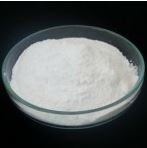
Calcium Carbonate nanoparticles (100g)
View Product
Calcium Carbonate Microparticles, ca. 3um
View Product
Calcium Carbonate Microparticles, ca. 6um
View ProductReady to Explore Nano CaCO3 Solutions for Your Research or Industry?
Connect with Reinste to discover our range of high-quality nanomaterials and advanced solutions tailored for your specific needs in polymer science and rubber technology.
Get in Touch Today