Nanoparticle Calcium Carbonate Market: Trends, Applications, and Innovation for Indian Researchers & Professionals
Dive deep into the evolving landscape of Nano CaCO3, its transformative applications, and the groundbreaking nanotechnology innovations poised to revolutionize various industries across India.
Explore OpportunitiesUnveiling the Nanoparticle Calcium Carbonate Revolution in India
The global scientific and industrial landscape is constantly evolving, driven by innovations in materials science and nanotechnology. Among these, Nanoparticle Calcium Carbonate (Nano CaCO3) stands out as a material of immense promise, particularly for a rapidly developing nation like India. With its unique properties stemming from its nanoscale dimensions, Nano CaCO3 is not just a conventional filler; it's a sophisticated performance enhancer, a strategic cost-reducer, and a potent catalyst for innovation across a myriad of sectors. For Indian researchers, scientists, and industry professionals, gaining a deep understanding of the dynamics within the burgeoning Nanoparticle Calcium Carbonate Market is absolutely crucial for staying ahead in the competitive global arena and contributing to indigenous technological advancements.
India's robust and expanding R&D infrastructure, coupled with a burgeoning manufacturing sector, presents a fertile ground for the widespread adoption and continuous advancement of Nano CaCO3 Applications. From significantly enhancing the durability and lightweighting potential of plastics used in critical automotive components and sustainable packaging, to meticulously improving the rheology and protective qualities of paints and high-performance coatings, the impact of these Calcium Carbonate Nanoparticles is profound and far-reaching. This comprehensive blog post aims to provide an in-depth overview, meticulously delving into the current Nanomaterials Trends, the exciting and diverse potential of Calcium Carbonate Nanocomposites, and the broader, transformative implications for Nanotechnology Innovation specifically within the dynamic Indian context. We will thoroughly explore how these advanced nanomaterials are not only transforming and optimizing existing products and processes but are also actively paving the way for entirely new functionalities, superior performance characteristics, and increasingly sustainable solutions that align with India's long-term economic and environmental objectives.
The journey into the nanoscale world of calcium carbonate reveals a material that, despite its common and abundant origins, offers truly extraordinary capabilities. Its exceptionally high surface area, ultra-fine particle size, and unique crystalline structures enable it to impart superior mechanical strength, enhanced optical properties, and improved processability to various material matrices. As India continues its impressive trajectory towards becoming a global manufacturing powerhouse and a leading research and innovation hub, the strategic and widespread integration of Nano CaCO3 will undoubtedly play a pivotal role in achieving significantly higher performance standards, greater economic efficiencies, and a more sustainable industrial footprint. This detailed exploration will serve as an invaluable resource for forward-thinking scientists, visionary engineers, and proactive industry leaders who are keen on harnessing the transformative power of Advanced Nanomaterials to drive India's future growth.
Why Nanoparticle Calcium Carbonate is a Game-Changer for Indian R&D
Indian researchers and scientists are at the forefront of nanomaterials research. Nano CaCO3 offers a compelling suite of benefits:
- Enhanced Material Properties: Enables the development of Calcium Carbonate Nanocomposites with superior mechanical strength, stiffness, impact resistance, and thermal stability compared to conventional fillers.
- Cost-Effectiveness: As a naturally abundant mineral, Nano CaCO3 offers an economical alternative to more expensive synthetic nanoparticles, making advanced material development more accessible.
- Versatile Functionality: Can be surface-modified to achieve specific functionalities, allowing for tailored applications in diverse fields from polymers to biomedical engineering.
- Improved Processability: Its fine particle size and uniform dispersion can lead to better flow properties in polymer melts and improved surface finish in final products.
- Sustainable Solutions: Contributes to lightweighting initiatives, reducing material consumption and energy usage, aligning with India's sustainable development goals.
- Broad Application Spectrum: Opens avenues for research in areas like drug delivery, water purification, advanced coatings, and next-generation packaging materials.
- Local Sourcing Potential: India has significant calcium carbonate reserves, fostering self-reliance in the production of these critical Nano Chemicals.
- Innovation Catalyst: Drives new research directions in Nanomaterials Research and Nanotechnology Applications, positioning India as a leader in advanced materials.
Transformative Nano CaCO3 Applications Across Industries
The unique attributes of Nanoparticle Calcium Carbonate translate into groundbreaking applications across various industrial sectors:
Plastics & Polymers
In the plastics industry, Nano CaCO3 acts as a superior reinforcing filler. It significantly improves tensile strength, impact resistance, and stiffness of polymers like PVC, PP, and PE. This leads to lighter yet stronger plastic components for automotive, construction, and packaging, reducing material usage and enhancing product lifespan. Its fine dispersion also improves surface finish and dimensional stability.
Paints & Coatings
Calcium Carbonate Nanoparticles enhance the performance of paints and coatings by improving rheology, opacity, and weatherability. They can reduce the need for titanium dioxide, a more expensive pigment, while providing excellent hiding power and gloss retention. This makes them ideal for high-performance architectural, industrial, and automotive coatings.
Paper & Pulp Industry
Used as a filler and coating pigment, Nano CaCO3 improves paper brightness, opacity, and printability. Its high surface area allows for better ink absorption and reduced paper weight, leading to more efficient and sustainable paper production processes. This is particularly relevant for high-quality printing papers and packaging materials.
Rubber & Elastomers
In rubber formulations, Nanoparticle Calcium Carbonate acts as a semi-reinforcing filler, improving tensile strength, tear resistance, and abrasion resistance. It's crucial for products like tires, conveyor belts, and seals, offering a cost-effective way to enhance durability and performance without compromising elasticity.
Pharmaceuticals & Cosmetics
Due to its biocompatibility and controlled release capabilities, Nano CaCO3 is being explored in drug delivery systems, bone regeneration, and as a component in dental materials. In cosmetics, it can act as a mild abrasive, opacifier, and rheology modifier in various formulations.
Adhesives & Sealants
Advanced Nanomaterials like Nano CaCO3 improve the mechanical properties, thixotropy, and adhesion of various adhesive and sealant formulations. They help control viscosity, prevent sagging, and enhance the overall durability and bond strength of the final product.
India's Nanoparticle Calcium Carbonate Landscape: Opportunities & Future Trends
The Nanoparticle Calcium Carbonate Market in India is poised for significant and sustained growth, driven by a confluence of favorable factors. The government's impactful "Make in India" initiative, which encourages domestic manufacturing and innovation, coupled with substantial increasing investments in infrastructure development and a rapidly expanding manufacturing base, collectively generates a robust and ever-growing demand for high-performance, yet cost-effective, advanced materials. Indian industries across various sectors are increasingly recognizing and actively adopting cutting-edge Nanotechnology Applications to not only enhance product quality and performance but also to reduce their environmental footprint and gain a crucial competitive edge in both domestic and international markets. This proactive approach has significantly fueled intensive research into more efficient and sustainable CaCO3 Synthesis methods and the development of sophisticated Nanoparticle Characterization techniques within the country's leading research institutions and industrial R&D centers.
One of the most prominent Nanomaterials Trends observed in India is the strong focus on developing highly functionalized Nano CaCO3. Researchers are diligently exploring and refining various surface modification techniques to precisely tailor the nanoparticles for very specific and demanding applications. This includes, for instance, improving their compatibility with hydrophobic polymers for advanced composites or imparting novel properties such as antimicrobial activity for healthcare and packaging solutions. This remarkable customization capability is unlocking unprecedented possibilities for Nanocomposites in incredibly diverse sectors, ranging from smart textiles with integrated functionalities to cutting-edge biomedical devices designed for targeted therapies. The growing emphasis on sustainable and eco-friendly industrial practices across India also positions Nano CaCO3 as a highly preferred choice, given its natural abundance, non-toxicity, and significant potential to replace more expensive, energy-intensive, or environmentally harmful synthetic alternatives.
Furthermore, the accelerating adoption of the circular economy concept throughout India is driving an escalating demand for materials that actively contribute to product longevity, ease of recycling, and overall resource efficiency. Calcium Carbonate Nanoparticles, by substantially enhancing the durability, strength, and lifespan of plastics, rubbers, and other composite materials, play a profoundly crucial role in extending product lifecycles and significantly reducing waste generation. This perfectly aligns with India's ambitious environmental protection goals and offers immense opportunities for innovative manufacturers to develop greener, more sustainable product lines. The synergistic collaboration between leading academic institutions, specialized research laboratories, and forward-thinking industry players is rapidly accelerating the translation of fundamental Nanomaterials Research into commercially viable and marketable products, thereby solidifying India's emerging position as a key leader in the global Nanotech Innovation landscape. Continued strategic investment in advanced manufacturing techniques for Nano Chemicals, coupled with the cultivation of a growing pool of highly skilled professionals in nanotechnology, ensures that India will continue to be a pivotal and influential player in shaping the global nanoparticle calcium carbonate market trends for decades to come. The future promises exciting and transformative breakthroughs, with Nano CaCO3 remaining at the very core of many next-generation materials and advanced technologies.
Frequently Asked Questions about Nanoparticle Calcium Carbonate
Nanoparticle Calcium Carbonate (Nano CaCO3) refers to calcium carbonate particles with dimensions typically between 1 and 100 nanometers. Due to their extremely small size, they exhibit unique properties like high surface area, enhanced reactivity, and improved dispersion. Their primary uses span across industries such as plastics, rubber, paints, paper, pharmaceuticals, and cosmetics, where they act as reinforcing fillers, rheology modifiers, and opacifying agents.
The Nanoparticle Calcium Carbonate Market holds significant promise for Indian industries due to its cost-effectiveness, abundant raw material availability, and versatility. Indian manufacturers can leverage Nano CaCO3 to produce advanced materials with superior performance, reduce production costs, and foster innovation in sectors like automotive, construction, packaging, and healthcare, aligning with the 'Make in India' initiative and promoting self-reliance in advanced materials.
Emerging trends in Nano CaCO3 applications include their increasing use in biodegradable plastics to improve mechanical properties and reduce environmental impact, development of smart coatings with enhanced scratch resistance and anti-corrosion properties, and integration into biomedical applications like drug delivery systems and bone tissue engineering. Research is also focused on synthesizing functionalized Nano CaCO3 for specific applications, further expanding its utility.
Nanoparticle Calcium Carbonate contributes to sustainable development by enabling the creation of lightweight materials, thereby reducing energy consumption in transportation and manufacturing. It can replace more expensive or environmentally harmful additives, leading to greener production processes. Furthermore, its role in improving the durability and lifespan of products like plastics and coatings reduces waste, supporting a circular economy. Its abundance as a natural mineral also makes it a sustainable alternative to synthetic fillers.
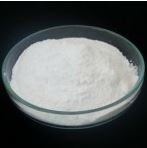
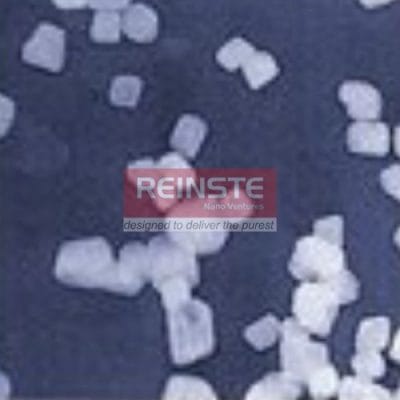
Explore Related Nanoparticle Calcium Carbonate Products


Ready to Innovate with Nanoparticle Calcium Carbonate?
Unlock the potential of Nano CaCO3 for your research or industrial applications. Whether you're exploring new Nanotechnology Innovations or optimizing existing processes, Reinste and Hiyka offer a range of high-quality Calcium Carbonate Nanoparticles and expert support.
Get in Touch Today