
Nano Calcium Carbonate (Nano CaCO3): Revolutionizing Indian R&D and Industry
Unlocking the potential of nanoscale materials, this guide explores the transformative impact of Nano CaCO3 on various sectors, from advanced materials to sustainable solutions, tailored for Indian researchers and professionals.
Explore NowIntroduction to Nano Calcium Carbonate: A Game Changer for India
In the rapidly evolving landscape of materials science and engineering, Nano Calcium Carbonate (Nano CaCO3) stands out as a material of immense promise. With particles typically ranging from 1 to 100 nanometers, Nano CaCO3 exhibits properties vastly superior to its conventional micro-sized counterparts. This nanoscale advantage translates into enhanced performance across a myriad of applications, from reinforcing polymers to improving the efficacy of pharmaceuticals. For Indian researchers and professionals, understanding and harnessing the power of Nano CaCO3 is not just an academic pursuit but a strategic imperative for innovation and competitive advantage in the global market.
India's robust scientific community and burgeoning industrial sectors are increasingly recognizing the potential of nanomaterials. Nano CaCO3, in particular, offers cost-effective solutions for enhancing product quality and developing novel materials. Its high surface area, unique crystal structures, and excellent dispersibility make it an ideal candidate for advanced applications in plastics, rubber, paints, paper, and even biomedical fields. This blog aims to provide a comprehensive overview of Nano CaCO3, its synthesis, properties, diverse applications, and the exciting opportunities it presents for India's scientific and industrial future.
The journey into the nano-world of calcium carbonate reveals a substance that is both versatile and indispensable. From enhancing the durability of construction materials to improving the gloss of automotive paints, Nano CaCO3 is silently revolutionizing industries. Its biogenic forms are also opening new avenues in sustainable materials and biocompatible applications, aligning perfectly with India's growing focus on green technologies and advanced research.
Unlocking Potential: Benefits of Nano CaCO3 for Indian Researchers
Nano Calcium Carbonate offers a plethora of advantages that are particularly relevant for researchers and industries in India:
- Enhanced Mechanical Properties: Nano CaCO3 acts as an excellent reinforcing filler, significantly improving the tensile strength, impact resistance, and stiffness of polymers, plastics, and rubber, crucial for developing high-performance materials.
- Cost-Effectiveness: As a naturally abundant mineral, Nano CaCO3 provides a cost-effective alternative to more expensive synthetic fillers, helping Indian industries reduce production costs without compromising on quality.
- Improved Surface Finish and Aesthetics: Its fine particle size leads to smoother surfaces, better gloss, and reduced shrinkage in molded products, making it ideal for paints, coatings, and automotive applications.
- Versatile Dispersibility: Surface-modified Nano CaCO3 can be easily dispersed in both aqueous and organic media, ensuring compatibility with a wide range of material systems and processing techniques.
- Optical Clarity and Opacity Control: Depending on the application, Nano CaCO3 can be engineered to either enhance transparency in films or provide superior opacity in paints and paper, offering versatile optical control.
- Biocompatibility and Sustainability: Biogenic Nano CaCO3, derived from natural sources, offers excellent biocompatibility, opening doors for applications in medicine, drug delivery, and sustainable materials, aligning with India's focus on green chemistry.
- Fire Retardancy: In certain polymer composites, Nano CaCO3 can contribute to improved flame retardancy, an essential property for safety in various industrial products.
- Rheological Modification: It can significantly alter the rheological properties of liquids and melts, aiding in easier processing and improved flow characteristics in industries like paints and plastics.
- Reduced Environmental Impact: Utilizing Nano CaCO3 as a filler can reduce the overall material consumption of polymers, contributing to lighter products and potentially lower carbon footprints, supporting India's environmental goals.
Diverse Applications of Nano CaCO3 Across Indian Industries
The versatility of Nano CaCO3 makes it an indispensable material across a wide array of industrial sectors in India. Its unique properties allow for significant improvements in product performance and manufacturing efficiency.
Plastics and Polymers
Nano CaCO3 is a paramount filler in the plastics industry, particularly in PVC, PP, and PE. It enhances mechanical strength, stiffness, impact resistance, and dimensional stability. For Indian manufacturers, this means producing more durable and cost-effective plastic products, from pipes and profiles to automotive components and packaging materials. It also improves processability, allowing for faster cycle times and reduced energy consumption.
Paints and Coatings
In the paints and coatings sector, Nano CaCO3 serves multiple functions. It acts as an extender, improving opacity, whiteness, and brightness while reducing titanium dioxide consumption. It also enhances rheological properties, scrub resistance, and weatherability. Indian paint manufacturers are increasingly adopting Nano CaCO3 to produce high-quality, durable, and aesthetically superior paints for architectural, industrial, and automotive applications.
Rubber and Elastomers
As a reinforcing and semi-reinforcing filler, Nano CaCO3 improves the mechanical properties of natural and synthetic rubbers. It enhances tensile strength, tear strength, and abrasion resistance, making rubber products more durable and long-lasting. This is vital for the Indian automotive, tire, and industrial rubber goods sectors, where performance and reliability are critical.
Paper Manufacturing
In the paper industry, Nano CaCO3 is used as a filler and coating pigment. It improves paper brightness, opacity, smoothness, and printability while reducing wood pulp consumption. This contributes to more sustainable and cost-effective paper production, which is a significant advantage for India's large paper and packaging industry.
Adhesives and Sealants
Nano CaCO3 enhances the rheology, thixotropy, and mechanical strength of various adhesives and sealants. It improves bond strength, reduces shrinkage, and provides better dimensional stability. This is crucial for construction, automotive, and general assembly applications across India.
Pharmaceuticals and Cosmetics
Due to its high purity and biocompatibility, Nano CaCO3 is used in pharmaceuticals as a calcium supplement, antacid, and excipient. In cosmetics, it functions as a filler, opacifier, and abrasive. Indian pharmaceutical and cosmetic companies are exploring advanced applications, including drug delivery systems and specialized skincare formulations, leveraging the unique properties of Nano CaCO3.
Nano CaCO3 in India: Emerging Opportunities and Future Trends
India's growing economy, coupled with a strong emphasis on 'Make in India' and 'Atmanirbhar Bharat' initiatives, creates a fertile ground for the advancement and adoption of Nano Calcium Carbonate technologies. The demand for high-performance, sustainable, and cost-effective materials is driving innovation in the Nano CaCO3 sector.
Key Trends and Opportunities:
- Sustainable Synthesis Routes: There's a significant trend towards eco-friendly and energy-efficient methods for Nano CaCO3 synthesis, including biogenic routes using microorganisms or industrial waste, aligning with India's environmental goals.
- Surface Modification for Tailored Applications: Customizing the surface chemistry of Nano CaCO3 with various organic and inorganic modifiers is a key trend to enhance its compatibility with specific polymer matrices and achieve desired functionalities, crucial for specialized applications in India's diverse industries.
- High-Performance Composites: The demand for advanced materials in sectors like automotive, aerospace, and construction is propelling research into Nano CaCO3 composites. These composites offer superior strength-to-weight ratios and enhanced durability, vital for India's infrastructure development.
- Biomedical and Pharmaceutical Innovations: With its biocompatibility, Nano CaCO3 is being explored for novel drug delivery systems, bone tissue engineering, and medical implants. This area presents significant opportunities for India's thriving biotechnology and pharmaceutical research.
- Smart Materials and Nanotechnology Integration: Integrating Nano CaCO3 into smart materials for sensors, functional coatings, and energy storage devices is an emerging area. Indian research institutions are actively pursuing these advanced nanotechnology applications.
- Waste Valorization: Utilizing industrial by-products and waste materials as precursors for Nano CaCO3 synthesis not only reduces waste but also offers a sustainable and economical production pathway, a critical aspect for resource-conscious India.
The future of Nano Calcium Carbonate in India is bright, characterized by continuous research, industrial adoption, and a strategic focus on innovation that leverages its unique properties to address contemporary challenges and create new opportunities across various sectors.
Frequently Asked Questions about Nano Calcium Carbonate
Nano Calcium Carbonate, or Nano CaCO3, refers to calcium carbonate particles engineered to be in the nanoscale range, typically between 1 to 100 nanometers. Due to their extremely small size, these nanoparticles exhibit unique physical and chemical properties compared to their bulk counterparts, including high surface area, enhanced reactivity, and improved dispersion in various matrices. This makes them highly valuable in a multitude of industrial and scientific applications.
The synthesis of Nano CaCO3 can be achieved through various methods, including precipitation (carbonation method), sol-gel processes, hydrothermal synthesis, and biogenic routes. The most common industrial method involves controlled precipitation by reacting a calcium source (like calcium hydroxide or calcium chloride) with a carbon dioxide source (like CO2 gas or sodium carbonate) in a solution. Precise control over reaction parameters such as temperature, pH, concentration, and the presence of surfactants or modifiers is crucial to achieve uniform particle size and morphology.
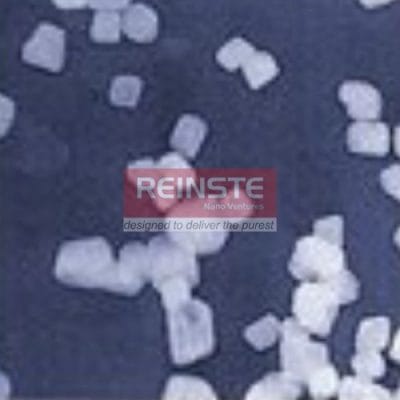
Key properties of Nano CaCO3 include an exceptionally high surface area to volume ratio, leading to enhanced reactivity and improved interfacial adhesion in composites. They offer superior whiteness, high purity, and excellent rheological properties. Their nanoscale dimensions allow for improved mechanical strength, impact resistance, and surface finish in polymers, as well as better optical properties and barrier functions. Different morphologies (e.g., spherical, spindle-shaped, cubic) also impart distinct properties.
In India, Nano CaCO3 finds extensive applications across various sectors. It is widely used as a filler in plastics (PVC, PP, PE) to enhance mechanical properties, reduce costs, and improve processability. In the rubber industry, it acts as a reinforcing agent. It's crucial in paints and coatings for improved opacity, gloss, and weather resistance. Other significant applications include paper manufacturing, adhesives, sealants, pharmaceuticals, cosmetics, and as a component in construction materials for enhanced durability and strength. Its biogenic form is also explored in biomedical fields.
The primary difference lies in particle size. Conventional Calcium Carbonate (ground or precipitated) typically has particle sizes in the micrometer range, while Nano CaCO3 particles are in the nanometer range. This size difference leads to vastly different properties. Nano CaCO3 offers a much higher surface area, leading to superior reinforcement, impact strength, and surface finish in materials. It also provides better optical clarity, improved rheology, and enhanced reactivity, making it suitable for high-performance applications where conventional CaCO3 might fall short.
Future trends for Nano CaCO3 in India point towards increased demand in high-performance composites, smart materials, and sustainable applications. There's growing interest in developing surface-modified Nano CaCO3 for specific functionalities, exploring biogenic synthesis routes for eco-friendly production, and expanding its use in advanced applications like drug delivery systems, wastewater treatment, and CO2 capture technologies. The focus will be on cost-effective production, tailored properties, and integration into India's rapidly expanding manufacturing and research sectors.
Related Products: Explore Our Calcium Carbonate Range
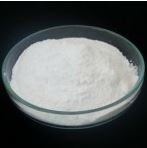
Discover high-quality Calcium Carbonate products from Reinste and Hiyka, essential for your research and industrial applications. We offer a range of Nano and Micro Calcium Carbonate tailored to various needs.


Ready to Advance Your Research with Nano CaCO3?
Connect with our experts to explore custom solutions and high-quality Nano Calcium Carbonate products for your specific needs.
Get in Touch TodayContact Us
Have questions or need specialized Nano CaCO3 products? Fill out the form below, and our team will get back to you promptly.