Nano CaCO3: Unlocking Future Innovations for Indian Industry & Research
Explore the transformative potential of Calcium Carbonate Nanoparticles in diverse industrial sectors and cutting-edge research, driving innovation across India.
Learn MoreOverview: The Rise of Nano CaCO3 in Indian Innovation
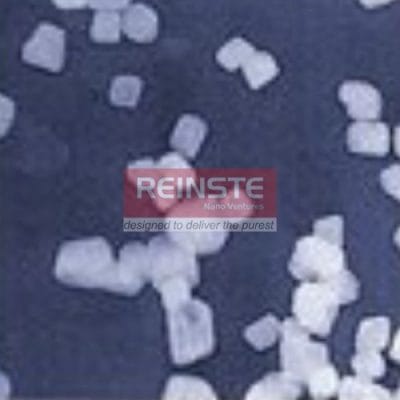
Nano Calcium Carbonate (Nano CaCO3) represents a paradigm shift in material science, offering unparalleled opportunities for innovation across various industries. With particles typically ranging from 1 to 100 nanometers, Nano CaCO3 exhibits unique properties that set it apart from its micro-sized counterparts. Its high surface area-to-volume ratio, enhanced reactivity, and superior dispersion capabilities make it an indispensable component in advanced material formulations. For Indian researchers and industries, the adoption of Nano CaCO3 is not just about material improvement; it's about fostering indigenous innovation, boosting product performance, and contributing to a more sustainable future. The unique crystalline structures and controlled morphologies achievable at the nanoscale allow for precise engineering of material properties, opening doors to applications previously deemed impossible with conventional materials.
India's rapidly evolving R&D landscape and burgeoning industrial sectors are increasingly recognizing the strategic importance of nanotechnology. Nano CaCO3, as a versatile and cost-effective nanomaterial, is at the forefront of this revolution. From enhancing the durability of plastics to improving the optical properties of paints, its applications are diverse and impactful, promising to redefine product standards and manufacturing processes within the nation. The government's push for advanced manufacturing and research excellence further accelerates the integration of such cutting-edge materials, positioning India as a key player in the global nanotechnology arena. This foundational understanding of Nano CaCO3 is crucial for both academic exploration and industrial implementation, driving a new era of material innovation.
Key Benefits for Indian Researchers and Professionals
-
•
Enhanced Material Properties: Nano CaCO3 significantly improves the mechanical strength, impact resistance, and thermal stability of polymers, composites, and other materials, leading to more durable and high-performance products.
-
•
Cost-Effectiveness & Sustainability: By acting as a high-performance filler, it can reduce the overall material cost while enhancing product attributes. Its use can also contribute to lighter products and more efficient manufacturing processes, aligning with sustainable development goals.
-
•
Versatility in Applications: Its unique nanoscale properties allow for seamless integration into diverse matrices, including plastics, rubber, paints, paper, and even advanced pharmaceutical formulations, offering a broad spectrum of utility.
-
•
Novel Product Development: Researchers can leverage Nano CaCO3 to create innovative products with improved functionalities, such as self-cleaning surfaces, advanced drug delivery systems, and next-generation packaging materials.
-
•
Support for Indigenous Research: The availability and growing understanding of Nano CaCO3 empower Indian scientists and engineers to conduct cutting-edge research, develop patented technologies, and contribute to global scientific advancements in nanotechnology.
-
•
Improved Processability: Its fine particle size and controlled morphology can lead to better dispersion, reduced viscosity, and improved flow characteristics in manufacturing processes, optimizing production efficiency.
Transformative Industrial Applications of Nano CaCO3
Polymers & Plastics Industry
Nano CaCO3 serves as an excellent reinforcing filler in polymers and plastics, significantly enhancing tensile strength, impact resistance, and stiffness. It also improves surface finish and dimensional stability, making it ideal for automotive parts, packaging, and construction materials.
Paints & Coatings Sector
In paints and coatings, Nano CaCO3 improves opacity, brightness, and whiteness. It also acts as a rheology modifier, enhances scrub resistance, and provides UV protection, leading to more durable and aesthetically pleasing finishes for architectural and industrial applications.
Adhesives & Sealants
For adhesives and sealants, Nano CaCO3 is crucial for controlling viscosity, improving bonding strength, and enhancing flexibility. It helps in achieving desired rheological properties and contributes to the overall performance and longevity of the adhesive bond.
Paper Manufacturing
The paper industry utilizes Nano CaCO3 as a high-performance filler and coating pigment. It improves paper brightness, opacity, smoothness, and printability, while also reducing raw material costs and environmental impact.
Rubber Industry
As a reinforcing filler in rubber, Nano CaCO3 enhances tear strength, tensile strength, and abrasion resistance. It's used in tires, hoses, gaskets, and other rubber products to improve performance and extend lifespan.
Pharmaceuticals & Cosmetics
In advanced applications, Nano CaCO3 is explored for drug delivery systems, as an excipient in tablets, and as a natural UV filter in cosmetics. Its biocompatibility and high surface area offer exciting possibilities for novel formulations.
India's Nanotech Horizon: Opportunities and Future Trends for Nano CaCO3
The future outlook for Nano CaCO3 in India is exceptionally promising, driven by a confluence of factors including robust government support for scientific research, increasing industrial demand for advanced materials, and a growing pool of skilled professionals. India's "Make in India" initiative and focus on self-reliance ('Atmanirbhar Bharat') are creating fertile ground for the domestic production and application of cutting-edge nanomaterials like Calcium Carbonate Nanoparticles. This emphasis on local innovation is fostering a vibrant ecosystem for Nanomaterials Chemistry and Nano Chemical Synthesis, leading to a reduction in reliance on imports and strengthening the national industrial base. The strategic importance of these materials is further highlighted by their potential to address critical challenges in various sectors.
Key trends indicate a surge in research and development activities focused on tailoring Nano CaCO3 for specific high-value applications. This includes the creation of advanced nanocomposites for aerospace and defense, where lightweight yet strong materials are paramount. Furthermore, Nano CaCO3 is being explored for sustainable solutions in agriculture, such as controlled-release fertilizers and soil remediation. The integration of artificial intelligence and machine learning in CaCO3 Research and Nanoparticle Science is accelerating discovery and optimization processes, allowing for faster development of new formulations and applications. This data-driven approach is revolutionizing how researchers approach Material Nanotechnology.
The push towards green nanotechnology means that environmentally friendly synthesis methods for Nano CaCO3 are gaining significant traction, aligning with global sustainability goals and India's commitment to a cleaner environment. Researchers are actively developing methods that minimize energy consumption and waste generation. Collaboration between academic institutions, research laboratories, and industrial players is crucial for translating laboratory breakthroughs into commercial success, forming strong public-private partnerships. With continued investment in infrastructure and human capital, India is poised to become a global leader in Industrial Nanotech, with Nano CaCO3 playing a pivotal role in this transformative journey. The demand for advanced materials in sectors like automotive, construction, electronics, and even biomedical applications will further fuel the growth of Nano CaCO3 applications, ensuring a dynamic and impactful future for this versatile nanomaterial in the Indian market.
Frequently Asked Questions about Nano CaCO3


Ready to Integrate Nano CaCO3 into Your Innovations?
Connect with Reinste and Hiyka to discover premium quality Nano Calcium Carbonate and other advanced nanomaterials tailored for your research and industrial needs.