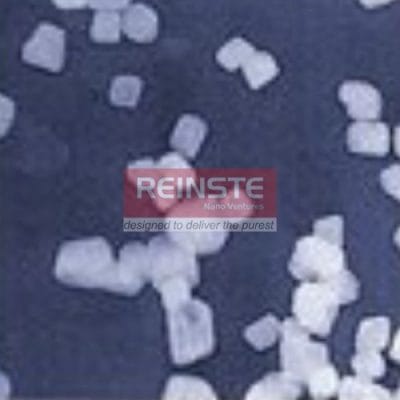
');" data-bg="https://hiyka.com/wp-content/uploads/2020/02/c06109c2-calcium-carbonate-nanoparticles.jpg" aria-labelledby="hero-title">

Nano CaCO3: Revolutionizing Materials Science for Indian Innovators

Explore the profound impact of Calcium Carbonate Nanoparticles on various industries and discover their potential to drive innovation in India's research and development landscape.

Learn More

Introduction to Nano Calcium Carbonate: A Game-Changer for Indian R&D

In the rapidly evolving landscape of materials science, Nano Calcium Carbonate (Nano CaCO3) stands out as a pivotal innovation, offering unprecedented opportunities for researchers and industries in India. These Calcium Carbonate Nanoparticles, characterized by their ultra-fine size and unique surface properties, are transforming traditional applications and paving the way for novel advancements across various sectors. For Indian researchers and professionals, understanding the nuances of Nano CaCO3 is not just an academic pursuit but a strategic imperative to foster indigenous innovation and compete globally.

The journey of nanomaterials in India is gaining significant momentum, with a strong emphasis on developing sustainable and high-performance solutions. Nano CaCO3, a versatile nanomaterial, fits perfectly into this vision. Its exceptional reinforcing, optical, and rheological properties make it an indispensable component in everything from advanced plastics and coatings to pharmaceuticals and construction materials. This blog delves into the scientific and industrial relevance of Nano CaCO3, highlighting its manufacturing process, diverse applications, and the immense potential it holds for India's scientific and economic growth.

As India pushes for self-reliance and technological advancement, the role of nanotechnology becomes increasingly critical. Nano CaCO3 exemplifies how nanoscale materials can lead to macro-scale impact, offering solutions that are not only efficient but also environmentally friendly. Join us as we explore the fascinating world of nanoscale materials and uncover how Nano CaCO3 is poised to revolutionize various industries, providing Indian innovators with the tools to build a brighter, more sustainable future.

Unlocking Potential: Benefits of Nano CaCO3 for Indian Researchers

For Indian researchers and professionals, integrating Nano CaCO3 into their work presents a myriad of advantages, enhancing both the scientific rigor and commercial viability of their projects.

Enhanced Material Properties

Nano CaCO3 significantly improves the mechanical strength, impact resistance, and surface finish of polymers, rubber, and other composites. Its small particle size allows for better dispersion and interaction at the molecular level, leading to superior performance characteristics for nano composites.

Cost-Effectiveness and Sustainability

As a naturally abundant and relatively inexpensive material, Nano CaCO3 offers a cost-effective alternative to more expensive fillers while maintaining or even improving product performance. This aligns with India's focus on sustainable and economical manufacturing practices.

Versatile Applications

From advanced coatings and adhesives to pharmaceuticals and food packaging, the versatility of Nano CaCO3 opens up new avenues for product development and innovation across diverse industries, allowing researchers to explore new frontiers in nanoparticle applications.

Advancement in Nanotechnology

Working with Nano CaCO3 provides invaluable experience in nanotechnology, enabling researchers to master techniques in synthesis, characterization, and application of nano powder, crucial for India's growing expertise in advanced materials.

Diverse Applications of Calcium Carbonate Nanoparticles in Indian Industries

The unique properties of Calcium Carbonate Nanoparticles make them highly sought after across a spectrum of industries, driving product innovation and performance improvements in India.

Plastics and Polymers

Nano CaCO3 acts as an excellent reinforcing filler in plastics and polymers, enhancing stiffness, impact strength, and dimensional stability. It is widely used in PVC pipes, automotive components, and packaging films, contributing to lighter and stronger products.

Paints and Coatings

In the paints and coatings industry, Nano CaCO3 improves opacity, brightness, and weather resistance. Its fine particle size ensures a smooth finish and reduces the need for expensive pigments, making it a cost-effective additive.

Rubber and Elastomers

As a reinforcing agent in rubber, Nano CaCO3 enhances tensile strength, tear resistance, and abrasion resistance. It is crucial for manufacturing high-performance tires, conveyor belts, and other rubber products.

Pharmaceuticals and Cosmetics

In pharmaceuticals, Nano CaCO3 can be used as an excipient, a calcium supplement, or in drug delivery systems. In cosmetics, it acts as a filler, opacifier, and absorbent, found in products like toothpastes and makeup.

Construction Materials

Nano CaCO3 improves the strength, durability, and workability of concrete and cement-based materials. It helps reduce permeability and cracking, leading to more resilient and long-lasting infrastructure.

Paper and Packaging

In the paper industry, Nano CaCO3 is used as a filler and coating pigment to improve brightness, opacity, and printability, while also reducing production costs. It contributes to lighter and stronger packaging solutions.

Frequently Asked Questions about Nano Calcium Carbonate

Nano Calcium Carbonate (Nano CaCO3) refers to calcium carbonate particles engineered to nanoscale dimensions (typically 1-100 nm). Its importance for Indian industries lies in its ability to significantly enhance material properties like strength, durability, and optical characteristics at a lower cost, fostering innovation in sectors from plastics to pharmaceuticals.

Calcium Carbonate Nanoparticles find diverse applications across industries. In plastics, they improve mechanical strength and surface finish; in paints and coatings, they enhance opacity and weather resistance; in rubber, they act as reinforcing fillers; and in pharmaceuticals, they are used as drug delivery systems and excipients. They are also crucial in advanced composites and paper manufacturing.

The manufacturing process of nano CaCO3 typically involves controlled precipitation methods. Common techniques include carbonation of calcium hydroxide suspension, microemulsion methods, and sol-gel processes. These methods allow precise control over particle size, morphology, and surface properties, which are critical for specific applications.

The future of Nano CaCO3 in India is promising, driven by increasing R&D investments, government support for 'Make in India' initiatives, and growing demand for high-performance materials. Emerging trends include its use in sustainable construction, advanced electronics, and biomedical applications, offering significant opportunities for Indian researchers and manufacturers.

Ready to Innovate with Nano CaCO3?

Connect with our experts to explore how Calcium Carbonate Nanoparticles can elevate your research and industrial applications.

Get in Touch Today

Contact Us