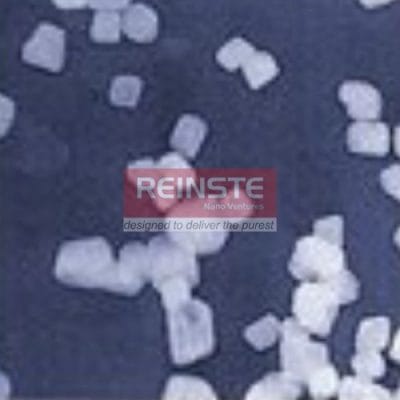
Nano CaCO3: Revolutionizing Indian Research and Industry with Advanced Nanomaterials
Discover how Nano Calcium Carbonate, a pivotal nanomaterial, is driving innovation across various sectors in India, from enhancing plastics to pioneering new nanocomposites and advanced material science.
Introduction to Nano CaCO3 and its Significance in India
In the dynamic landscape of materials science and engineering, Nano Calcium Carbonate (Nano CaCO3) stands out as a versatile and high-performance nanomaterial. Its unique properties, stemming from its nanoscale dimensions, make it an indispensable component in a myriad of applications. For Indian researchers and professionals, understanding the multifaceted potential of Nano CaCO3 is crucial for fostering innovation, developing advanced products, and addressing contemporary industrial challenges.
India's rapidly expanding industrial base, coupled with a robust research and development ecosystem, presents a fertile ground for the adoption and advancement of nanotechnology. Nano CaCO3, with its ability to significantly enhance mechanical properties, thermal stability, and surface characteristics of various matrices, is at the forefront of this revolution. From reinforcing polymers to improving the efficiency of coatings and sealants, its impact is profound and far-reaching, promising a new era of high-performance materials tailored for specific industrial needs.
This article delves into the core aspects of Nano CaCO3, exploring its benefits, diverse applications, and the emerging trends that are shaping its future in the Indian context. We aim to provide a comprehensive resource for scientists, engineers, and industry leaders looking to harness the power of this remarkable nanomaterial.
Key Benefits of Nano CaCO3 for Researchers and Industries
Enhanced Mechanical Properties
Significantly improves tensile strength and impact resistance in polymers.
Increases stiffness and hardness, crucial for durable materials.
Reduces material brittleness, leading to more robust end-products.
Improved Thermal Stability
Elevates the heat distortion temperature of polymer nanocomposites.
Enhances fire retardancy when used as a filler.
Contributes to better performance in high-temperature applications.
Cost-Effectiveness and Sustainability
Acts as an economical filler, reducing the overall material cost.
Offers a sustainable alternative to petroleum-based fillers.
Facilitates lightweighting of components, leading to energy savings.
Excellent Dispersion and Compatibility
Nanoscale particles ensure uniform distribution within the matrix.
Surface modification techniques allow for tailored compatibility with various polymers.
Leads to homogeneous material properties and predictable performance.
Versatile Applications
Broad utility in plastics, rubber, coatings, adhesives, and sealants.
Applicable in construction, automotive, packaging, and electronics.
Enables the development of novel materials with bespoke properties.
Improved Surface Finish and Aesthetics
Contributes to smoother surfaces and better printability.
Can enhance opacity and brightness in certain applications.
Reduces shrinkage and warpage in molded products.
Industrial Applications of Nano CaCO3: Driving Innovation Across Sectors
Plastics and Polymers
Nano CaCO3 is extensively used as a filler in various polymers like PVC, PE, PP, and ABS. It significantly improves mechanical properties such as impact strength, tensile strength, and flexural modulus. In plastics, it also enhances processability, reduces shrinkage, and provides a smoother surface finish, making it ideal for pipes, profiles, films, and automotive components. The "benefits of nano caco3 in plastics" are widely recognized for improving performance and reducing costs.
Paints, Coatings, and Adhesives
In paints and coatings, Nano CaCO3 acts as an extender and a functional filler, improving opacity, brightness, and rheological properties. It enhances scrub resistance, weatherability, and overall durability. For adhesives and sealants, it improves bonding strength, thixotropy, and reduces material costs, contributing to superior product performance and longevity.
Rubber and Elastomers
When incorporated into rubber compounds, Nano CaCO3 improves tear strength, abrasion resistance, and modulus. It can partially replace more expensive reinforcing fillers like carbon black or silica, offering a cost-effective solution without compromising performance. This makes it valuable for tires, conveyor belts, and other rubber products requiring high durability.
Paper and Packaging
In the paper industry, Nano CaCO3 is used as a filler and coating pigment, enhancing brightness, opacity, and printability. It also reduces manufacturing costs and improves paper strength. For packaging materials, especially those involving plastics, it contributes to better barrier properties and mechanical integrity, extending shelf life and product protection.
Construction Materials
Nano CaCO3 can be integrated into cement, concrete, and other building materials to improve strength, durability, and resistance to environmental factors. It can also enhance the workability of concrete mixes and reduce permeability, leading to longer-lasting and more sustainable infrastructure. Its application in "nanocomposites" for construction is a growing area.
Pharmaceuticals and Cosmetics
Due to its biocompatibility and fine particle size, Nano CaCO3 finds applications in pharmaceuticals as a calcium supplement and as an excipient in drug formulations. In cosmetics, it's used in powders, creams, and toothpastes for its abrasive, opacifying, and bulking properties, contributing to product texture and efficacy.
Emerging Opportunities and Trends for Nano CaCO3 in India
Growth of Nanotechnology in India
India is witnessing a significant surge in "Nanotechnology" research and development, backed by government initiatives and increased private sector investment. This burgeoning ecosystem provides a fertile ground for the widespread adoption and innovation of "Nano CaCO3" across various industrial sectors. The focus on indigenous manufacturing and advanced material solutions further accelerates the demand for high-quality "Nanomaterials". Researchers are increasingly exploring novel synthesis routes and surface modification techniques to tailor Nano CaCO3 for specific applications, enhancing its compatibility and performance in complex matrices.
The emphasis on sustainable development also positions Nano CaCO3 as a preferred "nano filler" due to its natural abundance and lower environmental footprint compared to some synthetic alternatives. This trend is particularly relevant in the plastics industry, where the "benefits of nano caco3 in plastics" are being leveraged to create more eco-friendly and high-performance polymer nanocomposites. Indian research institutions are actively engaged in "CaCO3 research" to unlock further potential.
Key Market Drivers and Future Prospects
Automotive Sector: Increasing demand for lightweight and fuel-efficient vehicles drives the use of "Nano polymer" nanocomposites with enhanced mechanical properties.
Construction Industry: Growing infrastructure development requires durable and sustainable building materials, where Nano CaCO3 improves concrete strength and longevity.
Packaging Solutions: The need for improved barrier properties and reduced plastic usage in packaging boosts the application of Nano CaCO3.
Electronics and Electricals: Development of advanced electronic components benefits from the insulating and thermal properties of Nano CaCO3 "nanocomposites".
Research & Development: Continuous "Nano engineering" and "chemical synthesis" advancements are opening new avenues for specialized Nano CaCO3 applications.
Medical and Healthcare: Biocompatible Nano CaCO3 is being explored for drug delivery systems and bone tissue engineering.
Frequently Asked Questions about Nano CaCO3
Nano CaCO3, or Nano Calcium Carbonate, refers to calcium carbonate particles with an average size in the nanometer range (typically 1-100 nm). The primary difference from conventional CaCO3 (micron-sized) lies in its significantly larger surface area-to-volume ratio, leading to enhanced reactivity, better dispersion, and superior reinforcing capabilities when incorporated into various materials. These nanoscale properties enable unique performance enhancements not achievable with larger particles, especially in "nanocomposites" and "nano polymer" applications.
The "benefits of nano caco3 in plastics" are numerous. It significantly improves mechanical properties such as impact strength, tensile strength, and flexural modulus. It also enhances thermal stability, dimensional stability, and surface finish. Furthermore, Nano CaCO3 can act as a cost-effective "nano filler", reducing overall material costs while maintaining or even improving performance, making it a valuable additive for various plastic products.
Nano CaCO3 is typically synthesized through controlled precipitation methods, often involving the reaction of calcium hydroxide with carbon dioxide in the presence of various additives or surfactants to control particle size and morphology. Other methods include carbonation, solvothermal synthesis, and biological mineralization. Advances in "chemical synthesis" and "nano engineering" are continuously refining these processes to produce Nano CaCO3 with tailored properties for specific "nanomaterials" applications.
Nano CaCO3 plays a crucial role in sustainable "material science" due to its natural abundance, non-toxicity, and ability to act as a partial replacement for more resource-intensive or environmentally impactful materials. By enhancing the performance and extending the lifespan of products, particularly plastics and composites, it contributes to resource efficiency and waste reduction. Its use as a "nano filler" in "nanocomposites" also supports the development of lightweight materials, leading to energy savings in sectors like automotive and transportation.
Connect with our experts to explore how Nano Calcium Carbonate can elevate your research, product development, and industrial applications. Let's build the future of advanced materials together.