
Nano CaCO3 in Cement Additives: Revolutionizing Construction with Nanomaterials and Nanotechnology
Explore how Nano Calcium Carbonate is transforming the Indian construction industry, offering enhanced strength, durability, and sustainability for modern infrastructure projects.
Learn MoreThe Dawn of Nano CaCO3 in Indian Construction: A Paradigm Shift
India's burgeoning infrastructure sector is constantly seeking innovative solutions to meet the demands of rapid urbanization and sustainable development. In this quest, nanomaterials, particularly Nano Calcium Carbonate (Nano CaCO3), are emerging as game-changers. Traditionally, calcium carbonate has been a staple in construction, but its nanoscale counterpart unlocks unprecedented potential. Nano CaCO3, with particle sizes typically below 100 nanometers, exhibits unique properties that significantly enhance the performance of cement and concrete. This article delves into how this advanced material is poised to revolutionize the Indian construction landscape, offering enhanced strength, durability, and environmental benefits.
For Indian researchers and professionals, understanding the intricacies of Nano CaCO3 in cement industry is crucial. The material's high surface area-to-volume ratio, coupled with its unique crystal structure, allows for superior interaction with cementitious matrices. This leads to accelerated hydration, improved packing density, and a refined pore structure within the concrete, ultimately resulting in a stronger, more resilient final product. As India moves towards developing smart cities and sustainable infrastructure, the adoption of nanotechnology in construction becomes not just an advantage, but a necessity. The potential for cost-effective production and application tailored to local conditions makes Nano CaCO3 a highly relevant area of research and industrial implementation.
The focus on cement additives is paramount because even small additions of nanomaterials can yield significant improvements. Nano CaCO3 acts as a nucleation site for calcium silicate hydrate (C-S-H) formation, the primary binding phase in cement, thereby accelerating strength development. Furthermore, its ability to fill nanoscopic voids contributes to reduced permeability, making concrete more resistant to aggressive environments, a critical factor in India's diverse climatic zones. This section lays the groundwork for understanding the profound impact Nano CaCO3 is having, and will continue to have, on the future of construction materials in India.
Unlocking Potential: Benefits of Nano CaCO3 for Indian Researchers
For the vibrant community of Indian researchers and material scientists, Nano CaCO3 presents a fertile ground for innovation and discovery. Its integration into cement additives opens up numerous avenues for groundbreaking research.
- • Enhanced Material Properties: Researchers can explore optimizing the mechanical strength, durability, and workability of concrete by precisely controlling the size, morphology, and dispersion of Calcium Carbonate Nanoparticles. This includes studies on compressive strength, flexural strength, and resistance to cracking.
- • Accelerated Hydration Kinetics: Investigating the role of Nano CaCO3 as a nucleation agent to speed up cement hydration, leading to faster strength gain and reduced setting times, which is crucial for rapid construction projects.
- • Improved Durability and Longevity: Research into how Nano CaCO3 reduces porosity and permeability, thereby enhancing resistance to chemical attacks (sulfate, chloride), freeze-thaw cycles, and carbonation, leading to longer service life for structures.
- • Sustainable Construction Practices: Exploring the environmental benefits, such as potential reduction in cement content (and thus CO2 emissions) while maintaining or improving performance, aligning with India's sustainability goals.
- • Novel Nanocomposite Materials: Developing new nanocomposite materials by combining Nano CaCO3 with other nanomaterials to achieve multi-functional properties, such as self-sensing or self-healing capabilities in concrete.
- • Cost-Effectiveness and Scalability: Researching cost-effective synthesis methods for Nano CaCO3 and optimizing its dosage to ensure economic viability for large-scale industrial applications in India.
- • Waste Utilization: Exploring the possibility of deriving Nano CaCO3 from industrial waste products, contributing to a circular economy and further enhancing sustainability.
These research areas not only advance material science but also provide tangible solutions for India's infrastructure challenges, fostering innovation and economic growth within the nation.
Transforming Industries: Key Applications of Nano CaCO3 in India
The versatility of Nano CaCO3 extends across various critical sectors, making it a valuable chemical product for advanced applications, particularly in the Indian context.
High-Performance Concrete (HPC)
By incorporating Nano CaCO3, concrete can achieve significantly higher compressive and flexural strengths, reduced permeability, and enhanced durability. This is critical for large-scale infrastructure projects like bridges, high-rise buildings, and dams, where long-term performance and resistance to harsh environmental conditions are paramount. Its use allows for slimmer, more efficient structural designs.
Sustainable Building Materials
Nanoparticle applications of calcium carbonate contribute to green building initiatives. Nano CaCO3 can partially replace cement, reducing the carbon footprint associated with cement production. It also improves the efficiency of supplementary cementitious materials (SCMs), leading to more sustainable and eco-friendly construction practices in India's rapidly growing urban centers.
Self-Healing Concrete
Advanced research is exploring Nano CaCO3's role in developing self-healing concrete. Encapsulated nanoparticles can be released upon crack formation, reacting with moisture to precipitate new calcium carbonate, thereby autonomously repairing micro-cracks and extending the lifespan of structures, reducing maintenance costs significantly.
Specialized Mortars and Grouts
In specialized applications requiring high early strength, low shrinkage, and improved bond strength, Nano CaCO3 is invaluable. This includes repair mortars for heritage structures, precision grouts for machinery foundations, and advanced tile adhesives, where its fine particle size ensures excellent penetration and bonding.
Road and Pavement Construction
The addition of Nano CaCO3 can enhance the durability and load-bearing capacity of road materials, including asphalt and concrete pavements. This leads to longer-lasting roads that are more resistant to cracking and rutting, crucial for India's extensive road network and heavy traffic conditions.
Waterproofing and Corrosion Resistance
By refining the pore structure of concrete, Nano CaCO3 significantly improves its impermeability, making it highly effective in waterproofing applications for basements, tunnels, and water retaining structures. This also enhances resistance to rebar corrosion, a major issue in coastal and humid regions.
India's Nanomaterial Frontier: Opportunities and Future Trends
India stands at the cusp of a nanotechnology revolution, with significant government support for research and development in nanomaterials. The "Make in India" initiative, coupled with a growing emphasis on sustainable development, creates a fertile ground for the widespread adoption of Nano CaCO3 in the construction sector. The demand for high-quality, durable, and environmentally friendly building materials is escalating, driven by ambitious infrastructure projects like the National Infrastructure Pipeline and Smart Cities Mission.
Emerging Trends in Nano CaCO3 Application:
- Localized Production and Supply Chains: A growing trend towards developing indigenous production capabilities for Nano CaCO3, reducing reliance on imports and fostering local expertise in advanced chemicals.
- Integration with Digital Construction: Exploring the synergy between nanoparticle applications and digital construction technologies like BIM (Building Information Modeling) for optimized material usage and performance prediction.
- Focus on Circular Economy: Increased research into synthesizing Nano CaCO3 from industrial by-products (e.g., waste lime, fly ash), promoting resource efficiency and waste reduction in the cement industry.
- Development of Smart Materials: Future trends point towards concrete infused with Nano CaCO3 that can self-monitor its health, report stress levels, or even repair itself, leading to truly smart infrastructure.
- Skill Development and Training: A rising need for skilled professionals and technicians who can handle and apply nanomaterials effectively and safely in construction.
The collaborative efforts between academia, research institutions, and industry players in India are crucial for translating laboratory breakthroughs into commercial realities. This ecosystem will drive the innovation and adoption of Nano CaCO3, positioning India as a leader in sustainable and advanced construction material science. The future of Indian construction is undoubtedly intertwined with the advancements in nanotechnology and the intelligent application of nanocomposite materials.
Frequently Asked Questions about Nano CaCO3 in Construction
Nano CaCO3 (Nano Calcium Carbonate) refers to calcium carbonate particles with sizes typically below 100 nanometers. Unlike traditional, larger-particle calcium carbonate, its nanoscale size provides a significantly higher surface area, leading to enhanced reactivity, better dispersion in matrices, and superior performance as a cement additive, improving strength, durability, and workability of concrete.
The primary benefits include accelerated cement hydration, leading to faster strength development; improved mechanical properties such as compressive and flexural strength; reduced permeability for enhanced durability against chemical attacks and water ingress; and potential for partial cement replacement, contributing to more sustainable construction practices.
While the initial cost of nanomaterials can be higher, the long-term benefits of Nano CaCO3, such as increased structural lifespan, reduced maintenance, and potential for material optimization, can lead to overall cost savings. Research is also focused on developing more cost-effective production methods and optimizing dosages to ensure economic viability for large-scale Indian projects.
Nano CaCO3 contributes to sustainability by enabling the production of more durable concrete, reducing the need for frequent repairs or replacements. It can also facilitate partial replacement of cement, thereby lowering the carbon footprint associated with cement manufacturing. Furthermore, its use can enhance the performance of supplementary cementitious materials, promoting resource efficiency.
Explore Related Calcium Carbonate Products

Calcium Carbonate Microparticles, ca. 3um
View Product
Calcium Carbonate Microparticles, ca. 6um
View Product
Calcium Carbonate Nanoparticles (25g)
View Product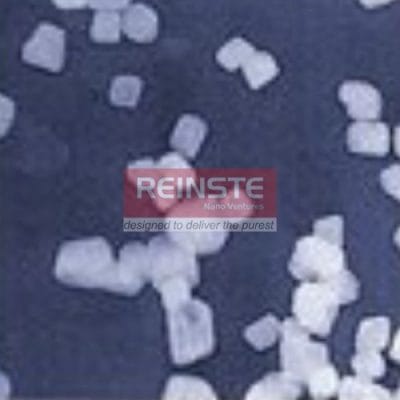
Calcium Carbonate microparticles (ca. 2-3 μm)
View ProductReady to Innovate with Nanomaterials?
Partner with Reinste for cutting-edge nanomaterials and advanced chemicals that drive the future of construction. Explore our range of Nano CaCO3 and other nanoparticle applications designed for superior performance and sustainability.
Contact Us Today