The Dawn of a New Material Age in India
In the relentless pursuit of technological sovereignty, India stands at the cusp of a materials science revolution. Central to this transformation are Nano Borides, a class of advanced ceramic materials poised to redefine the boundaries of engineering and manufacturing. As the nation champions initiatives like 'Make in India' and pushes for self-reliance in strategic sectors, understanding the Nano Borides Applications and their unique properties is no longer an academic exercise—it's a national imperative. This article serves as a comprehensive guide for Indian researchers, engineers, and industry leaders on the profound impact of nano borides, from their synthesis to their role in shaping market trends.
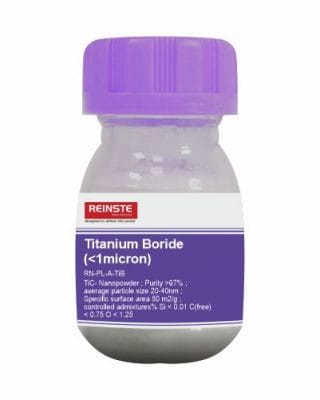
Nano borides, such as Titanium Boride (TiB₂) and Zirconium Diboride (ZrB₂), are not merely incremental improvements over their conventional counterparts. By shrinking particles to the nanoscale, we unlock a new realm of material characteristics. These materials exhibit an extraordinary combination of hardness (often approaching that of diamond), extreme melting points, and remarkable resistance to wear and corrosion. For a rapidly industrializing economy like India, these Nano Borides Properties translate into tangible benefits: longer-lasting machine tools, lighter and stronger aerospace components, more efficient electronic systems, and more resilient defense equipment. This exploration delves into the core of Nano Borides in Materials Science, providing insights into their current research developments and future potential.
Why Indian Researchers Should Focus on Nano Borides
For the vibrant R&D community in India, nano borides represent a fertile ground for innovation. The unique advantages offered by these nanomaterials can help solve some of the most pressing challenges in materials science. Here are the key benefits that make nano borides a compelling area of study:
- Exceptional Mechanical Properties: With hardness values exceeding 25 GPa and high elastic moduli, nano borides are ideal for developing next-generation composites and coatings that can withstand extreme mechanical stress.
- Superior Thermal Stability: Their high melting points (often above 3000°C) and excellent thermal shock resistance make them critical for applications in high-temperature environments, such as hypersonic vehicles and furnace linings.
- Enhanced Sintering Behavior: The high surface area of nanoparticles allows for densification at lower temperatures compared to traditional borides, reducing energy consumption and manufacturing costs—a key consideration for industrial scalability.
- Tunable Electrical Properties: Many nano borides exhibit high electrical conductivity, making them suitable for use in electrodes, electronic packaging, and as conductive fillers in polymers. This opens avenues for research in advanced electronics and energy storage.
- Versatility in Composites: Nano borides serve as excellent reinforcing agents in metal matrix composites (MMCs) and ceramic matrix composites (CMCs), significantly improving the strength, stiffness, and wear resistance of the host material.
Transforming Industries: Key Applications of Nano Borides
The theoretical benefits of nano borides are already translating into practical, high-impact applications across various Indian industries. Below are some of the most promising areas where Uses of Nano Borides are making a significant difference.
Aerospace & Defense
Lightweight, high-strength materials are paramount. Nano boride composites are being developed for armor plating, rocket nozzle inserts, and thermal protection systems on spacecraft, offering superior performance over conventional alloys.
Cutting Tools & Abrasives
The extreme hardness of nano borides makes them perfect for creating cutting tools and grinding wheels. Coatings of TiB₂ on tools can dramatically increase their lifespan and precision, boosting manufacturing efficiency.
Advanced Electronics
As electronic components become smaller and more powerful, heat dissipation is a major challenge. Nano borides, with their high thermal conductivity, are used in heat sinks and substrates to keep sensitive electronics cool and reliable.
Wear-Resistant Coatings
From industrial machinery to automotive engine parts, a thin coating of nano boride can provide a super-hard, low-friction surface. This reduces wear and tear, extends component life, and improves energy efficiency.
Riding the Wave: Nano Borides Market Trends in India
The global shift towards high-performance materials has created a significant opportunity for India. The Nano Borides Market Trends are driven by increasing demand from high-growth sectors. The Indian government's focus on indigenous defense production and space exploration (ISRO) is a major catalyst. As domestic manufacturing capabilities expand, the demand for locally produced advanced materials, including nano borides, is set to soar. Researchers and businesses that invest in Nano Borides Synthesis Methods and scalable production will be well-positioned to capitalize on this trend.
Furthermore, Nano Borides Research Developments are accelerating. Innovations in cost-effective synthesis and nanoparticle dispersion techniques are making these materials more commercially viable. There is a growing need for nano borides consulting services in materials science to help industries integrate these advanced materials into their products. The convergence of nanotechnology and materials science is creating a paradigm shift, and nano borides are at the forefront of this evolution. For Indian professionals, this is a golden opportunity to contribute to and benefit from a technology that will define the future of engineering.