An Introduction to a Material Science Revolution
In the dynamic landscape of material science, a new class of materials is making waves, promising to redefine the capabilities of plastics. We're talking about nano borides, a category of nanostructured boride compounds that are revolutionizing industries from aerospace to automotive. For India, a nation rapidly advancing its manufacturing and R&D prowess, understanding and adopting these nano composite materials is not just an option—it's a strategic imperative.
At their core, nano borides are ceramic particles, like titanium boride or zirconium diboride, engineered at the nanoscale. When these tiny but mighty particles are integrated into polymers, they create plastics with nano borides, a new breed of high-performance injection molding materials. The result is a composite that retains the lightweight and versatile nature of plastic while gaining the extraordinary hardness, thermal resistance, and durability of ceramics.
This blog delves into the world of nano borides, exploring how they are enhancing plastic injection molding applications. We will uncover the tangible benefits for Indian researchers, the burgeoning market opportunities, and the practical applications that are driving innovation across the subcontinent. Whether you are a material scientist, an engineer, or an industry leader, the potential of nanotech borides is too significant to ignore.
Key Benefits for Researchers and Industry
Unmatched Mechanical Strength
Nano boride additives create a reinforcing matrix within polymers, drastically increasing tensile strength, hardness, and rigidity. This allows for the production of plastic components that can withstand extreme stress and replace heavier metal parts.
Superior Thermal Stability
One of the standout features of nanostructured boride composites is their ability to resist deformation at high temperatures. This opens up applications in engine components, electronics, and other heat-intensive environments.
Enhanced Wear and Abrasion Resistance
The inherent hardness of nano borides imparts exceptional resistance to friction and wear. This makes these nano composite materials ideal for creating durable gears, bearings, and protective coatings that last longer.
Improved Electrical & Thermal Conductivity
Depending on the specific boride used (e.g., Titanium Boride), these nano materials can transform insulating plastics into conductive or semi-conductive materials, crucial for antistatic and EMI shielding applications in electronics.
Lightweighting Potential
By reinforcing plastics to achieve metal-like performance, nano borides enable significant weight reduction in components. This is a critical advantage in the automotive and aerospace sectors for improving fuel efficiency and performance.
Design Flexibility in Injection Molding
These advanced injection molding materials can be used to create complex geometries with high precision, offering engineers greater design freedom without compromising on performance or durability.
Nano Borides in Action: Industry Applications
Automotive Sector
In India's booming automotive industry, lightweighting is key to meeting fuel efficiency standards. Plastics with nano borides are used to manufacture under-the-hood components like engine covers, manifolds, and electrical housings that require high heat resistance and durability. They are also used for wear-resistant interior parts and structural components, reducing vehicle weight while enhancing safety and performance.
Aerospace & Defense
The aerospace and defense sectors demand materials with the highest performance-to-weight ratio. Nano boride composites are integral to creating lightweight structural components, radomes (radar-transparent enclosures), and high-temperature engine parts. Their exceptional hardness also makes them suitable for manufacturing lightweight armor and ballistic protection systems, aligning with the 'Make in India' initiative for defense manufacturing.
Electronics & Telecommunications
As electronic devices become smaller and more powerful, managing heat is a critical challenge. Nano boron applications include creating thermally conductive plastic casings and heat sinks that efficiently dissipate heat, improving device reliability and longevity. Furthermore, their use in creating EMI shielding materials is vital for ensuring the integrity of high-frequency communications equipment.
Industrial Machinery
The longevity of industrial equipment often depends on the durability of its smallest parts. High-strength plastics formulated with nanotech borides are used to injection mold robust gears, bearings, seals, and cutting tool components. These parts exhibit lower friction and superior wear resistance compared to traditional plastics, reducing maintenance downtime and operational costs for factories across India.
The Indian Horizon: Trends and Opportunities
The market for nano composite materials in India is on an upward trajectory, driven by both government policy and industrial demand. The 'Make in India' campaign is a significant catalyst, encouraging domestic production of high-value materials and reducing reliance on imports. Research institutions and universities across the country are intensifying their focus on nano materials, with nano boron applications emerging as a key area of study.
For Indian researchers, this translates into increased funding opportunities and a fertile ground for innovation. The challenge lies in scaling up laboratory successes to industrial production. Collaborations between academia and industry are crucial for developing cost-effective manufacturing processes for plastics with nano borides. The development of customized nanostructured boride formulations tailored for specific local industry needs—from agriculture to renewable energy—presents a massive opportunity.
Furthermore, as India pushes towards leadership in electric vehicles (EVs) and renewable energy infrastructure, the demand for advanced, lightweight, and thermally stable injection molding materials will surge. Nano borides in plastic injection molding applications are perfectly positioned to meet this demand, offering solutions for battery casings, motor components, and durable parts for wind turbines and solar panel mountings.
Related High-Performance Materials

Titanium Boride Nanopowder (3-8microns)
View Product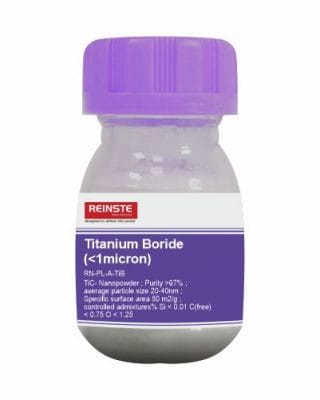
Titanium Boride (<1micron)
View Product
Zirconium Diboride Nanopowder (ZrB2)
View ProductFrequently Asked Questions
Nano borides are advanced ceramic materials where the particle size is in the nanometer range (typically 1-100 nm). This small size gives them exceptionally high surface area and unique properties like extreme hardness, high thermal conductivity, and chemical stability, making them powerful additives in nano composite materials.
When incorporated into polymers, nano borides act as reinforcing agents. They significantly enhance the mechanical strength, thermal stability, wear resistance, and even electrical conductivity of the base plastic. This results in high-performance injection molding materials suitable for demanding applications.
Like all nanomaterials, handling nano borides requires adherence to strict safety protocols, including proper ventilation and personal protective equipment (PPE) to avoid inhalation. Once compounded into a plastic matrix, the nanoparticles are encapsulated, significantly reducing exposure risk. Researchers and manufacturers in India must follow guidelines set by regulatory bodies.
The future is incredibly promising. With government initiatives like 'Make in India' and a push for domestic manufacturing in high-tech sectors like defense, aerospace, and electric vehicles, the demand for advanced materials is growing. Nanostructured borides are key to developing next-generation, locally-sourced, high-performance composites.
Ready to Innovate with Advanced Materials?
Connect with our experts to explore how nano borides and other nanostructured materials can elevate your research and product development. Let's build the future, together.
Contact Us Today