
The Dawn of a New Era: Nano Borides in Dental Implantology
The quest for the perfect dental implant material is a continuous journey in materials science. For decades, titanium and its alloys have been the gold standard. However, the future demands materials that are not just strong and biocompatible, but also possess enhanced wear resistance, superior osseointegration capabilities, and antimicrobial properties. Enter Nano Borides, a class of advanced ceramic materials poised to revolutionize the field. For Indian researchers and the burgeoning dental industry, understanding the nuances of Nano Borides in Dental Applications is not just an academic exercise—it's a gateway to innovation and market leadership.
Nano Borides are compounds formed between boron and a more electropositive element, engineered at the nanoscale. This small size unlocks extraordinary properties. Materials like Titanium Boride (TiB₂) and Zirconium Diboride (ZrB₂) exhibit a remarkable combination of hardness (often exceeding that of conventional ceramics), high melting points, and excellent chemical stability. This makes them exceptionally suited for the demanding environment of the human mouth. The focus on Dental Implant Materials Research in India can significantly benefit from exploring these materials, potentially leading to homegrown technologies that are both superior and cost-effective.
Why Indian Researchers Should Focus on Nano Borides
The exploration of Nano Borides for Dental Implants presents a fertile ground for research and development. Here are the key benefits that make this a compelling area of study:
- Exceptional Mechanical Properties: Nano Borides boast extreme hardness and wear resistance. This translates to implants that can withstand the immense forces of mastication over long periods, reducing material fatigue and failure rates.
- Superior Biocompatibility: Research indicates that materials like TiB₂ are highly biocompatible, meaning they do not provoke an adverse immune response. This is critical for successful osseointegration, where the implant fuses with the jawbone.
- Enhanced Osseointegration: The nanoscale topography of Thin Film Nano Borides coatings can be engineered to promote better cell adhesion and proliferation, leading to faster and stronger bonding with bone tissue compared to traditional implant surfaces.
- Antimicrobial Potential: Certain boride compositions have shown promise in resisting bacterial colonization, a major cause of peri-implantitis and implant failure. This is a significant advantage over standard titanium implants.
- Radiopacity: Nano Borides are typically radiopaque, allowing for clear visibility on X-rays. This helps dentists and surgeons to accurately assess implant placement and integration over time.
Real-World Applications of Nano Borides in Dentistry
The potential uses of Nano Borides extend beyond just the implant body. Their versatile properties open up several innovative avenues in dental and biomedical engineering.
Implant Surface Coatings
Applying a thin film of Nano Borides onto a conventional titanium implant can dramatically enhance its surface properties. This coating acts as a super-hard, biocompatible shield, improving wear resistance and promoting better osseointegration without changing the implant's core structure.
Composite Implant Materials
Researchers are developing novel composites by reinforcing biocompatible polymers or metals with Nano Boride particles. These materials aim to mimic the mechanical properties of natural bone more closely, reducing stress shielding and improving the implant's long-term biomechanical performance.
Dental Abutments and Screws
The components connecting the implant to the crown are subjected to significant stress. Using Nano Borides for these parts can prevent screw loosening and component fracture, which are common points of failure in traditional implant systems.
Surgical and Dental Instruments
The extreme hardness of Nano Borides makes them perfect for coating surgical drills, burs, and scaling instruments. This results in sharper, more durable tools that improve precision during surgery and reduce wear and tear.
Opportunities & Research Trends in the Indian Context
The Nano Borides Market is on a significant upward trajectory, and India is uniquely positioned to capitalize on this growth. With a strong base in pharmaceuticals, a growing medical device industry, and government initiatives like 'Make in India,' the ecosystem is ripe for innovation in advanced materials. The current Nano Borides Research Trends in India are focused on cost-effective synthesis and application-specific material development.
Exploring Cost-Effective Synthesis Methods
A major hurdle for commercialization is the high cost of producing high-purity nanopowders. Indian researchers are actively investigating scalable and economical Nano Borides Synthesis Methods. Techniques like high-energy ball milling (Mechanical Alloying) and self-propagating high-temperature synthesis (SHS) are being optimized to produce high-quality Nano Borides at a lower cost compared to methods like Chemical Vapor Deposition (CVD), which is more suitable for thin films. Success in this area could make advanced dental implants accessible to a larger segment of the Indian population.
Focus on Bio-functionalization
The next frontier in nano borides in dental implant materials research is not just about mechanical properties but also about biological interaction. Research is moving towards "bio-functionalizing" Nano Boride surfaces. This involves modifying the surface to actively promote bone growth or to release antimicrobial agents, creating a new generation of 'smart' implants. This interdisciplinary field, combining materials science with biology, is a massive opportunity for Indian R&D institutions.
Related Materials for Your Research

Titanium Boride Nanopowder (3-8microns)
View Product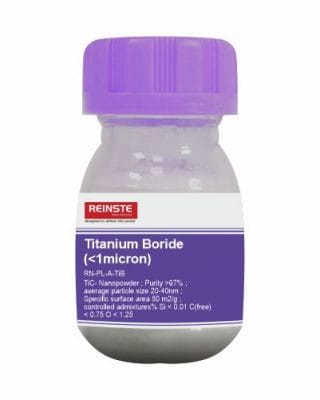
Titanium Boride (<1micron)
View Product
High-Temperature Structural Materials Zirconium Diboride Nanopowder, 100-200nm, 300-500nm, 1-3um, 3-5um (ZrB2)
View ProductFrequently Asked Questions
Nano Borides are ceramic compounds of boron with more electropositive elements, engineered at the nanoscale (typically under 100 nm). Their importance in dental implants stems from their exceptional combination of properties: high hardness, superior wear resistance, excellent biocompatibility, and chemical inertness, making them ideal candidates for long-lasting, safe implants.
Nano Borides enhance implant longevity primarily through their extreme hardness and wear resistance, which minimizes material degradation from chewing forces. Their high biocompatibility also reduces the risk of adverse tissue reactions and inflammation, promoting better osseointegration and long-term stability within the jawbone.
Current research indicates that Nano Borides, such as Titanium Boride (TiB2) and Zirconium Diboride (ZrB2), exhibit excellent biocompatibility. They are chemically stable and show minimal ion leakage, reducing the risk of toxicity and allergic reactions. Extensive clinical trials are ongoing to further validate their long-term safety in human patients.
Key synthesis methods for Nano Borides include Mechanical Alloying (high-energy ball milling), Chemical Vapor Deposition (CVD) for thin films, Sol-Gel Synthesis, and Self-propagating High-temperature Synthesis (SHS). The choice of method depends on the desired particle size, purity, and application, whether it's for a coating or a bulk composite material.
The Nano Borides market in India is in a high-growth phase, driven by increasing demand from the dental, aerospace, and cutting tools industries. The 'Make in India' initiative and a growing focus on advanced materials research are fueling local R&D and manufacturing capabilities, positioning India as a key player in the global Nano Borides market.