
An Introduction to the Power of Nano Borides
In the quest for sustainable development and technological advancement, India's research and industrial sectors are constantly seeking innovative materials that can solve pressing challenges. Among the most promising candidates are nano borides. These remarkable materials, which are compounds of boron engineered at the nanoscale, are stepping out of research labs and into the real world, promising a paradigm shift in fields as diverse as environmental remediation and advanced manufacturing.
One of the most critical applications for India is in environmental science, particularly for wastewater treatment. Borides at the nanoscale offer an unprecedented solution to water pollution, a significant concern for a rapidly industrializing nation. With their unique chemical and physical properties, these materials can efficiently remove a wide array of contaminants, from heavy metals discharged by factories to persistent organic dyes from the textile industry. This makes nanostructured borides a cornerstone technology for achieving national goals like the Clean Ganga Mission and ensuring water security for future generations.
Beyond cleaning water, the world of borides in nanotechnology extends to creating materials with extraordinary capabilities. Their inherent hardness, high melting points, and chemical inertness make them ideal for protective coatings in aerospace and defense, while their electrical properties are being harnessed for next-generation electronics. These functional boride materials represent a frontier in materials science, offering Indian innovators a powerful toolkit to build a self-reliant and technologically superior future.
Key Benefits for Researchers & Innovators
For the Indian R&D community, working with nanocrystalline borides opens up a plethora of advantages that can accelerate innovation and drive impactful outcomes:
- Exceptional Efficiency: The high surface-area-to-volume ratio of nano borides provides a massive number of active sites, leading to significantly faster and more efficient reactions, whether in catalysis or contaminant adsorption in wastewater.
- Enhanced Properties: Nanostructuring unlocks quantum-size effects, resulting in superior hardness, thermal stability, and conductivity compared to their bulk counterparts. This allows for the creation of high-performance composites and devices.
- Versatility in Application: The sheer variety of boride compounds (e.g., Titanium Boride, Zirconium Boride) allows researchers to select or synthesize materials tailored for specific tasks, from high-temperature structural components to specialized catalysts.
- Potential for Sustainability: Many nano borides for wastewater treatment applications can be regenerated and reused multiple times, reducing operational costs and minimizing secondary waste, aligning perfectly with circular economy principles.
- Catalyst for "Make in India": Developing expertise in nano-boride synthesis and application strengthens India's domestic manufacturing capabilities for high-tech products, reducing reliance on imports and fostering indigenous innovation.
Industry-Transforming Applications of Nano Borides
Wastewater Treatment Borides
This is arguably the most immediate and impactful application for India. Nano borides act as superior adsorbents and catalysts for removing a broad spectrum of pollutants, including toxic heavy metals (like lead, mercury, and arsenic), industrial dyes, pesticides, and pharmaceutical residues from water sources. Their efficiency and reusability make them a game-changer for industrial effluent treatment plants (ETPs) and municipal water purification.
Aerospace & High-Temperature Materials
The extreme hardness, high melting point, and resistance to oxidation of high-temperature borides like Zirconium Diboride (ZrB2) and Hafnium Boride (HfB2) make them perfect for applications in extreme environments. They are used in rocket nozzles, leading edges of hypersonic vehicles, and as protective coatings for industrial cutting tools and furnace linings.
Advanced Electronics & Energy Storage
Certain functional boride materials exhibit excellent electrical conductivity and stability. Magnesium Diboride (MgB2), for instance, is a superconductor at relatively high temperatures, opening doors for its use in MRI machines, fault current limiters, and energy transmission. Other nano borides are being explored as electrode materials in next-generation batteries and supercapacitors.
Industrial Catalysis
The unique electronic structure and high surface area of nanostructured borides make them powerful catalysts for various chemical reactions. They are used in hydrocarbon cracking, hydrogenation processes, and in producing fine chemicals. Their robustness and resistance to poisoning give them a longer lifespan than many traditional catalysts, improving process efficiency and reducing costs.
The Indian Landscape: Opportunities and Future Trends
The momentum for borides in nanotechnology is growing rapidly within India, driven by a convergence of policy support and market demand. The "Make in India" initiative and the National Mission on Interdisciplinary Cyber-Physical Systems are creating a fertile ground for R&D in advanced materials. Indian research institutions like the IITs, IISc, and CSIR labs are actively engaged in nano-boride synthesis and characterization, publishing cutting-edge research that bridges the gap between lab-scale discovery and industrial application.
A significant trend is the focus on green synthesis methods for producing nanocrystalline borides. Researchers are exploring ways to create these materials using environmentally friendly precursors and processes, which further enhances their appeal for sustainable applications like wastewater treatment. The development of composite materials, where nano borides are embedded within a polymer or ceramic matrix, is another key area. These composites combine the unique properties of the borides with the processability of the host material, opening up even more boride applications.
For Indian industries, particularly in the textile, leather, chemical, and manufacturing sectors, adopting wastewater treatment borides is no longer just a matter of compliance but a strategic move towards water stewardship and operational efficiency. As the cost of fresh water rises and environmental regulations become stricter, the business case for investing in these advanced, reusable treatment solutions becomes increasingly compelling. The future will likely see a surge in demand for locally sourced, high-quality functional boride materials to fuel this technological transition.
Frequently Asked Questions
Nano borides are a class of ceramic materials where at least one dimension of their crystalline structure is in the nanometer range (typically 1-100 nm). These nanostructured borides, compounds of boron with a more electropositive element, exhibit unique properties like exceptional hardness, high melting points, superior chemical stability, and enhanced catalytic activity compared to their bulk-sized counterparts. These properties make them highly sought-after functional boride materials for advanced applications.
In wastewater treatment, nano borides primarily work through adsorption and catalytic degradation. Their high surface-area-to-volume ratio provides abundant active sites for contaminants like heavy metals, dyes, and organic pollutants to bind to. Furthermore, some functional boride materials can act as catalysts, promoting chemical reactions that break down harmful substances into less toxic compounds. This dual-action mechanism makes wastewater treatment borides highly efficient and effective.
The environmental impact of nano borides is an active area of research. While they offer significant environmental benefits by cleaning wastewater, the potential toxicity of nanoparticles themselves (nanotoxicity) must be carefully managed. Key strategies include immobilizing the nano borides on larger substrates to prevent their release into the environment and studying their lifecycle to ensure responsible disposal. The goal is to maximize their treatment efficiency while minimizing any ecological footprint.
The primary challenges include the cost and complexity of nano-boride synthesis, the tendency of nanoparticles to agglomerate (clump together), which reduces their effectiveness, and ensuring their stability and reusability over multiple treatment cycles. Scaling up production from laboratory to industrial levels while maintaining consistent quality is another significant hurdle that researchers in India and worldwide are actively working to overcome.
For researchers and industries in India, sourcing high-purity, well-characterized nanomaterials is crucial. Specialized suppliers like Hiyka provide a range of nano borides, including titanium boride and zirconium diboride, with detailed specifications to support R&D and industrial applications. They offer materials in various particle sizes suitable for different needs, from fundamental research to pilot-scale projects.
Recommended Nano Boride Products

Titanium Boride Nanopowder (3-8microns)
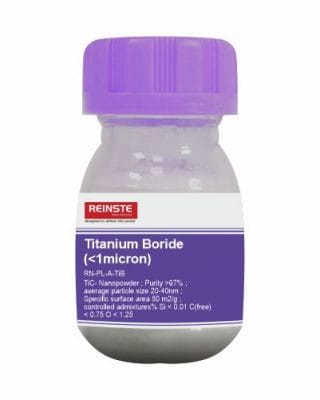
Titanium Boride (<1micron)

High-Temperature Zirconium Diboride Nanopowder (ZrB2)
Ready to Advance Your Research?
Take the next step in your project with high-purity nano borides. Whether you're tackling wastewater challenges or developing next-generation materials, we have the products to support your innovation.
Browse All Boride Products