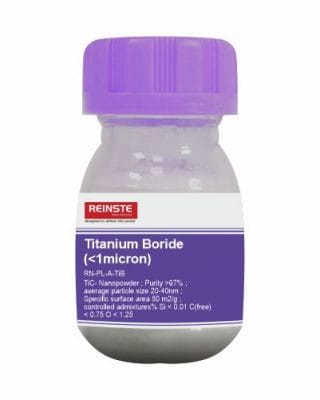
The Dawn of a New Era: Nano Borides in Advanced Medicine
In the ever-evolving landscape of medical science, nanotechnology continues to be a beacon of hope, promising solutions to some of humanity's most pressing health challenges. Within this microscopic realm, a new class of materials is emerging with extraordinary potential: nano borides. For researchers and professionals across India's burgeoning R&D sector, understanding these materials is no longer a matter of academic curiosity but a strategic imperative. Nano borides are at the forefront of innovation in drug delivery systems, offering unprecedented precision and efficacy that could redefine treatment paradigms for diseases ranging from cancer to chronic infections.
So, what exactly are nano borides? They are a class of ceramic nanomaterials formed by combining boron with a metal or metalloid element, such as titanium, zirconium, or magnesium. The result is a compound with remarkable properties: exceptional hardness, high thermal stability, and unique electronic characteristics. When synthesized at the nanoscale, these properties are amplified, making them ideal candidates for biomedical applications. Their robustness allows them to act as protective carriers for sensitive drug molecules, shielding them from degradation in the bloodstream and ensuring they reach their intended target intact. This targeted approach is the cornerstone of modern pharmacology, aiming to maximize therapeutic impact while minimizing side effects—a goal that nano borides are uniquely equipped to help achieve.
The relevance of this technology to India cannot be overstated. With a world-class pharmaceutical industry and a growing ecosystem of scientific research, India is poised to become a global leader in nanotechnology-driven healthcare. The development of novel nanomaterials like nano borides aligns perfectly with national initiatives such as 'Make in India' and the push for self-reliance in critical medical technologies. By harnessing the power of boron in medicine, Indian scientists can develop cost-effective and highly efficient drug delivery systems, addressing the healthcare needs of millions and contributing to the global scientific community. This article delves into the transformative world of nano borides, exploring their benefits, applications, and the immense opportunities they present for the Indian scientific landscape.
Why Researchers are Turning to Nano Borides: Key Benefits
The scientific community's growing excitement around nano borides isn't unfounded. These materials offer a compelling suite of advantages over traditional drug delivery vehicles. For Indian researchers working with limited budgets but aiming for high-impact outcomes, these benefits are particularly significant.
- Enhanced Stability and Durability: Unlike softer organic carriers like liposomes, which can be prone to leakage and degradation, nano borides are incredibly robust. Their strong covalent bonds provide exceptional chemical and thermal stability, ensuring that the drug payload remains secure until it reaches the target site. This is crucial for protecting sensitive biologics and chemotherapy agents.
- High Drug Loading Capacity: Many nano boride structures, such as boron nitride nanotubes (BNNTs), boast a high surface-area-to-volume ratio. This provides ample space for attaching a large number of drug molecules, leading to a more potent therapeutic effect from a smaller amount of the carrier material.
- Tunable Surface Chemistry: The surface of nano borides can be easily modified or "functionalized." Researchers can attach specific targeting ligands (like antibodies or peptides) that act like a biological GPS, guiding the nanoparticle directly to diseased cells (e.g., cancer cells) while ignoring healthy ones. This precision is the key to targeted therapy.
- Biocompatibility and Low Cytotoxicity: Extensive research, particularly on BNNTs, has indicated excellent biocompatibility. Their chemical inertness means they are less likely to trigger an adverse immune response. This favorable safety profile is a critical prerequisite for any material intended for use within the human body.
- Multi-modal Potential: The unique properties of boron compounds open the door for theranostics—a revolutionary approach that combines therapy and diagnostics. For instance, boron's ability to capture neutrons makes it a candidate for Boron Neutron Capture Therapy (BNCT), a targeted radiation therapy for cancer. A nano boride carrier could deliver a chemotherapy drug and simultaneously act as a BNCT agent, offering a two-pronged attack on tumors.
From Lab to Life: Diverse Applications in Indian Industries
The theoretical benefits of nano borides are already translating into practical applications across various sectors of medical research. Here’s how these advanced nanoparticles are making a difference:
Oncology and Cancer Therapy
This is arguably the most promising area. Nano borides are being engineered to deliver potent anti-cancer drugs directly to tumors. By functionalizing their surface with ligands that bind to tumor-specific receptors, these nanoparticles can accumulate at the cancer site, releasing their payload in a controlled manner. This targeted approach drastically reduces the systemic toxicity associated with conventional chemotherapy, improving patient quality of life.
Advanced Bio-Imaging
Some nano borides possess properties that make them useful as contrast agents in medical imaging techniques like MRI. By loading them with both a drug and an imaging agent, researchers can track the journey of the drug delivery vehicle in real-time, confirming that it has reached its target. This provides invaluable data for optimizing treatment protocols.
Antibacterial and Antiviral Agents
With the rise of antibiotic-resistant bacteria, new solutions are urgently needed. Nano borides can be used to deliver antimicrobial agents more effectively. Furthermore, some nano borides themselves exhibit intrinsic antimicrobial properties, disrupting bacterial cell walls and inhibiting their growth, offering a novel strategy in the fight against infectious diseases.
Gene Therapy and Delivery
Delivering genetic material like siRNA or plasmids into cells is a major challenge in gene therapy. The positively charged surfaces of functionalized nano borides can effectively bind to negatively charged DNA/RNA, protecting it from enzymes in the body and facilitating its entry into target cells. This could unlock new treatments for genetic disorders.
The Indian Frontier: Opportunities and Trends in Nano Boride Research
India's scientific community is uniquely positioned to capitalize on the nano borides for drug delivery systems research trend. The convergence of a robust pharmaceutical manufacturing base, a world-class talent pool in chemical research, and increasing government support for nanotechnology creates a fertile ground for innovation. The National Centre for Nanoscience and Nanotechnology and various IITs are already conducting cutting-edge research on nanomaterials, including boron nitride and other nano composites.
A key opportunity for India lies in developing cost-effective and scalable synthesis methods for high-purity nano borides. Current production methods can be expensive, limiting widespread adoption. Indian ingenuity in process chemistry could lead to breakthroughs that make these advanced materials more accessible for both research and commercial application. Furthermore, there is a significant opportunity to explore the use of nano borides for treating diseases that are prevalent in the Indian subcontinent, such as tuberculosis, malaria, and certain types of cancer.
The trend is moving towards creating sophisticated, multi-functional nano composites. Imagine a single nanoparticle that combines a nano boride core for stability, a biodegradable polymer shell for controlled release, a targeting molecule for precision, and an imaging agent for diagnostics. Developing such integrated systems is the next frontier, and Indian researchers have the interdisciplinary expertise required to lead this charge. The exploration of boron in medicine is just beginning, and nano borides are set to be the star players in this exciting field.