
Forging the Future of Adhesion: An Introduction to Nano Borides
In the dynamic landscape of materials science, a quiet revolution is underway, driven by materials engineered at the atomic scale. Among these, **nano borides** are emerging as a game-changer, particularly in the field of **adhesive formulations**. For Indian researchers and industries striving for global competitiveness under initiatives like 'Make in India' and 'Aatmanirbhar Bharat', understanding and harnessing the power of these nanomaterials is not just an opportunity—it's a necessity. But what makes these tiny particles so mighty?
Nano borides are a class of ceramic compounds containing boron and a metal, such as titanium, zirconium, or tungsten. When reduced to the nanoscale (less than 100 nanometers), their properties are magnified exponentially. Imagine taking a material known for its hardness and heat resistance and making it even more potent. This is the promise of nano borides. When integrated into polymer matrices, they create adhesives that are no longer just 'sticky tapes' but structural components capable of withstanding extreme conditions. This article delves into the core properties, diverse applications, and the burgeoning opportunities that **nano borides technology advancements** present for the Indian R&D ecosystem.
Why Researchers are Turning to Nano Borides
The integration of nano borides into adhesive formulations offers a spectrum of benefits that address the most pressing challenges in modern engineering and manufacturing.
Unmatched Mechanical Strength
Nano borides act as reinforcing fillers, drastically increasing the tensile strength, shear strength, and overall toughness of adhesives. This results in bonds that are less prone to failure under stress.
Superior Thermal Stability
One of the key **nano borides properties** is their high melting point. This translates to adhesives that can maintain their structural integrity at extreme temperatures, crucial for aerospace and automotive engine components.
Enhanced Electrical & Thermal Conductivity
For **nano borides in electronics**, their ability to improve conductivity is vital. This allows for the creation of electrically conductive adhesives used for mounting heat-sensitive components and EMI shielding.
Improved Chemical and Wear Resistance
The inherent inertness of nano borides makes adhesives more resistant to corrosion and harsh chemicals. They also improve wear resistance, extending the lifespan of bonded components in abrasive environments.
Nano Borides Applications: From Satellites to Smartphones

Aerospace & Defense
In a sector where failure is not an option, adhesives enhanced with nano borides are used for bonding composite structures, engine components, and heat shields. Their ability to withstand extreme temperatures and vibrations is critical for satellites, missiles, and aircraft.

Automotive Industry
From bonding lightweight chassis components in electric vehicles to high-wear brake systems, nano boride adhesives offer durability and performance. They contribute to vehicle weight reduction, improving fuel efficiency and performance.

Electronics Manufacturing
The trend of miniaturization requires robust solutions. Conductive adhesives with nano borides are used for die-attach applications and thermal management in high-power LEDs and processors, ensuring longevity and reliability.

Protective & Industrial Coatings
Beyond adhesives, **nano borides in coatings** create surfaces with extreme hardness and wear resistance. This is ideal for cutting tools, industrial machinery, and marine applications where protection against corrosion and abrasion is paramount.
The Indian Context: Market Trends and R&D Opportunities
The **nano borides market trends** in India are on a steep upward trajectory. Fueled by government support for domestic manufacturing and a burgeoning high-tech industrial base, the demand for advanced materials is skyrocketing. Indian researchers are in a prime position to lead **nano borides in adhesive formulations research**. The key lies in focusing on application-specific synthesis and formulation. For instance, developing cost-effective **nano borides synthesis** methods could significantly lower the barrier to entry for small and medium-sized enterprises.
There is immense potential in developing tailored solutions for local industries. Consider the renewable energy sector: creating highly durable adhesives for wind turbine blades or thermally conductive pastes for solar panel manufacturing are ripe areas for innovation. Furthermore, exploring **nano borides in medicine**, such as in biocompatible adhesives for medical implants or drug delivery systems, represents a frontier with profound societal impact. The collaboration between academic institutions, research labs, and reliable **nano borides suppliers** is crucial to translating laboratory breakthroughs into commercially viable products that can compete on the global stage.
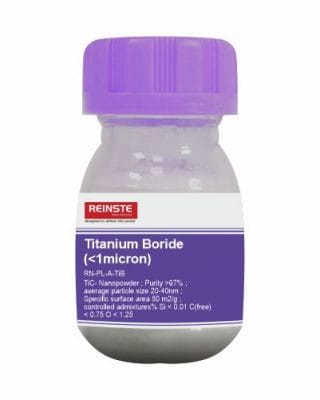
Explore High-Purity Nano Borides


Frequently Asked Questions
Nano borides are advanced ceramic materials composed of boron and a more electropositive element, engineered at the nanoscale (typically under 100 nanometers). This small particle size gives them an exceptionally high surface-area-to-volume ratio, leading to remarkable properties like extreme hardness, high thermal conductivity, and excellent chemical stability, making them superior to their bulk-sized counterparts.
Incorporating nano borides into adhesive formulations acts as a reinforcing agent. They significantly enhance the adhesive's mechanical strength, thermal stability, and electrical conductivity. This results in bonds that are not only stronger but can also withstand extreme temperatures and environmental conditions, which is critical for high-performance applications in aerospace, automotive, and electronics.
As with all nanomaterials, handling nano borides requires adherence to strict safety protocols. Due to their small particle size, they can become airborne and pose an inhalation risk. Researchers in India and globally are advised to work in well-ventilated areas, use fume hoods, and wear appropriate personal protective equipment (PPE), including gloves, goggles, and respirators, to minimize exposure.
The aerospace, defense, automotive, and electronics manufacturing sectors in India stand to benefit enormously. With government initiatives like 'Make in India' pushing for domestic production of high-tech components, nano boride-enhanced adhesives can provide the performance needed for building everything from satellite components and electric vehicles to advanced consumer electronics.
Reliable sourcing is key for reproducible research. Indian researchers can procure high-purity nano borides from specialized suppliers like Hiyka, which provides a wide range of nanomaterials, including various boride nanopowders with detailed specifications and batch consistency, catering specifically to the R&D community.
Ready to Advance Your Research?
Connect with our experts to discuss your specific needs for nano boride materials and accelerate your next big project.
Contact Us Today