The Dawn of a Materials Revolution in India
India, with its ambitious "Make in India" initiative and a rapidly expanding high-tech industrial sector, stands at the cusp of a materials science revolution. At the forefront of this transformation are nano borides and boron carbide composites. These advanced materials are no longer confined to theoretical research; they are becoming the backbone of innovation across critical sectors. From crafting lighter and stronger components for ISRO's launch vehicles to developing next-generation electronics and wear-resistant coatings for heavy machinery, high-performance borides are setting new benchmarks for performance and durability.
For Indian researchers and professionals, understanding the unique nano borides properties is crucial. These materials, which include compounds like Titanium Boride (TiB₂) and Zirconium Diboride (ZrB₂), offer an extraordinary combination of hardness, high melting points, and excellent thermal and electrical conductivity. As we delve deeper, we will explore how these carbon boride materials are not just enhancing existing technologies but also paving the way for groundbreaking applications, positioning India as a global leader in nanotechnology and advanced manufacturing.
Why Researchers are Turning to Nano Borides
The unique nanoscale properties of these materials unlock a new frontier for scientific exploration and product development. Here’s why Indian R&D professionals are increasingly focused on boride compounds applications:
- Exceptional Mechanical Properties: Nano borides significantly enhance the hardness, strength, and wear resistance of composites, making them ideal for high-stress applications in aerospace and defence.
- Superior Thermal Stability: With extremely high melting points, these materials are perfect for developing components that can withstand extreme temperatures, such as rocket nozzles and cutting tools.
- Advanced Electrical & Neutron Absorption: Boron carbide composites, in particular, are excellent neutron absorbers, a critical property for nuclear applications. Other nano borides offer tunable electrical conductivity for advanced electronic components.
- Lightweighting Potential: The use of nano borides in carbon fiber composites allows for the creation of materials that are both incredibly strong and lightweight, a key requirement for fuel-efficient aircraft and vehicles.
Industry-Defining Applications in India
Aerospace & Defence
The quest for lighter, faster, and more resilient aircraft finds a powerful ally in nano materials in aerospace. Boron carbide composites are used in manufacturing lightweight armor for personnel and vehicles, while other nano borides are being researched for high-temperature coatings on turbine blades and hypersonic vehicle components.
Advanced Electronics
The unique conductive properties of nano borides in electronics are enabling the development of more efficient and durable components. They are used as diffusion barriers in microchips and in creating high-performance electrodes and thermoelectric materials that can convert waste heat into electricity.
Nanotechnology in Manufacturing
Nanotechnology in manufacturing is being redefined by nano borides. Their extreme hardness makes them a superior choice for cutting tools, abrasives, and wear-resistant coatings. This extends the lifespan of machinery, reduces downtime, and improves precision in manufacturing processes across India.
Additive Manufacturing (3D Printing)
The field of additive manufacturing is witnessing a paradigm shift with nanoborides in 3D printing. Incorporating these nanoparticles into polymer or metal powders allows for the 3D printing of complex parts with significantly enhanced strength and thermal resistance, opening doors for rapid prototyping and custom high-performance components.
Nuclear & Energy Sector
Boron's neutron-absorbing capabilities make boron carbide composites indispensable in the nuclear industry. They are used for control rods, shielding, and shutdown pellets in nuclear reactors, enhancing safety and efficiency. This is crucial for India's clean energy goals.
Automotive Industry
High-performance borides are being integrated into brake pads and engine components to improve wear resistance and longevity. The push for electric vehicles (EVs) also presents opportunities for using these materials to create lightweight structural components, improving range and efficiency.
Opportunities and Future Trends for High-Performance Borides in India
The landscape for nano borides and advanced composites in India is fertile with opportunity. Government initiatives like the National Technical Textiles Mission and increased funding for R&D in strategic sectors are creating a robust ecosystem for innovation. The focus on self-reliance in defence manufacturing (Atmanirbhar Bharat) is a significant driver for the adoption of boron carbide composites in armor and aerospace applications. Indian research institutions are actively exploring novel synthesis methods to produce high-purity carbon boride materials at a lower cost, which could democratize their use across various industries.
Looking ahead, the synergy between nanoborides in 3D printing and AI-driven material design is a key trend. This will enable the rapid development of custom materials with precisely engineered properties. Furthermore, the application of nano borides in carbon fiber composites is expected to grow exponentially, driven by the demand for lightweight materials in the EV, drone, and renewable energy (e.g., wind turbine blades) sectors. For researchers and businesses, this is the opportune moment to invest in the research, development, and commercialization of these next-generation materials.
Frequently Asked Questions
Nano borides are ceramic materials containing boron and another element (typically a metal) with particle sizes in the nanometer range (1-100 nm). This small size gives them enhanced properties compared to their bulk counterparts, such as increased hardness, reactivity, and a higher surface-area-to-volume ratio, making them ideal for advanced applications.
In aerospace, boron carbide composites are highly valued for their low density and extreme hardness. They are used to manufacture lightweight ballistic armor, high-temperature resistant tiles for spacecraft, and as reinforcing agents in metal matrix composites to improve the structural integrity of aircraft components without adding significant weight.
High-performance borides, like Titanium Boride (TiB₂), are among the hardest materials known, second only to diamond and cubic boron nitride. This exceptional hardness, combined with high thermal stability and chemical inertness, allows them to maintain a sharp cutting edge even at high temperatures, making them perfect for machining hard metals and alloys.
As with all nanomaterials, handling nano borides requires adherence to strict safety protocols. Researchers and workers should use personal protective equipment (PPE), including respirators, gloves, and lab coats, and work in well-ventilated areas or fume hoods to prevent inhalation or skin contact. Proper disposal procedures must also be followed.
Related High-Performance Materials

Titanium Boride Nanopowder (3-8microns)
View Product →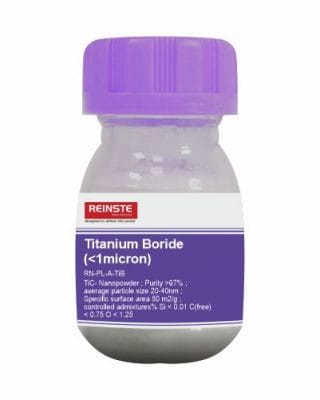
Titanium Boride (<1micron)
View Product →
High-Temperature Zirconium Diboride Nanopowder (ZrB2)
View Product →Ready to Innovate with Nano Borides?
Connect with our experts to find the right high-performance materials for your research and development needs.
Contact Us Today