
Nano Borides in India: A Researcher's Guide to Quality Control, Testing, and Applications
Explore the cutting-edge world of nano borides, from essential quality control procedures to their revolutionary impact on Indian industries. Your ultimate guide to advanced nanomaterials starts here.
Explore NowThe Dawn of a New Material Age: Understanding Nano Borides
In the relentless pursuit of materials that are stronger, lighter, and more resilient, the field of nanotechnology has emerged as a beacon of innovation. At the forefront of this revolution are nano borides, a class of advanced ceramic materials poised to redefine industries across India and the globe. These are not just incremental improvements; they represent a quantum leap in material science. Nano borides are compounds of boron with more electropositive elements, engineered into nano structures, typically with dimensions under 100 nanometers. This nanoscale manipulation unlocks extraordinary properties—unprecedented hardness, exceptional thermal and chemical stability, and unique electronic characteristics—that are simply unattainable in their bulk forms.
For the Indian research and development (R&D) landscape, the significance of nanomaterials like nano borides cannot be overstated. As India strives to become a global manufacturing and technology hub under initiatives like 'Make in India' and 'Aatmanirbhar Bharat', the demand for high-performance materials is skyrocketing. From aerospace and defense to electronics and energy, the ability to fabricate superior components domestically is a strategic imperative. Boride compounds at the nanoscale offer a pathway to achieving this, providing Indian researchers and industries with the tools to innovate and compete on a global scale. This guide delves into the critical aspects of nano borides, with a special focus on the rigorous nano testing and quality control procedures that underpin their successful application.
Why Indian Researchers Should Focus on Nano Borides
The study and application of nano borides offer a fertile ground for innovation, providing tangible benefits that align perfectly with the goals of the Indian scientific community. Here's why these materials are a game-changer:
-
Pioneering High-Performance Materials
Researchers can develop next-generation nano composites by integrating nano borides into various matrices (polymers, metals, ceramics). This leads to materials with significantly enhanced mechanical strength, wear resistance, and thermal stability, opening doors for breakthroughs in sectors requiring robust performance under extreme conditions.
-
Driving Indigenous Innovation
Mastering the synthesis and application of nano materials like borides reduces India's reliance on imported high-tech materials. This empowers local industries and research institutions to develop proprietary technologies, contributing directly to national self-reliance in strategic sectors like defense and aerospace.
-
Unlocking Novel Applications
The unique electronic properties of certain boride compounds make them ideal candidates for research in advanced electronics, from semiconductors to superconductors. This opens up new avenues for creating smaller, faster, and more efficient electronic components, a key area of focus in modern nanotechnology.
-
Enhancing Durability with Nano Coatings
Research into nano coatings based on borides can lead to ultra-hard, corrosion-resistant surfaces. This is invaluable for extending the lifespan of industrial machinery, cutting tools, and critical infrastructure, resulting in significant economic and environmental benefits through reduced wear and tear.
Industrial Applications: Where Nano Borides Make an Impact
Aerospace & Defense
The exceptional strength-to-weight ratio and high-temperature stability of nano borides make them ideal for aircraft components, rocket nozzles, and lightweight composite armor. Their use in nano coatings also protects critical parts from extreme heat and oxidation.
Cutting Tools & Abrasives
The extreme hardness of boride compounds, such as titanium boride, is harnessed to create superior cutting tools and industrial abrasives. These tools last longer and perform more efficiently, boosting productivity in India's manufacturing sector.
Advanced Electronics
Certain nano borides, like magnesium diboride, exhibit superconductive properties. This opens up research opportunities for developing next-generation electronic components, magnetic shielding, and energy-efficient power transmission systems.
High-Temperature Structural Materials
Materials like Zirconium Diboride (ZrB2) are used in applications requiring stability at ultra-high temperatures, such as crucibles for molten metals and components for hypersonic vehicles. The process of nano fabrication allows for creating parts with enhanced thermal shock resistance.
The Indian Nanotechnology Landscape: Trends & Opportunities
India's journey into the world of nanotechnology is backed by strong government support and a vibrant academic community. The National Mission on Nano Science and Technology (Nano Mission) has been instrumental in fostering R&D and building infrastructure. This creates a fertile ground for research in advanced nano structures like borides. Key institutions like the Indian Institutes of Technology (IITs) and the Indian Institute of Science (IISc) are actively involved in cutting-edge nano materials research, collaborating with industries to translate lab-scale innovations into commercial products.
A critical aspect of this ecosystem is the emphasis on nano borides quality control testing procedures. As domestic production increases, the need for standardized and reliable nano testing becomes paramount. Indian labs are increasingly equipping themselves with sophisticated characterization tools to ensure that the nanomaterials produced meet stringent international standards. This focus on quality is crucial for building trust and enabling the adoption of Indian-made nanomaterials in high-stakes applications. The future trend points towards developing 'smart' nano composites—materials with built-in sensing or self-healing capabilities—where nano borides will play a foundational role.
Explore High-Purity Nano Borides
Titanium Boride Nanopowder (3-8microns)
View Product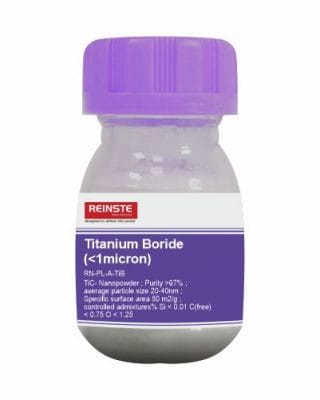
Titanium Boride (<1micron)
View Product
High-Temperature Structural Materials Zirconium Diboride Nanopowder (ZrB2)
View ProductFrequently Asked Questions
Nano borides are advanced ceramic materials where compounds of boron with more electropositive elements are engineered at the nanoscale (typically under 100 nanometers). This size reduction dramatically enhances their intrinsic properties like extreme hardness, high melting points, and chemical inertness, making them superior to their bulk counterparts for high-performance applications.
Quality control is paramount because the unique advantages of nano borides are directly tied to their nanoscale properties—particle size, distribution, purity, and surface chemistry. Any deviation can lead to inconsistent performance, compromised material integrity, and failure in critical applications. Rigorous nano testing ensures reliability, repeatability, and safety, which is essential for industries like aerospace, defense, and electronics.
In India, boride compounds are pivotal in several key sectors. They are used in manufacturing superhard cutting tools, creating durable nano coatings for industrial equipment, developing lightweight armor for defense applications, and as components in high-temperature structural materials for aerospace. Their role in nano composites is also growing, enhancing the strength and thermal stability of polymers and metals.
Nano testing involves a suite of advanced analytical techniques. Electron microscopy (SEM, TEM) is used to visualize nano structures and morphology. X-ray Diffraction (XRD) helps determine crystal structure and phase purity. Dynamic Light Scattering (DLS) measures particle size distribution in a liquid medium, while techniques like Atomic Force Microscopy (AFM) probe surface characteristics. These tests provide a comprehensive quality profile of the nanomaterials.
The future is incredibly promising. With government initiatives like 'Make in India' and a strong push for domestic R&D, the demand for advanced materials like nano borides is set to soar. We expect to see wider adoption in sectors like renewable energy (for catalysts and energy storage), biomedical devices (for biocompatible coatings), and smart textiles. The focus will be on sustainable nano fabrication and creating multifunctional nano composites tailored for specific industrial challenges.
Ready to Advance Your Research?
Leverage the power of high-performance nano borides in your next project. Explore our extensive catalog of nanomaterials or contact our experts to discuss your specific requirements.
Browse Products