
An Introduction to Nano Borides in Advanced Composites
In the relentless pursuit of materials that are stronger, lighter, and more durable, the field of nanotechnology has opened up revolutionary avenues. Among the most promising innovations are Nano Borides, a class of ceramic nanomaterials that are setting new benchmarks in performance. When incorporated into Metal Matrix Composites (MMCs), these tiny but mighty particles create materials with properties that were once thought to be mutually exclusive. For India, a nation rapidly advancing its industrial and technological capabilities under initiatives like 'Make in India' and 'Aatmanirbhar Bharat', understanding and harnessing the power of Nano Borides is not just an academic exercise—it's a strategic imperative.
So, what exactly are Nano Borides? They are compounds formed between boron and a metal element, engineered at the nanoscale (typically under 100 nanometers). This small size gives them an incredibly high surface-area-to-volume ratio, which is key to their effectiveness as reinforcing agents. Common examples include Titanium Boride (TiB₂), Zirconium Boride (ZrB₂), and Hafnium Boride (HfB₂). These materials are renowned for their exceptional characteristics: extreme hardness, often rivaling diamond; ultra-high melting points, making them suitable for high-temperature applications; and remarkable chemical inertness and wear resistance. When these nanoparticles are dispersed within a metal matrix—such as aluminum, titanium, or copper—they create a composite material that inherits these superior properties.
The relevance for Indian researchers and professionals cannot be overstated. From developing next-generation aerospace components and lightweight automotive parts to creating advanced defense systems and durable industrial tools, the applications of Nano Borides are vast and transformative. As India aims to become a global manufacturing hub, the adoption of such advanced materials is crucial for producing high-value, competitive products. This guide delves into the synthesis of Nano Borides, their profound benefits, key applications, and the emerging opportunities for the Indian R&D ecosystem.
Why Researchers Should Focus on Nano Boride Composites
-
Unprecedented Mechanical Enhancement
Nano Borides significantly increase the tensile strength, hardness, and stiffness of MMCs. This allows for the creation of materials that can withstand extreme stress and wear, opening doors for research in high-performance engineering applications.
-
Superior Thermal Stability
With extremely high melting points, Nano Borides enable composites to maintain their structural integrity and mechanical properties at elevated temperatures, a critical area of study for aerospace, nuclear, and automotive industries.
-
Enhanced Wear and Corrosion Resistance
The chemical inertness and hardness of boron-based nanomaterials lead to surfaces that resist abrasion, friction, and chemical degradation. This is vital for developing long-lasting coatings and components for harsh environments.
-
Lightweighting Potential
By reinforcing light metals like aluminum or magnesium, Nano Borides help create composites with a high strength-to-weight ratio. This is a primary goal in automotive and aerospace research to improve fuel efficiency and payload capacity.
Key Industry Applications of Nano Boride Composites
Aerospace and Defense
In aerospace, weight reduction without compromising strength is paramount. Nano Boride in Composites are used to manufacture turbine blades, engine components, and structural parts that can withstand extreme temperatures and stresses. In defense, their hardness makes them ideal for developing lightweight ballistic armor for vehicles and personnel.
Automotive Manufacturing
The automotive industry leverages these composites for high-performance brake rotors, pistons, and cylinder liners. The enhanced wear resistance and thermal conductivity of Nano Boride Materials lead to more durable, efficient, and safer vehicles. This is a key area for R&D in India's growing auto sector.
Cutting Tools and Abrasives
The exceptional hardness of Nano Borides makes them perfect for creating cutting tools, grinding wheels, and industrial abrasives. Nano Boride Coatings on existing tools can dramatically extend their lifespan and improve performance, reducing manufacturing costs and downtime in heavy industries.
Trends and Opportunities for Nano Borides in India
The landscape for advanced materials in India is buzzing with potential, and boron-based nanomaterials are at the forefront of this revolution. The Indian government's focus on self-reliance in critical technologies provides a fertile ground for research and commercialization of Nano Boride composites. Premier institutions like the IITs, IISc, and DRDO are actively involved in the synthesis of Nano Borides and exploring their integration into various applications. The key opportunity lies in bridging the gap between laboratory-scale research and large-scale industrial manufacturing.
One of the most significant trends is the development of cost-effective manufacturing processes for nano borides for metal matrix composites. While methods like CVD produce high-purity materials, they can be expensive. Indian researchers are focusing on scalable and economical routes like mechanochemical synthesis and self-propagating high-temperature synthesis (SHS). Success in this area will make these advanced composites accessible to a broader range of industries, including SMEs.
Furthermore, there is a growing demand for custom properties of Nano Borides tailored for specific applications. This involves controlling particle size, morphology, and dispersion within the metal matrix to achieve desired outcomes—be it enhanced electrical conductivity for electronic components or maximum hardness for armor. This opens up a vast field for collaborative research between academia and industry, fostering innovation and creating high-value products right here in India.
Frequently Asked Questions
Nano Borides are ceramic nanomaterials composed of boron and a more electropositive element, typically a metal. They are crucial in composites, especially Metal Matrix Composites (MMCs), because their nanoscale size and exceptional properties—like extreme hardness, high melting points, and excellent thermal/electrical conductivity—act as powerful reinforcing agents. They significantly enhance the strength, wear resistance, and performance of the base material.
The main synthesis methods for Nano Borides include mechanochemical synthesis (high-energy ball milling), chemical vapor deposition (CVD), self-propagating high-temperature synthesis (SHS), and various chemical reduction processes. The choice of method depends on the desired purity, particle size, and cost-effectiveness for the intended application.
India's aerospace, defense, automotive, and heavy machinery sectors stand to benefit immensely. In aerospace and defense, these composites can be used for lightweight armor and high-performance engine components. In the automotive industry, they can improve brake systems and engine parts. For heavy machinery, they are ideal for creating durable cutting tools and wear-resistant coatings.
Yes, like many nanomaterial production processes, there can be environmental concerns. These often relate to the energy intensity of synthesis methods like SHS or CVD and the handling of precursor chemicals. Responsible manufacturing practices, waste management, and ongoing research into 'green' synthesis routes are critical to mitigating the environmental impact of Nano Borides.
Recommended Nano Boride Products

Titanium Boride Nanopowder (3-8microns)
View Product →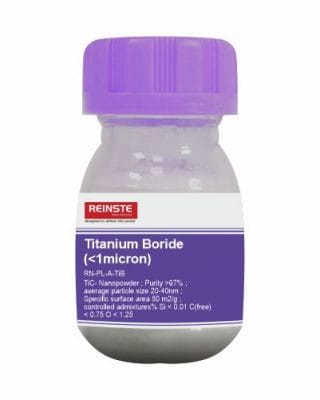
Titanium Boride (<1micron)
View Product →
Zirconium Diboride Nanopowder (ZrB2)
View Product →Ready to Advance Your Research?
Connect with us to source high-purity Nano Borides for your research and industrial applications. Let's build the future of materials, together.
Contact Us Today