
In the relentless pursuit of next-generation technologies, materials science stands as the bedrock of innovation. Among the most promising class of materials emerging today are nano borides. These are not just incremental improvements; they represent a quantum leap in material capabilities. For India, a nation rapidly cementing its position as a global hub for research and development (R&D) and manufacturing, understanding and harnessing the power of nano borides is not just an opportunity—it's a strategic imperative.
At their core, nano borides are ceramic compounds of boron with a metal, engineered at the nanoscale. This "nano" dimension is key. By reducing materials to a scale of 1 to 100 nanometers, we unlock a host of extraordinary properties not seen in their bulk counterparts. Imagine materials with the hardness of a diamond, the heat resistance of industrial ceramics, and the conductivity of metals, all rolled into one. This is the world of nano borides.
This article delves into the transformative potential of Nano Borides for Energy Storage, a critical area for India's sustainable future. We will explore their unique properties, cutting-edge applications, and the burgeoning market trends, providing Indian researchers, scientists, and industry professionals with a comprehensive guide to this exciting field.
The Researcher's Edge: Unpacking Nano Boride Properties
For researchers in India, working with nano borides opens up a new toolbox for innovation. Their unique combination of physical and chemical characteristics offers significant advantages:
-
Exceptional Hardness & Wear Resistance: Materials like titanium boride (TiB₂) are incredibly hard, making them ideal for developing durable coatings and cutting tools that last longer and perform better.
-
High Thermal & Electrical Conductivity: This is the cornerstone of Nano Borides Energy Storage applications. Their ability to efficiently conduct heat and electricity is vital for creating next-generation batteries, supercapacitors, and thermal management systems.
-
Superior Chemical Inertness & Stability: Nano borides resist corrosion and degradation in harsh chemical environments, a crucial property for long-lasting electrodes and catalysts in industrial processes.
-
High Melting Points: Compounds like Zirconium Diboride (ZrB₂) are ultra-high temperature ceramics (UHTCs), making them indispensable for applications in aerospace, defense, and furnace linings where extreme heat is a factor.
From Lab to Industry: Key Nano Boride Applications
Advanced Energy Storage Systems
This is where Nano Borides Applications shine brightest. They are being researched as electrode materials and protective coatings in lithium-ion batteries, sodium-ion batteries, and supercapacitors. Their high conductivity boosts power density (faster charging), while their stability prevents the degradation of electrodes, significantly extending battery life and improving safety—a key factor for India's booming EV market.
Wear-Resistant & Thermal Coatings
The extreme hardness of nano borides makes them perfect for creating protective coatings on industrial machinery, cutting tools, and engine parts. This reduces friction, minimizes wear and tear, and extends the operational life of critical components, leading to massive cost savings in manufacturing and heavy industries.
High-Efficiency Catalysts
The high surface area of nano borides makes them excellent catalysts and catalyst supports. They can accelerate chemical reactions in petroleum refining, fine chemical synthesis, and pollution control systems. Nano Borides Research in this area focuses on creating more efficient and cost-effective industrial processes.
Aerospace & Hypersonics
Materials like ZrB₂ and Hafnium Boride (HfB₂) are leading candidates for use in hypersonic vehicles, rocket nozzles, and atmospheric re-entry shields. Their ability to withstand temperatures exceeding 3000°C is critical for India's ambitious space and defense programs.
Riding the Nanotech Wave: Indian Opportunities & Trends
The Nano Borides Market Trends in India are pointing towards exponential growth. Several factors are converging to create a fertile ground for innovation and commercialization. The Indian government's 'Make in India' and 'Aatmanirbhar Bharat' initiatives are pushing for domestic production of high-performance materials, reducing reliance on imports. This creates a significant opportunity for Nano Borides Manufacturers to establish and scale up their operations within the country.
Furthermore, the national push towards electric mobility and renewable energy grids directly fuels the demand for advanced energy storage solutions. This is the primary driver for Nano Borides Research in India. Academic institutions and CSIR labs are intensifying their focus on developing novel Nano Borides Syntheses techniques that are scalable and cost-effective. The goal is to move from lab-scale production to industrial-scale manufacturing, a critical step for market viability.
Investment in Nano Borides in Nanotechnology is no longer a niche area. We are seeing increased funding from both public and private sectors for projects that demonstrate clear commercial potential. For researchers, this means more grants, better infrastructure, and more collaborative opportunities with industries looking for a competitive edge through material innovation. The key is to bridge the gap between fundamental research and practical, market-ready Nano Borides Innovations.
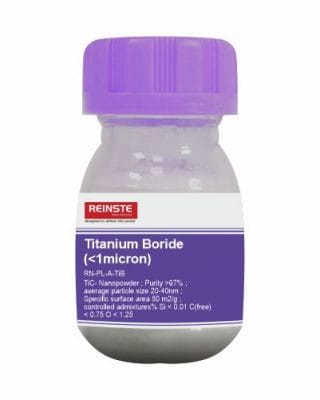
Related Nano Boride Products


Frequently Asked Questions
Nano borides are advanced ceramic materials composed of boron and a more electropositive element, typically a metal. What makes them 'nano' is their particle size, which is on the nanometer scale (typically below 100 nm). This incredibly small size gives them a high surface-area-to-volume ratio, leading to unique and enhanced properties like exceptional hardness, high melting points, superior conductivity, and chemical inertness compared to their bulk-sized counterparts.
Nano borides are critical for energy storage due to their unique combination of properties. Their high electrical conductivity improves the performance of electrodes in batteries and supercapacitors, allowing for faster charging and discharging. Their structural stability enhances the lifespan and safety of these devices. For instance, using nano borides as coatings on anode materials in lithium-ion batteries can prevent degradation, leading to more durable and efficient energy storage solutions.
Common methods for nano boride synthesis include both traditional and advanced techniques. These include: 1. Carbothermal Reduction: A high-temperature process involving carbon. 2. Self-Propagating High-Temperature Synthesis (SHS): An energy-efficient method where a combustion wave propagates through reactants. 3. Sol-Gel Method: A chemical solution process for creating highly pure and homogenous nanopowders. 4. Chemical Vapor Deposition (CVD): Used for creating thin films and coatings. The choice of synthesis method depends on the desired purity, particle size, and application.
The future of nano borides research in India is incredibly promising. With government initiatives like 'Make in India' and a strong focus on renewable energy and electric vehicles (EVs), there is a growing demand for advanced materials. Indian research institutions are actively exploring nano borides for next-generation batteries, hydrogen storage, and catalysis. We anticipate a surge in funding, public-private partnerships, and innovations in nano boride production to meet domestic and global demands.
Ready to Innovate with Nano Borides?
Whether you are developing next-generation energy storage solutions or pioneering new industrial applications, we have the high-purity nano boride materials you need. Connect with our experts to discuss your research requirements.
Contact Our Team