The Dawn of a New Material Age in India
The quest for materials that are stronger, lighter, and more durable is a perpetual challenge in modern engineering. In India, a nation rapidly ascending the global manufacturing and technology ladder, this quest is particularly pronounced. From the burgeoning aerospace sector pushing the boundaries of space exploration to advanced defense systems requiring next-generation protection, the demand for high-performance materials is insatiable. This is where **Nano Borides for Composites** emerge as a game-changing technology.
Nano borides, a class of ultra-high temperature ceramics (UHTCs), are compounds of boron with metals like titanium (TiB₂), zirconium (ZrB₂), and hafnium (HfB₂). When synthesized at the nanoscale, their properties are magnified, making them exceptional candidates for reinforcing composite materials. These are not just incremental improvements; **Nano Borides in Manufacturing** represent a paradigm shift, enabling the creation of composites that can withstand extreme environments, reduce weight dramatically, and enhance operational efficiency. For Indian researchers and professionals, understanding the properties and **Nano Borides Applications** is no longer a matter of academic curiosity—it is a strategic imperative for national technological advancement and global competitiveness.
Unlocking Groundbreaking Benefits for Researchers
For the Indian R&D community, nano borides offer a fertile ground for innovation. The unique **Nano Borides Properties** open doors to research that was previously theoretical, allowing for tangible advancements in material science. Here are some key benefits:
-
Extreme Hardness and Wear Resistance
Nano borides like TiB₂ are among the hardest materials known. This translates to composites with exceptional resistance to abrasion and wear, perfect for developing long-lasting coatings, cutting tools, and durable components for high-friction environments.
-
Ultra-High Temperature Stability
With melting points often exceeding 3000°C, nano borides enable the creation of composites that maintain structural integrity in extreme thermal conditions. This is critical for hypersonic vehicle components, rocket nozzles, and advanced braking systems.
-
Superior Strength-to-Weight Ratio
Incorporating nano borides into lightweight matrices like aluminum or titanium alloys significantly boosts their strength and stiffness without adding substantial weight. This is a cornerstone of **Nano Borides for Composites** in the aerospace and automotive industries, leading to fuel efficiency and increased payload capacity.
-
Enhanced Thermal and Electrical Conductivity
Unlike many ceramics, nano borides exhibit excellent conductivity. This unique property allows for the development of multifunctional composites that can manage heat in high-power electronics or provide structural integrity while dissipating electrical charges.
Spearheading Industrial Advancement: Key Applications in India
The theoretical benefits of nano borides translate into tangible, high-impact applications across India's most critical sectors. The versatility of **Nano Borides Applications** is a key driver of their adoption.
Aerospace and Defense
This is the primary sector driving **Nano Boride Innovations**. Applications include lightweight armor for personnel and vehicles, thermal protection systems for spacecraft re-entry, leading edges for hypersonic missiles, and high-performance components for jet engines that operate at extreme temperatures.
Automotive and Transportation
In the automotive industry, **Nano Borides in Manufacturing** are used to create wear-resistant coatings for engine cylinders and pistons, enhancing engine life and efficiency. They are also being researched for use in advanced braking systems and lightweight structural components for electric vehicles (EVs).
Industrial Tooling and Machining
The exceptional hardness of nano borides makes them ideal for producing cutting tools, drill bits, and industrial dies. Composites reinforced with these nanoparticles can machine hardened steels and other tough alloys with greater precision and longevity, boosting manufacturing productivity.
Energy and Electronics
The unique combination of thermal stability and conductivity is valuable in the energy sector. Applications include electrodes for industrial electrolysis and components for nuclear applications. In electronics, they are used in heat sinks and substrates to manage thermal loads in high-density integrated circuits.
The Indian Landscape: Opportunities and Market Trends
The **Nano Borides Market Trends** in India are incredibly promising, fueled by government initiatives like 'Make in India' and 'Aatmanirbhar Bharat', which emphasize domestic manufacturing and technological self-reliance. Premier research institutions like the IITs, IISc Bangalore, and DRDO labs are at the forefront of **Nano Boride Research**, exploring novel synthesis techniques and composite manufacturing processes.
A significant trend is the focus on developing cost-effective **nano borides for composite manufacturing processes**. While traditional synthesis methods can be expensive, Indian researchers are pioneering new, scalable methods to bring down costs and make these advanced materials more accessible to a wider range of industries. There is also a growing emphasis on green synthesis routes, aligning with global sustainability goals. The intersection of **Nano Borides and Nanotechnology** is creating opportunities for startups to develop specialized products, from advanced coatings to bespoke composite materials for niche applications. As the demand for high-performance materials grows, so will the ecosystem supporting nano boride production, characterization, and implementation in India.
Frequently Asked Questions
Nano borides are advanced ceramic materials synthesized at the nanoscale (typically below 100 nanometers). They are compounds of boron with a more electropositive element, like titanium (TiB₂), zirconium (ZrB₂), or hafnium (HfB₂). Their nanoscale size gives them exceptionally high surface area-to-volume ratios, leading to enhanced properties like extreme hardness, high melting points, and excellent thermal and electrical conductivity, making them ideal reinforcements for composites.
The primary difference lies in the particle size. Conventional ceramic reinforcements (like alumina or silicon carbide) are typically in the micron-scale. Nano borides, being orders of magnitude smaller, allow for more uniform dispersion within a composite matrix. This leads to superior mechanical properties (strength, toughness) without the stress concentration points that larger particles can create. They also enable the creation of multifunctional composites with tailored thermal and electrical properties.
Key challenges for Indian researchers and industries include: 1) High Synthesis Cost: Producing high-purity, uniform nano borides can be expensive. 2) Dispersion Issues: Due to their high surface energy, nanoparticles tend to agglomerate (clump together), which can be difficult to overcome during composite manufacturing. 3) Scalability: Moving from lab-scale synthesis to industrial-scale production requires significant investment and process optimization. 4) Health & Safety: Handling nanoparticles requires specialized protocols to mitigate inhalation risks.
The aerospace and defense sectors are the most immediate beneficiaries, due to the urgent need for lightweight armor, high-temperature engine components, and thermal protection systems. The automotive industry can use them for wear-resistant engine parts and lighter vehicle frames. Furthermore, the electronics industry can leverage their thermal management properties for advanced heat sinks and substrates.
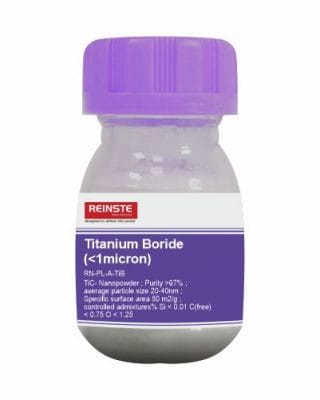
Sourcing reliable, high-purity nanomaterials is crucial for research success. Companies like Hiyka (a brand of Reinste) specialize in providing a wide range of nano borides, including Titanium Boride and Zirconium Diboride, with detailed characterization data. They cater specifically to the needs of the Indian R&D community, ensuring researchers have access to the materials needed for cutting-edge innovation.