
Introduction: The Dawn of Nanostructured Borides in India
In the relentless pursuit of materials with superior performance, the scientific community has turned its gaze towards the nanoscale. Among the most promising candidates are nanostructured borides, a class of materials renowned for their extreme hardness, high melting points, and exceptional chemical stability. For a nation like India, with burgeoning aerospace, defense, and manufacturing sectors, the ability to produce these advanced materials domestically is not just a scientific goal but a strategic imperative. This is where mechanical alloying (MA) emerges as a pivotal technology—a powerful, versatile, and scalable method for nano borides synthesis.
Traditional methods for synthesizing borides, such as carbothermal reduction or arc melting, often require extremely high temperatures. While effective, these techniques can be energy-intensive and often lead to larger grain sizes, which can compromise the unique properties that arise at the nanoscale. In contrast, mechanical alloying is a solid-state powder metallurgy technique that occurs at or near room temperature. It involves the repeated cold-welding, fracturing, and re-welding of powder particles in a high-energy ball mill. This intense mechanical action refines the grain structure down to the nanometer scale, enabling the creation of nanostructured borides with unprecedented properties. This guide delves into the nuances of using boron alloying techniques, specifically mechanical alloying, to synthesize nano borides, highlighting its relevance for Indian researchers and industries poised for a technological leap.
Why Mechanical Alloying is a Game-Changer for Nano Borides Synthesis
The adoption of the nano borides mechanical alloying synthesis process offers a multitude of advantages over conventional methods, making it particularly attractive for both academic research and industrial-scale production in India.
- Room Temperature Processing: By avoiding high temperatures, MA minimizes the risk of grain growth, ensuring the final product retains its fine nanostructure and the enhanced properties associated with it. This also translates to lower energy consumption and operational costs.
- Synthesis of Novel Materials: MA can produce alloys and compounds from elements with vastly different melting points (like boron and tungsten), which are otherwise immiscible through traditional melting routes. This opens the door to creating novel nano boron compounds with tailored properties.
- Enhanced Material Properties: The severe plastic deformation during milling introduces a high density of defects like dislocations and grain boundaries. This, combined with the nanoscale grain size, leads to significant improvements in hardness, strength, and toughness, as described by the Hall-Petch relationship.
- Scalability and Versatility: The process is highly scalable. What begins in a small laboratory mill can be transferred to larger industrial mills (attritors) for mass production. It's a versatile technique applicable to a wide range of metal-boron systems.
- Homogeneous Microstructure: The intense mixing action ensures a highly uniform distribution of constituent elements, leading to a chemically homogeneous final product, which is crucial for consistent material performance in high-stakes applications.
Industrial Applications: Powering India's 'Make in India' Initiative
The unique properties of nano borides make them indispensable for a new generation of high-performance products. Their adoption can provide a significant boost to India's 'Make in India' and 'Aatmanirbhar Bharat' campaigns by enabling domestic production of critical components.
Aerospace & Defense
Materials like titanium boride (TiB₂) and zirconium boride (ZrB₂) are ultra-high temperature ceramics. When synthesized as nanostructured materials, their thermal shock resistance and strength are amplified, making them ideal for rocket nozzles, hypersonic vehicle leading edges, and lightweight, high-performance armor plating.
Cutting Tools & Abrasives
The extreme hardness of nano borides, second only to diamond, makes them perfect for advanced cutting tools, grinding wheels, and industrial abrasives. Nanostructured coatings of materials like cubic boron nitride (c-BN) can dramatically extend the life and performance of machining tools used in India's automotive and manufacturing industries.
Nuclear Applications
Boron has a high neutron absorption cross-section. Nano borides, such as boron carbide (B₄C), can be used as superior neutron-absorbing materials in control rods and shielding for nuclear reactors, enhancing the safety and efficiency of India's nuclear power program.
Electronics & Spintronics
The unique magnetic and electrical properties of certain nano borides, like iron boride (FeB) and neodymium-iron-boron (NdFeB) magnets, are critical for data storage, sensors, and high-efficiency electric motors. The nanotechnology borides field is pushing the boundaries of device miniaturization and performance.
Opportunities and Trends in the Indian Nano Borides Market
The global market for advanced ceramics and nanomaterials is on an upward trajectory, and the nano borides market is a significant part of this growth. For India, this presents a golden opportunity. The government's focus on indigenous R&D and manufacturing creates a fertile ground for research institutions and private players to collaborate on boron alloying techniques. The key trend is the shift from micro-scale to nano-scale materials to unlock superior performance. Researchers are actively exploring the optimization of mechanical alloying parameters—such as milling time, ball-to-powder ratio, and process control agents—to precisely control the final properties of nanostructured borides.
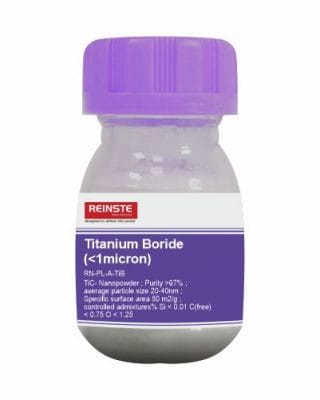
Furthermore, there is a growing interest in composite materials where nano borides act as reinforcing agents. For instance, incorporating titanium boride nanoparticles into an aluminum matrix can create a metal matrix composite (MMC) with a strength-to-weight ratio far exceeding that of conventional alloys. Such materials are in high demand in the automotive and aerospace sectors for creating lighter, more fuel-efficient vehicles and aircraft. As Indian industries increasingly adopt Industry 4.0 principles, the demand for high-performance materials like nano borides will only intensify, driving further innovation in their synthesis and application.
Related Products for Your Research


Frequently Asked Questions
Mechanical alloying (MA) is a solid-state powder processing technique that involves repeated welding, fracturing, and re-welding of powder particles in a high-energy ball mill. It is used to produce homogenous, nanostructured materials from elemental or pre-alloyed powders at or near room temperature.
This technique is ideal for nano borides because it operates at low temperatures, preventing grain growth and preserving the nanostructure. It allows for the synthesis of materials that are difficult to produce using conventional melting techniques due to high melting points or disparate component properties. It's also a scalable and relatively cost-effective method.
Nanostructured borides exhibit exceptional properties, including ultra-high hardness, high thermal and chemical stability, excellent wear resistance, and good electrical conductivity. Their nanoscale grain structure enhances these properties compared to their microcrystalline counterparts, a phenomenon explained by the Hall-Petch effect.
In India, the defense, aerospace, nuclear, automotive, and electronics industries stand to benefit significantly. Applications range from armor plating and cutting tools to high-temperature structural components for rockets and neutron-absorbing materials in nuclear reactors, aligning perfectly with initiatives like 'Make in India' and 'Aatmanirbhar Bharat'.
Ready to Advance Your Research?
Whether you are exploring nano borides synthesis or need high-purity materials for your next project, our team is here to help. Contact us to discuss your specific requirements.