
Introduction: The Rise of Nano Borides in Indian R&D
Nanotechnology is no longer a futuristic concept; it's a driving force of modern innovation, and India is rapidly emerging as a key player in this scientific revolution. Among the myriad of nanomaterials being explored, nano borides are carving out a significant niche. These compounds, which are nanoparticles of borides—essentially boron combined with metals like titanium, zirconium, or tungsten—are celebrated for their extraordinary physical and chemical properties. From unparalleled hardness to extreme temperature resistance, nano borides are poised to redefine industries from aerospace to defense and advanced manufacturing.
However, with great power comes great responsibility. As we integrate these powerful nanoparticles of borides into new technologies, ensuring their safety becomes paramount. The very nanoscale properties that make them so effective can also lead to unpredictable interactions with biological systems. This is where in vitro toxicity testing comes into play. For Indian researchers and professionals, mastering these testing methods is not just a regulatory hurdle; it's a critical step towards sustainable innovation, ensuring that our technological advancements do not come at the cost of human health or environmental integrity. This article serves as a comprehensive guide to understanding the unique properties of nano borides and the essential methodologies for evaluating their safety in a laboratory setting.
Unveiling the Remarkable Properties of Nano Borides
The excitement surrounding borides in nanotechnology stems from a unique combination of characteristics that are amplified at the nanoscale. Understanding these core nano boride properties is the first step to appreciating both their potential applications and the rationale behind their toxicity evaluation.
Key Chemical and Physical Properties of Borides
- Extreme Hardness and Wear Resistance: Materials like Titanium Boride (TiB₂) and Tungsten Boride (WB) are among the hardest materials known, rivaling diamond. This makes them ideal for applications requiring high durability and resistance to abrasion.
- High Melting Points: Nano borides are exceptionally stable at high temperatures. Zirconium Diboride (ZrB₂), for instance, has a melting point exceeding 3200°C, making it a prime candidate for refractory materials and high-temperature structural components.
- Excellent Thermal and Electrical Conductivity: Unlike many other ceramics, borides exhibit high conductivity. This property is crucial for applications in electrodes, electrical contacts, and thermal management systems in electronics.
- Chemical Inertness: Many borides show strong resistance to chemical corrosion, particularly from molten metals and acidic environments. This stability is vital for creating protective coatings and durable industrial components.
- High Neutron Absorption Cross-Section: Certain borides, particularly those containing the Boron-10 isotope, are excellent neutron absorbers. This makes materials like boron carbide (B₄C) and even some forms of boron nitride essential in the nuclear industry for control rods and shielding.
The synthesis of nano borides through methods like self-propagating high-temperature synthesis (SHS), chemical vapor deposition (CVD), or ball milling allows researchers to fine-tune particle size and morphology, further enhancing these properties. It is this nanoscale engineering that unlocks their full potential but also necessitates a thorough investigation into their biological interactions.
Applications: How Nano Borides Are Shaping Indian Industries
The unique properties of nano borides translate into a wide array of high-impact applications. In India, where the "Make in India" initiative is fueling growth in manufacturing and technology, these materials are finding fertile ground. The applications of nano borides are diverse and transformative.
Advanced Coatings & Cutting Tools
The exceptional hardness of nano borides makes them perfect for creating wear-resistant coatings on industrial parts, extending their lifespan and reducing maintenance costs. They are also incorporated into cutting tools, enabling higher precision and speed in machining operations for the automotive and manufacturing sectors.
Aerospace & Defense Composites
By reinforcing lightweight metal alloys (like aluminum or titanium) with nano boride particles, researchers can create metal matrix composites (MMCs) that are both incredibly strong and light. These materials are critical for developing next-generation aircraft, missiles, and armored vehicles, where strength-to-weight ratio is paramount.
High-Temperature Refractories
The steel, cement, and glass industries in India rely on materials that can withstand extreme heat. Nano borides like ZrB₂ are used to create crucibles, furnace linings, and other components that maintain their structural integrity at scorching temperatures, improving efficiency and safety in these demanding environments.
Nuclear and Energy Applications
The neutron-absorbing capabilities of boron compounds are leveraged in the nuclear sector for safety and control. Furthermore, their electrical conductivity and stability make them promising candidates for electrodes in advanced energy storage systems and industrial electrolysis processes.
The Critical Role of In Vitro Toxicity Testing for Nano Borides
As the use of nanoparticles of borides expands, a rigorous safety assessment is non-negotiable. In vitro toxicity testing—testing performed on cells in a controlled laboratory environment (e.g., in a petri dish or test tube)—offers the first line of defense. It is a faster, more ethical, and often more cost-effective alternative to animal testing (in vivo), providing crucial data on how nanoparticles interact with biological systems at a cellular level.
Why In Vitro Testing is Essential
- Predictive Power: It helps predict potential adverse outcomes like cell death, inflammation, or DNA damage.
- Mechanism Insight: It allows researchers to understand the specific mechanisms of toxicity, such as oxidative stress or membrane disruption.
- High-Throughput Screening: Multiple concentrations and types of nano borides can be tested simultaneously, accelerating the safety assessment process.
- Ethical Considerations: It aligns with the "3Rs" principle (Replacement, Reduction, and Refinement) of animal testing.
Common In Vitro Toxicity Testing Methods for Nano Borides
When evaluating nano borides, a battery of tests is typically employed to get a comprehensive picture of their potential toxicity. Here are some of the most common nano borides toxicity testing methods in vitro:
1. Cytotoxicity Assays (Cell Viability)
These assays determine the concentration at which nano borides become toxic to cells. The goal is to see if the nanoparticles cause cell death.
- MTT/MTS Assay: Measures the metabolic activity of cells. A decrease in activity suggests cell death or dysfunction.
- LDH Assay: Detects the release of lactate dehydrogenase (LDH), an enzyme that leaks out of cells when their membrane is damaged.
- Trypan Blue Exclusion Assay: A simple method where a dye is applied that can only enter dead cells, allowing for a direct count of viable vs. non-viable cells.
2. Genotoxicity Assays (DNA Damage)
These tests assess whether the nano borides can damage the genetic material (DNA) within a cell, which could have long-term health consequences.
- Comet Assay: A sensitive technique where individual cells are lysed and electrophoresed. Damaged DNA streams out, resembling a comet's tail.
- Micronucleus Test: Detects small, extra nuclei (micronuclei) in cells, which are formed from chromosome fragments or whole chromosomes left behind during cell division.
3. Oxidative Stress Assays
Many nanoparticles induce toxicity by generating reactive oxygen species (ROS), which cause cellular damage. These assays quantify that effect.
- DCFH-DA Assay: Uses a fluorescent probe that glows in the presence of ROS, allowing for the quantification of oxidative stress levels within the cells.
For researchers in India, adopting these standardized protocols is crucial for generating reliable, reproducible data that can be accepted globally, facilitating both academic collaboration and commercialization of nano boride-based technologies.
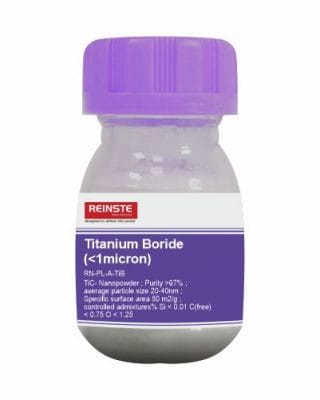
Explore Our Nano Boride Products


Frequently Asked Questions
Nano borides are advanced ceramic materials where boron is chemically combined with a more electropositive element, resulting in particles at the nanoscale (typically under 100 nm). These materials, such as titanium boride (TiB₂) and zirconium diboride (ZrB₂), are known for their exceptional hardness, high melting points, and excellent thermal and electrical conductivity.
As with any nanomaterial, understanding the potential biological impact of nano borides is essential for safe application. In vitro toxicity testing provides a controlled, ethical, and cost-effective method to assess how these nanoparticles interact with biological cells and systems, helping to predict potential health risks before they are used in consumer or industrial products.
In India, nano borides are gaining traction in high-performance sectors. Key applications include developing ultra-hard cutting tools, manufacturing wear-resistant coatings for industrial machinery, reinforcing lightweight metal matrix composites for aerospace and automotive parts, and creating advanced refractory materials for high-temperature environments.
Commonly used assays include MTT or MTS assays to measure cell viability and metabolic activity, LDH assays to detect cell membrane damage, and Comet assays to assess genotoxicity (DNA damage). Additionally, ROS (Reactive Oxygen Species) assays are used to measure oxidative stress, a common mechanism of nanoparticle-induced toxicity.