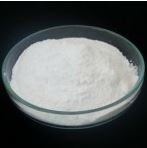
Nano Aluminum Oxide Granules Powder
High-purity nano aluminum oxide in granular powder form, ideal for advanced ceramic applications and composites requiring enhanced strength and wear resistance.
View Product →Delve into the advanced world of Nano Alumina, exploring its unique material properties, diverse industrial applications, and the burgeoning research landscape for Indian scientists and professionals.
Explore NowNano Alumina, or nano-sized aluminum oxide (Al₂O₃), represents a frontier in materials science, offering extraordinary properties due to its significantly increased surface area, unique crystallographic structures, and quantum effects at the nanoscale. For Indian researchers and professionals, understanding and harnessing Nano Alumina is crucial for advancements across various high-tech sectors. Its unique characteristics, such as superior hardness, exceptional thermal conductivity, excellent electrical insulation, high chemical inertness, and tunable optical properties, make it an indispensable material for next-generation technologies. From enhancing the durability and performance of advanced composites to revolutionizing energy storage solutions and catalytic processes, Nano Alumina is undoubtedly at the forefront of global innovation in materials engineering. The ability to manipulate materials at this scale unlocks possibilities for creating materials with unprecedented functionalities and efficiencies.
In India, a nation rapidly advancing in scientific research and industrial development, the adoption of cutting-edge nanomaterials like Nano Alumina is gaining significant momentum. This versatile material holds immense relevance for sectors ranging from defense and aerospace, where lightweight yet strong materials are paramount, to biomedical and electronics, offering solutions to complex engineering challenges. Its potential to improve existing technologies and enable entirely new ones positions it as a strategic material for India's technological future. This blog post aims to provide a comprehensive overview of Nano Alumina, covering its fundamental material properties, diverse industrial applications, and the promising research avenues it opens up for the vibrant Indian scientific community. We will also explore how Reinste actively supports this journey with state-of-the-art nano alumina testing services laboratory facilities, ensuring quality and fostering innovation in the nanomaterials domain.
Nano Alumina significantly enhances the strength, hardness, and thermal shock resistance of ceramic materials. This leads to the development of super-hard cutting tools, high-temperature structural components, and advanced wear-resistant coatings essential for aerospace, defense, and automotive industries, ensuring superior performance and durability.
In the electronics sector, Nano Alumina is extensively used as a high-performance dielectric material in capacitors, an effective insulating layer in microchips, and for critical thermal management in high-power electronic devices. Its properties enable the creation of more compact, efficient, and reliable electronic systems, crucial for modern technology.
Nano Alumina is crucial for improving the safety, cycle life, and overall performance of lithium-ion batteries by acting as a protective separator coating, enhancing thermal stability, and preventing internal short circuits. It also finds applications in fuel cells and supercapacitors, supporting the transition to cleaner energy solutions.
With its exceptionally high surface area and tailored pore structures, Nano Alumina serves as an excellent support material for catalysts in various chemical industries, including petroleum refining and fine chemical synthesis. It is also vital in automotive exhaust systems and for advanced water and air purification processes, contributing to environmental protection.
Due to its excellent biocompatibility and inertness, Nano Alumina is being extensively explored for advanced drug delivery systems, high-strength dental fillings, orthopedic implants (e.g., hip and knee replacements), and as protective coatings for various medical devices, enhancing their longevity and efficacy within the human body.
Applied as transparent, ultra-hard, and scratch-resistant coatings on optical lenses, touchscreens, and industrial equipment, Nano Alumina significantly extends their lifespan and improves performance. Its fine abrasive properties also make it valuable in polishing compounds and for creating high-precision optical surfaces.
The Indian market for advanced materials, including Nano Alumina, is experiencing robust growth, driven by increasing government investments in R&D, a burgeoning manufacturing sector, and a strong national push towards self-reliance (Atmanirbhar Bharat). India's strong pharmaceutical, automotive, electronics, and defense sectors are key demand drivers for high-performance nanomaterials. The unique properties of Nano Alumina make it highly sought after, with a growing demand for specialized Nano Alumina suppliers capable of providing high-quality, consistent, and customized materials to meet specific industrial requirements. This demand is further fueled by the need for localized production to reduce dependency on imports and boost domestic technological capabilities.
Current Nano Alumina market trends in India indicate a significant focus on sustainable Nano Alumina production methods and the development of cost-effective and scalable Nano Alumina synthesis techniques. Researchers are actively exploring novel ways to achieve specific morphologies, particle sizes, and surface functionalizations, optimizing its performance for a broader spectrum of Nano Alumina applications. The Nano Alumina price remains a critical factor in its widespread adoption, and local production capabilities are essential to make these advanced materials accessible to a broader range of industries, fostering economic growth and technological independence. Furthermore, the emphasis is on developing eco-friendly synthesis routes to align with global sustainability goals.
Key areas of intensive Nano Alumina research in India include improving the efficiency and safety of next-generation lithium-ion batteries, developing advanced catalysts for cleaner petrochemical processes, creating ultra-durable and lightweight coatings for aerospace and defense components, and innovating in biocompatible materials for advanced biomedical implants. Indian academic institutions, national research laboratories, and private companies are increasingly collaborating to establish world-class nano alumina testing services laboratory facilities. These facilities are crucial for rigorous material characterization, quality assurance, and performance validation, ensuring the reliability and efficacy of these advanced materials. This collaborative ecosystem is fostering a vibrant environment for innovation, positioning India as a significant player in the global Nano Alumina landscape. A deep understanding of Nano Alumina material properties and their precise characterization is paramount for unlocking its full potential in these diverse and critical fields, driving both scientific discovery and industrial advancement.
Nano Alumina refers to aluminum oxide (Al₂O₃) particles with dimensions in the nanometer range (typically 1-100 nm). Due to its nanoscale size, it exhibits unique and enhanced properties compared to bulk alumina, such as higher surface area, increased hardness, and improved thermal and electrical insulation.
The primary uses of Nano Alumina span various industries, including advanced ceramics, electronics (as dielectrics and insulators), energy storage (in lithium-ion batteries), catalysis (as a catalyst support), biomedical applications (implants, drug delivery), and protective coatings for enhanced durability and scratch resistance.
The main difference lies in particle size. Regular alumina has micrometer-sized particles, while Nano Alumina has nanometer-sized particles. This size reduction leads to a significantly higher surface area-to-volume ratio, increased reactivity, enhanced mechanical properties (hardness, strength), and different optical and electrical behaviors.
Like all nanomaterials, Nano Alumina should be handled with appropriate safety precautions. While generally considered less toxic than some other nanomaterials, inhalation of airborne nanoparticles should be avoided. Proper personal protective equipment (PPE) and ventilation are recommended in laboratory and industrial settings. Always refer to the Material Safety Data Sheet (MSDS) for specific handling instructions.
Reinste is a reputable supplier of high-quality Nano Alumina and offers comprehensive nano alumina testing services laboratory solutions for researchers and industries in India. We ensure the purity and consistency of our nanomaterials to meet diverse application requirements. You can explore our products and services on our website.
Don't let your projects fall behind. Connect with Reinste today to explore our comprehensive range of high-quality Nano Alumina products, meticulously engineered for purity and performance. Our expert team also offers state-of-the-art nano alumina testing services laboratory solutions, providing accurate characterization and analysis tailored for your specific research and industrial needs. Partner with us to unlock the full potential of nanomaterials and drive innovation in your field. Let's innovate together and achieve groundbreaking results.
Get in Touch Today