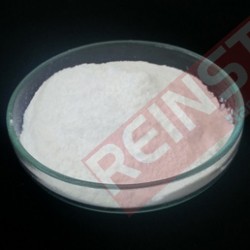
Dive into the computational world of nano alumina, exploring its transformative potential for advanced materials and industrial innovation across India.
Explore Nano AluminaIn the rapidly evolving landscape of materials science, nano alumina stands out as a material with unparalleled potential. Its unique properties at the nanoscale – including exceptional hardness, high thermal stability, and excellent chemical inertness – make it indispensable for a myriad of advanced applications. For Indian researchers and professionals, understanding and harnessing these properties is paramount to driving innovation and achieving technological self-reliance. This is where Nano Alumina Simulation and Nano Alumina Modeling emerge as game-changers.
Traditional experimental methods for material development are often time-consuming, resource-intensive, and limited in their ability to probe phenomena at the atomic and molecular levels. Computational Nano Alumina offers a powerful alternative, allowing scientists to predict, analyze, and optimize material behavior virtually. By simulating the interactions of atoms and molecules, researchers can gain profound insights into the synthesis, structure, and performance of nano alumina, significantly accelerating the pace of discovery and development.
For India, a nation committed to advancing its scientific and industrial capabilities, embracing Nano Alumina Simulation Tools is not just an option but a strategic imperative. These tools empower our engineers and scientists to design novel materials with tailor-made properties, addressing specific challenges in sectors ranging from defense and aerospace to renewable energy and healthcare. This blog delves into the intricacies of nano alumina simulation, its profound benefits, diverse applications, and the exciting opportunities it presents for India's scientific community.
Understanding the Nano Alumina Properties Simulation is key to unlocking its full potential. From predicting its behavior in extreme environments to optimizing its dispersion in composite materials, simulation provides a cost-effective and efficient pathway to innovation. Join us as we explore how these advanced computational techniques are shaping the future of materials science in India.
For researchers and scientists in India, integrating Nano Alumina Simulation into their work brings a multitude of advantages, transforming traditional research methodologies and opening new avenues for innovation.
The versatility of nano alumina, amplified by insights from Nano Alumina Simulation, has led to its widespread adoption across numerous industrial sectors. Here are some of the critical Nano Alumina Applications where its unique properties are making a significant impact:
Nano Alumina in Ceramics significantly enhances mechanical strength, hardness, and wear resistance, making it ideal for cutting tools, armor, and high-temperature components. Simulation helps optimize grain growth and sintering processes.
Nano Alumina in Coatings provides superior scratch resistance, corrosion protection, and thermal insulation. Applications range from automotive paints to thermal barrier coatings in aerospace engines. Nano Alumina Simulation Tools are vital for predicting coating adhesion and durability.
With its high surface area and tunable porosity, nano alumina acts as an excellent catalyst support and adsorbent. It's crucial in petrochemical processes, environmental remediation, and gas separation. Simulation helps understand surface reaction mechanisms.
Nano Alumina Uses extend to dielectrics in capacitors, insulation layers in microelectronics, and as a component in lithium-ion battery separators to enhance safety and performance. Computational Nano Alumina aids in optimizing these electrical properties.
Biocompatible nano alumina is used in dental and orthopedic implants, drug delivery systems, and biosensors. Its inertness and mechanical strength are highly valued.
Due to its extreme hardness, nano alumina is an excellent abrasive for polishing high-precision surfaces in optics, semiconductors, and metals.
The Nano Alumina market in India is poised for significant growth, driven by increasing industrialization, government initiatives like 'Make in India,' and a burgeoning focus on advanced materials research. Understanding the current and future Nano Alumina Trends is vital for stakeholders across the supply chain, from researchers to manufacturers and Nano Alumina Suppliers.
India's robust manufacturing sector, particularly in automotive, electronics, and aerospace, is creating a strong demand for high-performance materials. Nano Alumina, with its superior mechanical and thermal properties, is increasingly being adopted in these industries for lightweight components, advanced sensors, and protective coatings. The push for electric vehicles (EVs) and renewable energy solutions also fuels the need for improved battery materials and catalysts, areas where nano alumina excels.
The Indian government's emphasis on scientific research and technological development, through bodies like the Department of Science & Technology (DST) and Council of Scientific & Industrial Research (CSIR), provides substantial funding for nanotechnology projects. This support is encouraging more academic institutions and private R&D centers to invest in Nano Alumina Modeling and experimental research, fostering a collaborative ecosystem for innovation.
While global Nano Alumina Suppliers have historically dominated, there's a growing trend towards developing indigenous manufacturing capabilities. This not only reduces reliance on imports but also creates opportunities for local businesses to innovate in Nano Alumina Synthesis and processing. Simulation tools are instrumental in optimizing these local production processes for quality and cost-effectiveness.
Environmental sustainability is a key global trend, and India is no exception. Research is increasingly focusing on green synthesis routes for nano alumina and its application in environmental solutions, such as water purification and catalytic converters. Computational Nano Alumina plays a role in designing environmentally friendly synthesis protocols and understanding the long-term impact of nanomaterials.
Partnerships between academia, industry, and government are becoming more common, facilitating knowledge transfer and skill development in advanced materials. Workshops and training programs on Nano Alumina Simulation Tools Modeling are equipping the next generation of Indian scientists and engineers with the expertise needed to drive future innovations.
Nano Alumina simulation involves using computational methods to predict and understand the behavior, properties, and interactions of nano-sized aluminum oxide particles. This includes molecular dynamics, Monte Carlo simulations, and finite element analysis to study aspects like crystal structure, surface chemistry, mechanical strength, and thermal conductivity at the nanoscale.
Nano Alumina modeling is crucial for Indian R&D as it accelerates material discovery, optimizes synthesis processes, and predicts performance without extensive experimental trials. This leads to cost savings, faster innovation cycles, and the development of advanced materials for sectors like aerospace, defense, electronics, and renewable energy, aligning with India's 'Make in India' and scientific self-reliance goals.
Nano Alumina finds diverse applications including high-performance ceramics, catalysts, advanced coatings (thermal barrier, wear-resistant), abrasives, biomedical implants, drug delivery systems, and as a filler in composites. Its unique properties at the nanoscale make it ideal for enhancing strength, hardness, thermal stability, and catalytic activity in various materials.
Computational tools for Nano Alumina include quantum chemistry software (e.g., VASP, Gaussian), molecular dynamics simulators (e.g., LAMMPS, GROMACS), finite element analysis (FEA) software (e.g., ANSYS, Abaqus), and specialized materials science platforms. These tools enable researchers to model atomic interactions, predict material properties, and simulate complex behaviors.
Nano Alumina simulation drives market trends by enabling the design of novel materials with superior properties, leading to new product development and market expansion. It supports the trend towards lighter, stronger, and more efficient materials in industries like automotive, electronics, and energy storage, fostering innovation and competitive advantage.
Enhance your research and applications with high-quality nano alumina materials. These products complement the insights gained from Nano Alumina Simulation, bringing theoretical understanding into practical solutions.
Whether you're looking for advanced Nano Alumina Simulation Tools Modeling, high-quality materials, or expert consultation, Reinste is your trusted partner. Explore our resources and connect with our specialists to drive your innovations forward.
Get in Touch TodayHave specific questions about Computational Nano Alumina, its applications, or sourcing high-quality materials? Fill out the form below, and our team will get back to you promptly.