Nano Alumina Applications: Unlocking Potential for Indian R&D and Industry
Discover how nano alumina is revolutionizing various sectors, from advanced ceramics to cutting-edge electronics, and its pivotal role in India's technological growth.
Explore ApplicationsIntroduction to Nano Alumina
Nano alumina, also known as nano aluminum oxide (Al2O3), represents a cutting-edge class of nanomaterials that possesses extraordinary properties distinct from its bulk counterpart. Characterized by particle sizes typically ranging from 1 to 100 nanometers, nano alumina exhibits an exceptionally high surface area, superior hardness, remarkable thermal stability, and excellent chemical inertness. These unique attributes render it an indispensable component in the development of various high-performance materials and innovative technologies across a multitude of sectors.
For the vibrant community of Indian researchers and dedicated professionals, a comprehensive understanding of the multifaceted nano alumina applications is not merely beneficial but essential. This knowledge is pivotal for catalyzing innovation, fostering the creation of next-generation products, and significantly contributing to India's ambitious journey towards technological self-reliance and global leadership. This exhaustive guide aims to delve into the core aspects of nano alumina, meticulously highlighting its profound relevance to India's burgeoning research and development landscape and its diverse industrial sectors. Furthermore, access to detailed nano alumina application notes pdf documents can provide invaluable technical insights and practical methodologies for implementation.
Key Benefits of Nano Alumina for Indian Researchers
- Enhanced Material Strength and Durability: Incorporating nano alumina as a reinforcement phase or an additive dramatically improves the mechanical properties of composites, metals, and ceramics. This leads to materials with superior hardness, wear resistance, and fracture toughness, crucial for demanding applications in defense, aerospace, and automotive industries.
- Improved Thermal Conductivity and Insulation: Depending on its crystalline phase and morphology, nano alumina can be engineered to either efficiently dissipate heat (e.g., in electronics packaging) or act as an effective thermal barrier (e.g., in high-temperature insulation). This dual capability makes it highly versatile for thermal management solutions.
- Superior Catalytic Activity and Support in Chemical Reactions: The exceptionally high surface area of nano alumina provides abundant active sites, making it an outstanding catalyst support for a wide array of chemical reactions. It enhances reaction rates, selectivity, and overall process efficiency in petrochemicals, environmental catalysis, and organic synthesis.
- Advanced Surface Modification and Coating Capabilities: Nano alumina coating technology is revolutionizing surface engineering. These coatings offer unparalleled scratch resistance, corrosion protection, and improved hardness for components ranging from industrial tools to medical implants, significantly extending their operational lifespan and performance under harsh conditions.
- Facilitation of Miniaturization in Electronic Components: In the electronics sector, nano alumina's excellent dielectric properties and insulating capabilities are critical. It enables the development of ultra-thin dielectric layers, efficient thermal interface materials, and advanced passivation coatings, all contributing to the ongoing trend of miniaturization and enhanced performance of electronic devices.
- Development of Novel Composites with Tailored Properties: Researchers can precisely engineer materials with specific desired characteristics by integrating nano alumina into polymer, metal, or ceramic matrices. This opens immense possibilities for creating innovative products with customized mechanical, thermal, and electrical properties for niche applications.
- Opportunities for Sustainable and Energy-Efficient Solutions: By enabling the creation of more durable, lighter, and more efficient materials and components, nano alumina indirectly contributes to sustainability efforts. Its role in advanced battery technologies and catalytic converters also supports energy efficiency and environmental protection.
- Access to Detailed Nano Alumina Application Notes PDF: Reputable suppliers often provide extensive documentation, including nano alumina application notes pdf, which offer in-depth technical specifications, safety guidelines, and practical implementation strategies. These resources are invaluable for researchers in optimizing their experimental designs and industrial processes.
Diverse Nano Alumina Applications Across Industries
Nano Alumina for Ceramics
The incorporation of nano alumina for ceramics has profoundly transformed the field of advanced ceramic materials. By reducing grain size to the nanoscale, it significantly enhances the mechanical properties of ceramic components, including their hardness, fracture toughness, and wear resistance. This makes nano alumina indispensable for the production of high-performance refractories used in extreme temperature environments, durable cutting tools that maintain sharpness longer, and lightweight yet incredibly strong structural ceramics for aerospace and defense applications. Its use also contributes to the development of transparent ceramics, expanding their utility beyond traditional opaque forms.
Nano Alumina in Electronics
In the rapidly evolving electronics industry, nano alumina in electronics plays a pivotal role in enabling next-generation devices. Its exceptional dielectric strength and thermal conductivity make it ideal for creating ultra-thin insulating layers in capacitors and integrated circuits, ensuring efficient signal transmission and preventing short circuits. As a thermal management material, it effectively dissipates heat generated by high-power electronic components, preventing overheating and extending device lifespan. Furthermore, nano alumina is utilized in advanced passivation coatings to protect sensitive electronic components from moisture and corrosion, and as a key ingredient in chemical mechanical planarization (CMP) slurries for semiconductor manufacturing, contributing to the miniaturization and enhanced performance of electronic devices.
Nano Alumina Coating
Nano alumina coating technology is revolutionizing surface engineering. These coatings provide excellent scratch resistance, significantly increasing the durability of consumer electronics, optical lenses, and automotive finishes. Beyond hardness, they impart robust corrosion protection, crucial for components exposed to harsh environments in marine, chemical, and industrial settings. The coatings also improve wear resistance, making them invaluable for industrial tools, biomedical implants, and engine parts, thereby extending their operational lifespan and reducing maintenance requirements. The versatility of nano alumina allows for tailor-made coatings with specific functionalities, including anti-reflective or self-cleaning properties.
Catalysis and Adsorption
Nano alumina's role in catalysis is primarily driven by its high surface area, tunable pore structure, and surface acidity. It serves as an outstanding support material for active catalytic metals, dispersing them effectively and preventing sintering, which maintains high catalytic activity over time. Beyond being a support, nano alumina itself acts as an active catalyst in various reactions, particularly in acid-base catalysis. Its applications span petrochemical refining (e.g., in hydrodesulfurization), environmental catalysis (e.g., in automotive catalytic converters and industrial exhaust treatment), and the synthesis of fine chemicals, contributing to more efficient and environmentally friendly industrial processes.
Polishing and Abrasives
The inherent hardness and fine particle size distribution of nano alumina make it an ideal material for precision polishing and abrasive applications. It is extensively used in slurries for chemical mechanical polishing (CMP) in semiconductor manufacturing, achieving ultra-smooth surfaces essential for microelectronic fabrication. In the optical industry, nano alumina abrasives are employed for polishing lenses, mirrors, and other optical components to achieve high surface quality and clarity. Its controlled particle morphology allows for gentle yet effective material removal, making it suitable for delicate surfaces while delivering superior finish.
Lithium-ion Batteries
In the rapidly expanding field of energy storage, nano alumina is playing an increasingly critical role in improving the performance and safety of lithium-ion batteries. It is frequently applied as a protective coating on electrode materials, particularly cathodes. This nano alumina coating helps to stabilize the electrode-electrolyte interface, suppress unwanted side reactions, and mitigate thermal runaway risks, thereby enhancing the battery's safety profile. Additionally, these coatings can improve the cycle life and rate capability of batteries by reducing degradation and facilitating faster ion transport, contributing to the development of more robust and efficient energy storage solutions for electric vehicles and portable electronics.
Nano Alumina: Opportunities and Trends in India
India's dynamic economic growth, coupled with its strategic emphasis on 'Make in India' and 'Atmanirbhar Bharat' (self-reliant India) initiatives, has created an exceptionally fertile ground for the expansion and innovation within the nano alumina market. The country's burgeoning industrial sectors, including automotive, aerospace, defense, and electronics, are experiencing an unprecedented demand for advanced materials that offer superior performance, durability, and efficiency. This escalating demand is a primary driver for the increased adoption of nanomaterials like nano alumina.
Indian researchers, supported by robust government funding and academic collaborations, are actively delving into novel nano alumina uses. Promising areas of investigation include its application in advanced water purification systems to address the nation's water challenges, the development of biocompatible implants for the healthcare sector, and cutting-edge energy storage solutions crucial for India's renewable energy transition. The strengthening of indigenous manufacturing capabilities is simultaneously fostering a critical need for reliable nano alumina suppliers within the country, alongside the development of efficient and scalable nano alumina production methods.
A profound understanding of nano alumina properties is paramount for tailoring these materials precisely to meet the unique and diverse industrial requirements across India, thereby fostering greater innovation and achieving self-reliance in critical technologies. Moreover, the widespread availability of comprehensive nano alumina application notes pdf documents from leading global and domestic manufacturers serves as an invaluable resource. These documents empower local R&D efforts by providing detailed technical specifications, safety protocols, and practical implementation strategies, accelerating the transition of laboratory breakthroughs into industrial applications and ensuring India remains at the forefront of advanced materials science.
Frequently Asked Questions about Nano Alumina
Nano alumina, or nano aluminum oxide (Al2O3), is a high-performance ceramic nanomaterial characterized by its extremely small particle size (typically 1-100 nanometers). These tiny particles exhibit enhanced properties compared to their bulk counterparts, including superior hardness, thermal stability, high surface area, and chemical inertness, making them ideal for advanced applications.
Nano alumina finds diverse applications across various industries. Key areas include advanced ceramics (for improved strength and wear resistance), electronics (as dielectric layers, thermal management, and in semiconductors), protective coatings (for scratch and corrosion resistance), catalysis (as catalyst supports), polishing and abrasives, and as an additive in lithium-ion batteries to enhance safety and performance.
In ceramics, nano alumina significantly improves mechanical properties such as hardness, fracture toughness, and wear resistance. It allows for the creation of denser, stronger, and more durable ceramic components that can withstand extreme conditions, making it crucial for applications like cutting tools, ballistic armor, and high-temperature refractories.
Nano alumina is critical in electronics due to its excellent dielectric properties, high thermal conductivity, and insulating capabilities. It is used in thin-film dielectric layers, as a thermal management material to dissipate heat in electronic devices, in passivation coatings, and as a component in advanced semiconductor manufacturing, contributing to the miniaturization and efficiency of electronic components.
Several reputable suppliers offer nano alumina in India, catering to various research and industrial needs. Companies like Reinste and Hiyka are known for providing high-quality nanomaterials, including nano alumina. It is recommended to check their official websites or contact them directly for product specifications, availability, and pricing.
When handling nano alumina, it's essential to follow standard laboratory safety practices for nanomaterials. This includes wearing appropriate personal protective equipment (PPE) such as gloves, safety glasses, and a lab coat. Working in a well-ventilated area or under a fume hood is recommended to prevent inhalation of airborne nanoparticles. Always refer to the Safety Data Sheet (SDS) provided by the supplier for specific handling, storage, and disposal guidelines.
Related Nano Alumina Products
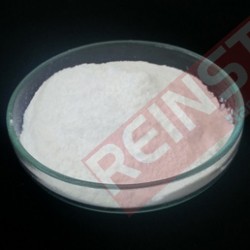
Nano Aluminum Oxide Granules Powder
View Product
Nano Alumina Translucent Liquid
View Product
High Quality Nano Alumina Particles For Lithium Battery
View ProductReady to Integrate Nano Alumina into Your Research?
Explore Reinste's comprehensive range of high-quality nano alumina products and advanced materials for your specific needs.
Visit Reinste Now