Unlocking the Potential of Nano Alumina: Properties, Particle Size, and Zeta Potential for Indian Innovation
Dive deep into the science and applications of nano alumina powder, understanding its critical characteristics and their impact on advanced materials, tailored for researchers and professionals in India.
Explore Nano Alumina ProductsIntroduction to Nano Alumina: A Game Changer for Indian R&D
Nano alumina, or nano aluminum oxide (Al2O3), stands as a cornerstone in the realm of advanced materials, revolutionizing various industries with its exceptional properties. For Indian researchers and professionals, understanding the nuances of nano alumina is paramount to fostering innovation across sectors like electronics, healthcare, automotive, and energy. Its unique characteristics, stemming from its nanoscale dimensions, bestow upon it enhanced hardness, thermal stability, electrical insulation, and catalytic activity, making it an an indispensable material for cutting-edge applications.
This comprehensive guide aims to illuminate the critical aspects of nano alumina, from its fundamental nano alumina properties and nano alumina particle size distribution to the crucial role of zeta potential in its dispersion and stability. We will explore its diverse applications and shed light on emerging trends and opportunities specifically within the Indian context, empowering the nation's scientific and industrial community to harness the full potential of this remarkable nanomaterial.
The miniaturization trend across technologies demands materials that can perform at unprecedented levels. Nano alumina powder, with its high surface area and quantum effects, offers solutions that bulk materials simply cannot. Its versatility allows for tailoring specific properties, making it a highly adaptable material for a wide array of high-performance scenarios, from strengthening composites to enabling advanced catalysis. Understanding these foundational aspects is the first step towards leveraging its full potential in India's journey towards scientific and industrial self-reliance.
Key Benefits of Nano Alumina for Researchers and Professionals
The unique nano alumina properties offer a multitude of advantages that are highly beneficial for researchers and professionals seeking to push the boundaries of material science and engineering. Leveraging nano alumina powder can lead to significant breakthroughs and performance enhancements in various applications:
- Enhanced Mechanical Strength: Integrates seamlessly into composites, significantly improving their hardness, wear resistance, and overall mechanical integrity, crucial for high-stress applications.
- Superior Thermal Performance: Offers improved thermal conductivity and excellent electrical insulation, making it ideal for advanced thermal management solutions in electronics and power systems.
- Advanced Catalytic Activity: Due to its high surface area and tunable surface chemistry, nano alumina acts as an exceptional catalyst support, accelerating chemical reactions and improving process efficiency in various industrial applications.
- Improved Surface Properties: When used in coatings, it provides better surface finish, increased scratch resistance, and enhanced corrosion protection, extending the lifespan of materials.
- Precise Control over Drug Delivery: The ultra-small nano alumina particle size enables its use in targeted drug delivery systems and other biomedical applications, offering precision at the cellular level.
- High-Performance Abrasives: Functions as a superior abrasive and polishing agent, achieving ultra-fine finishes on sensitive materials like semiconductors and optical lenses.
- Increased Energy Storage Efficiency: Plays a vital role in lithium-ion batteries by enhancing separator performance and electrode stability, leading to safer and more efficient energy storage solutions.
- Tailorable Optical Properties: Allows for the development of advanced sensors, transparent ceramics, and optical components with customized light interaction characteristics.
- Cost-Effective Material Solutions: Often, a smaller quantity of nano alumina can achieve superior results compared to bulk materials, leading to material savings and overall cost-effectiveness in product development.
- Facilitates Sustainable Innovation: Contributes to the development of lighter, more durable, and energy-efficient products, aligning with global and national goals for sustainability and eco-friendly manufacturing.
- Optimized Dispersion with Zeta Potential: Understanding and controlling the zeta potential of nano alumina dispersions is crucial for achieving uniform distribution in various matrices, ensuring consistent performance and preventing aggregation.
These advantages collectively highlight why nano alumina is not just a material, but a catalyst for innovation, offering Indian researchers and industries a powerful tool to develop advanced, high-performance products and solutions.
Diverse Applications of Nano Alumina Across Indian Industries
The broad spectrum of nano alumina applications makes it a material of immense strategic importance, particularly for India's rapidly advancing industrial landscape. Its unique nano alumina properties are being leveraged to develop next-generation solutions across various sectors:
Advanced Ceramics
In the ceramics industry, nano alumina powder is indispensable for producing high-performance components. Its fine nano alumina particle size allows for denser, stronger, and more wear-resistant ceramics suitable for ballistic protection, cutting tools, and high-temperature furnace linings. Indian manufacturers are increasingly adopting nano alumina to enhance the durability and efficiency of their ceramic products, meeting global standards for strength and thermal resistance. This leads to the creation of advanced structural ceramics and transparent ceramics with superior properties.
Protective Coatings
Nano alumina serves as an excellent additive in coatings, imparting superior hardness, scratch resistance, and corrosion protection. From automotive parts to industrial machinery and architectural surfaces, nano alumina-enhanced coatings extend product lifespan and reduce maintenance. The ability to control nano alumina particle size and dispersion through zeta potential measurement ensures uniform and effective coating layers, providing robust thermal barrier coatings and anti-corrosion layers for critical infrastructure.
Electronics and Thermal Management
With the miniaturization of electronic devices, effective thermal management is crucial. Nano alumina's high thermal conductivity and electrical insulation properties make it an ideal filler in polymer composites for heat sinks, potting compounds, and circuit board substrates. India's thriving electronics manufacturing sector benefits significantly from these advancements, enabling more compact and reliable devices. It’s also used as a dielectric material in various electronic components, showcasing its critical role in modern electronics.
Catalysis and Adsorption
The high surface area of nano alumina makes it a preferred support material for catalysts in various chemical reactions, including petroleum refining, environmental catalysis, and organic synthesis. Its tailored porosity and surface chemistry facilitate efficient reaction pathways. Indian chemical and petrochemical industries utilize nano alumina to improve process efficiency and reduce environmental impact, particularly in automotive catalysts and photocatalysis applications.
Energy Storage Solutions
The burgeoning electric vehicle market and renewable energy initiatives in India are driving demand for advanced battery materials. Nano alumina plays a critical role as a coating material for lithium-ion battery separators and electrode particles, enhancing thermal stability, preventing short circuits, and improving overall battery safety and lifespan. The precise control over nano alumina particle size is paramount for these applications, contributing to the development of high-performance fuel cell components and supercapacitors.
Biomedical and Healthcare
In the biomedical field, nano alumina's biocompatibility and mechanical strength make it suitable for dental implants, bone scaffolds, and drug delivery systems. Researchers in India are exploring innovative ways to utilize nano alumina for advanced healthcare solutions, including targeted drug delivery and tissue engineering. Its inert nature and ability to be functionalized make it a promising material for next-generation medical devices and diagnostics.
These diverse applications underscore the versatility of nano alumina and its pivotal role in driving technological advancements across India's industrial and research sectors, highlighting its importance as an additive in various formulations.
Nano Alumina in India: Opportunities, Market Trends, and Future Outlook
India's burgeoning research and development landscape, coupled with its growing manufacturing sector, presents a fertile ground for the adoption and innovation in nano alumina technology. The 'Make in India' initiative further propels the demand for indigenous development of advanced materials, positioning nano alumina as a strategic component.
Key nano alumina market trends in India include the increasing focus on electric vehicles (EVs), which drives demand for high-performance battery materials where nano alumina plays a crucial role in improving safety and efficiency. The healthcare sector's expansion, particularly in medical devices and diagnostics, opens avenues for nano alumina in biocompatible coatings and drug delivery systems. Furthermore, the push for sustainable infrastructure and energy solutions fuels research into nano alumina's role in lightweight composites and efficient energy conversion.
Indian academic institutions and industrial giants are actively investing in research on nano alumina synthesis methods, exploring cost-effective and scalable production techniques to meet domestic demand. The emphasis on nano alumina properties and nano alumina particle size optimization for specific applications, such as in advanced textiles or water purification, is also gaining traction. The market for nano alumina powder and its derivatives is projected to grow significantly, driven by these domestic demands and global advancements.
Collaboration between academia and industry, alongside government support, is crucial to fully capitalize on these opportunities and establish India as a leader in nano alumina innovation, enhancing its nano alumina applications across a spectrum of industries. The strategic importance of nano alumina as an additive in various advanced materials cannot be overstated, as it continues to unlock new possibilities for enhanced performance and efficiency.
The future outlook for nano alumina in India is bright, with continuous research into novel applications, improved synthesis techniques, and a growing understanding of how to precisely control its zeta potential for optimal dispersion and integration into complex systems. This will undoubtedly lead to a new era of material innovation and industrial growth for the nation.
Frequently Asked Questions about Nano Alumina
Nano alumina refers to aluminum oxide particles with dimensions typically less than 100 nanometers. Its small nano alumina particle size is crucial because it leads to a significantly increased surface area-to-volume ratio, quantum mechanical effects, and unique properties like enhanced hardness, improved thermal conductivity, and superior catalytic activity compared to its bulk counterpart. Optimal nano alumina particle size is vital for achieving desired performance in various applications, influencing everything from mechanical strength to optical transparency.
Zeta potential is a key indicator of the stability of colloidal dispersions, including those of nano alumina. It represents the electrical potential at the slipping plane of a particle in a liquid. A high absolute zeta potential (either positive or negative) indicates strong electrostatic repulsion between particles, preventing aggregation and leading to a stable dispersion. For nano alumina zeta potential measurement, understanding this parameter is critical for formulating stable suspensions used in coatings, slurries, and composites, ensuring uniform distribution and preventing sedimentation, which is essential for consistent material performance.
In India, nano alumina applications are expanding across several sectors. It is extensively used in advanced ceramics for high-strength components, in the automotive industry for wear-resistant coatings and catalytic converters, and increasingly in the electronics sector for thermal management and dielectric materials. The burgeoning lithium-ion battery market in India heavily relies on nano alumina for enhanced safety and performance. Furthermore, its use in polishing, abrasives, and as an additive in polymers and composites is significant for improving material properties and performance across various industrial processes, including nano alumina in ceramics and nano alumina use in coatings.
The versatility of nano alumina properties stems from its unique combination of characteristics. These include exceptional hardness and abrasion resistance, high thermal stability (refractory nature), excellent electrical insulation, and a high surface area. Depending on its crystalline phase (alpha, gamma, delta, theta), nano alumina can exhibit different properties, such as high porosity in gamma-alumina for catalytic applications or extreme hardness in alpha-alumina for structural uses. These properties make nano alumina powder a highly sought-after material for diverse high-performance applications, enabling innovations in sectors from aerospace to consumer goods.
Explore Related Nano Alumina Products
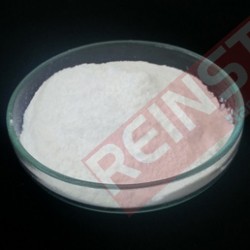
Nano Aluminum Oxide Granules Powder
View Product
Nano Alumina Translucent Liquid
View Product
High Quality Nano Alumina Particles For Lithium Battery
View ProductReady to Innovate with Nano Alumina?
Connect with Reinste to discover tailored nano alumina solutions that can elevate your research and industrial applications. Our experts are ready to assist you in harnessing the power of advanced nanomaterials.
Get in Touch Today