
The Next Leap in Material Science for Indian Innovation
In the world of advanced manufacturing, a persistent challenge has been the effective joining of dissimilar materials. How do you weld lightweight aluminum to high-strength steel without creating a weak, brittle joint? This question is critical for India's burgeoning aerospace, automotive, and electronics industries. The answer lies in a groundbreaking field: Nanocomposite Joining.
This innovative approach moves beyond traditional welding by employing interface engineering in dissimilar joints. By introducing specially designed nano alloys at the seam, we can create a bond that is not just strong, but often superior to the parent materials themselves. This isn't just a theoretical concept; it's a practical solution that addresses the core limitations of conventional joining methods. Through techniques like nano-enabled fusion welding and the precision of additive manufacturing of multi-material interfaces, we are now able to engineer high-strength dissimilar material bonds that are redefining product design and performance.
For Indian researchers and professionals, mastering the properties of nano alloys and their applications is no longer optional—it's essential for driving national initiatives like 'Make in India' and positioning the country as a global leader in high-tech manufacturing.
Key Benefits for Researchers & Industry
Unprecedented Bond Strength
Nano-reinforcements at the joint interface prevent the formation of brittle intermetallic compounds, resulting in bonds that exhibit superior tensile and fatigue strength.
Enhanced Thermal & Electrical Conductivity
Custom-engineered nano alloys can improve heat and electricity transfer across the joint, a critical factor for electronics and battery systems in electric vehicles.
Superior Corrosion Resistance
Interface engineering can create a galvanic-neutral zone at the joint, significantly reducing the risk of corrosion that plagues many dissimilar metal pairings.
Enables Lightweighting
The ability to reliably join lightweight materials like aluminum and composites to steel allows for significant weight reduction in vehicles and aircraft, improving fuel efficiency and performance.
Industrial Applications of Nano Alloys for Joining
Aerospace & Defense
In aerospace, every gram matters. Nanocomposite joining is used to weld lightweight aluminum fuselages to titanium alloy landing gear brackets, creating structures that are both incredibly strong and light. The industrial nano alloys used here ensure reliability under extreme stress and temperature variations.
Automotive (EVs)
The electric vehicle revolution hinges on battery technology. Joining copper tabs to aluminum busbars is a critical manufacturing step. Nano-enabled fusion welding provides a low-resistance, high-strength bond, improving battery efficiency and lifespan—a key nano alloys application.
Electronics & Semiconductors
Effective heat dissipation is vital for modern electronics. This technology allows for the direct bonding of ceramic heat sinks to copper heat spreaders, creating highly efficient thermal management solutions that enable more powerful and compact devices, showcasing the versatility of nano alloys in electronics.
Biomedical Devices
In medical implants, biocompatibility is key. Nanocomposite joining is used to bond biocompatible metals like titanium to polymers or ceramics for devices like pacemakers and artificial joints. This highlights the growing role of nano alloys in biotechnology, ensuring durability and patient safety.
Opportunities & Research Trends in India
India is at a pivotal moment in manufacturing and R&D. The national push towards self-reliance in defense, coupled with a booming EV market, creates a fertile ground for technologies like nanocomposite joining. Key research trends are emerging from premier institutions like the IITs and IISc, focusing on the additive manufacturing of multi-material interfaces. This involves using 3D printing to create functionally graded materials, where the joint is not an abrupt line but a gradual transition, eliminating stress points entirely.
Furthermore, government bodies and private sector giants are investing heavily in nano alloys research trends. The focus is on developing cost-effective nano alloy manufacturing processes and exploring novel compositions for specific industrial needs. For young researchers and engineers, this translates into immense opportunities. Expertise in material science, metallurgy, and advanced welding processes is in high demand. The advantages of nano alloys—strength, lightness, and conductivity—are perfectly aligned with the future of Indian industry.
Frequently Asked Questions
Nanocomposite joining is an advanced material science technique that involves introducing nanoparticles or nano-scale reinforcements into the interface (the joint area) between two dissimilar materials. This process, often part of nano-enabled fusion welding, creates a composite material at the joint, drastically improving its mechanical, thermal, and electrical properties, resulting in high-strength dissimilar material bonds.
Joining dissimilar materials like aluminum and steel is difficult due to their different physical, mechanical, and chemical properties. These include varying melting points, thermal expansion coefficients, and lattice structures. Traditional welding often creates brittle intermetallic compounds at the interface, leading to weak and unreliable joints. Interface engineering using nano alloys helps mitigate these issues.
Nano alloys and nanocomposites are crucial in aerospace for joining lightweight metals to high-strength alloys, in automotive for electric vehicle battery components (e.g., copper to aluminum), and in electronics for creating efficient thermal management systems. Their properties of nano alloys make them ideal for creating strong, lightweight, and durable multi-material structures.
Additive manufacturing (AM), or 3D printing, is revolutionizing this field by enabling the precise deposition of materials layer by layer. This allows for the creation of graded interfaces where the material composition changes gradually from one material to another, incorporating nano alloys. This additive manufacturing of multi-material interfaces results in superior bonding and reduces stress concentrations.
The outlook is extremely promising. With initiatives like 'Make in India' and a growing focus on advanced manufacturing, there is a huge demand for high-strength, lightweight materials. Indian research institutions are actively exploring nano alloys research trends, and industries in defense, aerospace, and electric mobility are poised to be major adopters of nanocomposite joining technologies.
Related Products
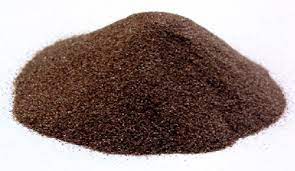
Copper/ Tin – Alloy Nanopowder
View Product →Ready to Advance Your Research?
Explore our range of high-purity nano alloys and materials to fuel your next big innovation. Connect with our experts to discuss your specific requirements.
Browse Our Catalog