An Introduction to Nano Alloys in the Indian R&D Landscape
In the ever-evolving world of materials science, nanotechnology stands as a beacon of innovation, and at its forefront are nano alloys. These are not just miniature versions of traditional alloys; they are a class of materials engineered at the atomic level, typically with grain sizes between 1 and 100 nanometers. This nanoscale manipulation unlocks a host of extraordinary properties not seen in their bulk counterparts. For the vibrant and rapidly growing research and development sector in India, understanding nano alloys in research is no longer a niche interest but a critical necessity.
The significance of nano alloy properties—such as enhanced catalytic activity, superior mechanical strength, unique magnetic behaviors, and tailored optical characteristics—cannot be overstated. Indian researchers across premier institutions like the IITs, IISc, and national laboratories are harnessing these properties to tackle some of the country's most pressing challenges. From developing efficient catalysts for cleaner energy to creating sensitive biosensors for affordable healthcare, the applications are as vast as they are impactful. The study of nano alloys synthesis and nano alloys characterization forms the bedrock of this research, enabling scientists to design materials with precision for specific, high-performance roles.
This guide is tailored for the Indian researcher, scientist, and professional. It aims to provide a comprehensive overview of the fundamental concepts, from production techniques to the latest market trends, emphasizing the immense potential nano alloys applications hold for Indian industry and academia. As we delve deeper, we will explore why nano alloys are a cornerstone of modern nanotechnology and a key driver of future technological advancements.
Key Benefits for Researchers Studying Nano Alloys
Engaging with nano alloys in research offers distinct advantages, empowering scientists to push the boundaries of innovation. Here are some of the core benefits:
- Unprecedented Material Properties: Researchers can achieve properties like superparamagnetism, enhanced catalytic efficiency, and lower melting points, which are impossible with micro alloys. This opens doors to novel experiments and product development.
- High Surface Area-to-Volume Ratio: The extremely high surface area of nano alloys makes them exceptionally reactive. This is a critical advantage in catalysis and sensing applications, where surface interactions are paramount.
- Tunable Characteristics: By precisely controlling the size, composition, and structure during nano alloys synthesis, researchers can fine-tune the material's properties to meet the exact requirements of their academic research papers or industrial projects.
- Interdisciplinary Research Opportunities: The study of nano alloys lies at the intersection of physics, chemistry, materials science, and engineering, fostering collaboration and leading to groundbreaking, interdisciplinary discoveries.
Industry-Specific Applications of Nano Alloys
Catalysis
Nano alloys, such as Pt-Ru and Pd-Au, are powerful catalysts due to their high surface area and unique electronic properties. They are vital in the petrochemical industry for refining processes, in automotive catalytic converters for pollution control, and in fuel cells for efficient energy conversion. The precise nano alloy properties allow for higher selectivity and reactivity, reducing waste and energy consumption.
Biomedical and Healthcare
Gold-silver (Au-Ag) nano alloys are used in diagnostic biosensors for detecting diseases at early stages. Their biocompatibility and optical properties also make them suitable for targeted drug delivery systems and as contrast agents in medical imaging. This is a key area of nano alloys in nanotechnology research in India.
Electronics and Data Storage
Magnetic nano alloys like Iron-Platinum (Fe-Pt) are revolutionizing data storage, enabling the development of ultra-high-density hard drives. Their unique magnetic domains allow for smaller bits and greater storage capacity. Furthermore, conductive nano alloys are used in printed electronics and flexible displays.
Energy Storage
In the quest for better batteries, nano alloys are a game-changer. Silicon-based nano alloys are being explored as high-capacity anodes for lithium-ion batteries, promising longer life and faster charging for electric vehicles and consumer electronics. This directly impacts the growing nano alloys market.
Environmental Remediation
The high reactivity of nano alloys makes them effective for environmental cleanup. For instance, nanoscale zero-valent iron (nZVI) alloys can neutralize toxic pollutants in groundwater and soil, offering a cost-effective and efficient solution to industrial contamination—a critical application for India.
Aerospace and Structural
Lightweight yet high-strength nano alloys (e.g., Aluminum-based) are being developed for aerospace components. By reinforcing the metal matrix with nanoparticles, researchers can create materials that reduce aircraft weight, improve fuel efficiency, and enhance durability under extreme conditions.
Opportunities and Trends for Nano Alloys in India
The nano alloys market in India is on a steep upward trajectory, driven by government initiatives like 'Make in India' and a burgeoning demand for advanced materials across various sectors. Researchers and industries are capitalizing on several key trends. A major focus is on the sustainable nano alloys production, with an emphasis on green synthesis methods that reduce environmental impact. This aligns with global sustainability goals and opens new avenues for funding and international collaboration.
Another significant trend is the integration of nano alloys into the Internet of Things (IoT) ecosystem. The development of highly sensitive and low-power sensors using nano alloys is critical for smart agriculture, environmental monitoring, and healthcare diagnostics. The superior nano alloy properties are essential for creating the next generation of connected devices. Academic research papers from India are increasingly focusing on these practical, market-oriented nano alloys applications, bridging the gap between laboratory discovery and commercial viability.
Furthermore, the debate of nano alloys vs micro alloys is becoming more pronounced in high-performance applications. While micro alloys are cost-effective for traditional structural uses, nano alloys are proving indispensable where performance and functionality are paramount. The meticulous process of nano alloys characterization using advanced techniques like Transmission Electron Microscopy (TEM) and X-ray Diffraction (XRD) is a crucial skill for researchers, ensuring the quality and reliability of these advanced materials for critical applications in defense, aerospace, and energy.
Frequently Asked Questions
Nano alloys are metallic alloys with at least one dimension in the nanometer scale (1-100 nm). Their unique properties, such as high reactivity and quantum effects, differ significantly from their bulk counterparts, making them crucial for advanced materials research.
Nano alloy synthesis involves sophisticated 'bottom-up' techniques like co-precipitation, sol-gel, and inert gas condensation, or 'top-down' methods like high-energy ball milling. These methods provide precise control over particle size and composition, which is not possible with traditional bulk melting and casting processes.
In India, nano alloys are heavily researched for applications in catalysis for petrochemical industries, biomedical sensors for affordable healthcare diagnostics, energy storage solutions like high-capacity batteries, and environmental remediation for water purification.
The key difference is the particle size and resulting properties. Nano alloys have grain sizes in the 1-100 nanometer range, exhibiting quantum size effects and a very high surface-area-to-volume ratio. Micro alloys have larger grain sizes (in the micrometer range) and their properties are primarily governed by classical physics, lacking the novel catalytic and electronic properties of nano alloys.
Related Nano Alloy Products
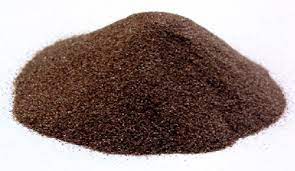
Copper/ Tin – Alloy Nanopowder
View Product →
Copper/ Tin – Alloy Nanopowder
View Product →
Copper/ Tin – Alloy Nanopowder
View Product →
Copper/ Tin – Alloy Nanopowder
View Product →Ready to Advance Your Research?
Explore our wide range of high-purity nano alloys and other nanomaterials to fuel your next discovery. Get in touch with our experts for custom requirements.
Browse Our Catalog