
The Dawn of a New Material Age in Indian Industry
India's rapid industrialization and ambitious economic goals are intrinsically linked to efficiency and sustainability. From pharmaceutical manufacturing to petrochemical refining, the need for pure gases is paramount. Traditional separation methods, like cryogenic distillation and pressure swing adsorption using zeolites or activated carbon, have long been the industry standard. However, these processes are often energy-intensive, costly, and reach performance plateaus. This is where a groundbreaking class of materials, **Metal-Organic Frameworks (MOFs)**, enters the stage, promising a paradigm shift.
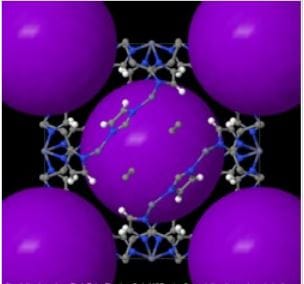
**Metal-Organic Frameworks (MOFs)** are essentially molecular sponges, engineered at the nanoscale. They consist of metal ions or clusters linked together by organic molecules, forming a highly ordered, crystalline structure with an unprecedented internal surface area. To put it in perspective, a single gram of a MOF can have a surface area larger than a football field. This vast, accessible surface, combined with tunable pore sizes, makes **MOFs exceptional candidates for gas adsorption and industrial gas separation**.
For Indian researchers and industries, **MOF materials** represent more than just a scientific curiosity; they are a strategic tool. They offer the potential to drastically reduce the energy footprint of purification processes, enhance product purity, and enable new chemical pathways. As India strives for 'Aatmanirbhar Bharat' (self-reliant India) in high-tech manufacturing and sustainable development, mastering **nanoporous materials** like MOFs is not just an option—it's a necessity.
Why MOFs are a Game-Changer for Researchers
For scientists and engineers in Indian R&D labs, MOFs open up a universe of possibilities. Their unique properties overcome many limitations of conventional adsorbents, providing a fertile ground for innovation.
Unmatched Designability and Tunability
Unlike the rigid structures of zeolites, MOFs are built with a "building block" approach. Researchers can systematically change the metal and organic linker to fine-tune pore size, shape, and chemical functionality, tailoring the material for highly selective **gas adsorption** of specific molecules.
Record-Breaking Surface Area
The exceptionally high surface area of MOFs allows for a much greater volume of gas to be adsorbed per unit mass of material. This translates to more compact, efficient systems and higher performance in **gas storage materials** applications.
Mild Regeneration Conditions
Many gases adsorbed by MOFs can be released through a gentle change in pressure or a slight increase in temperature. This reduces the energy required for regeneration, making the overall cycle more sustainable and cost-effective compared to traditional **high-performance adsorbents**.
Functionality for Active Separation
The organic linkers in MOFs can be functionalized with specific chemical groups that can interact more strongly with certain gas molecules, enhancing selectivity in complex gas mixtures—a key requirement in **chemical purification techniques**.
Key Industrial Applications for MOFs in India
The versatility of **MOF applications** spans across India's most vital industrial sectors. Here’s a look at where these **sustainable adsorbents** are poised to make the biggest impact.
Carbon Capture and Sequestration (CCS)
With India's commitment to reducing carbon emissions, MOFs offer a superior solution for capturing CO₂ from flue gas in power plants and industrial facilities. MOFs like Mg-MOF-74 exhibit high selectivity for CO₂ even at low concentrations, a critical factor for post-combustion capture.
Natural Gas and Biogas Upgrading
To use natural gas or biogas as fuel, impurities like CO₂, H₂S, and water must be removed. MOFs can perform this **industrial gas separation** with higher efficiency and lower energy costs than conventional amine scrubbing, making cleaner energy sources more economically viable.
Hydrogen Storage and Purification
As India explores a hydrogen-based economy, safe and dense storage of hydrogen is a major hurdle. **Gas storage materials** like MOFs can store hydrogen via physisorption at safer, lower pressures compared to traditional compression tanks, paving the way for hydrogen-powered vehicles and applications.
High-Purity Oxygen/Nitrogen Generation
The separation of air into pure oxygen and nitrogen is crucial for the medical, electronics, and food packaging industries. MOFs with specific pore apertures can selectively adsorb nitrogen over oxygen (or vice versa), enabling more efficient Pressure Swing Adsorption (PSA) systems.
The Indian Landscape: Opportunities and Future Trends
The ecosystem for **MOF materials for industrial gas purification in India** is rapidly evolving. Several premier research institutions, including the Indian Institutes of Technology (IITs), the Indian Institute of Science (IISc), and National Chemical Laboratories (NCL), are at the forefront of MOF synthesis, characterization, and application development. This academic push is creating a skilled workforce and a rich knowledge base, ripe for industrial collaboration.
A significant trend is the focus on developing **sustainable adsorbents** from cheaper, more abundant metals and organic linkers to bring down costs. The Indian government's emphasis on green technologies and carbon neutrality through initiatives like the National Action Plan on Climate Change is creating a favorable policy environment for technologies like MOFs. Industries are beginning to recognize the long-term economic benefits of investing in **high-performance adsorbents** that lower operational expenditures (OPEX) through energy savings.
The next five years will likely see a surge in pilot-scale projects applying MOFs in real-world industrial settings across India. The key to unlocking this potential lies in strengthening the bridge between academic research and industrial application, ensuring that lab-scale breakthroughs in **nanoporous materials** translate into robust, scalable **chemical purification techniques** that can power the nation's growth sustainably.
Featured MOF Materials for Your Research



Frequently Asked Questions
Metal-Organic Frameworks (MOFs) are a class of nanoporous materials composed of metal ions or clusters coordinated to organic ligands (linkers). This unique structure creates a crystalline, sponge-like material with an exceptionally high internal surface area, making them ideal for gas adsorption and storage.
MOFs offer several advantages: 1) Higher Surface Area: They have the largest known surface areas, allowing for greater gas adsorption capacity. 2) Tunability: Their pore size, shape, and chemical properties can be precisely engineered for selective gas separation. 3) Mild Regeneration: Gases can often be released with minimal energy input, reducing operational costs. 4) Higher Selectivity: They can be designed to capture specific gas molecules with high precision.
Yes, MOFs are becoming increasingly available in India for research and industrial piloting. Companies like Hiyka (a Reinste brand) provide a range of high-quality MOF materials, such as Cu-BTC, ZIF-8, and ZIF-67, catering to the needs of Indian researchers and industries.
The primary challenges for widespread industrial adoption include scaling up synthesis to produce large quantities affordably, ensuring long-term stability under harsh industrial conditions (like the presence of moisture or acidic gases), and developing cost-effective regeneration processes. However, ongoing research in India and globally is rapidly addressing these issues.
Ready to advance your research with high-performance MOFs?
Explore our catalog of cutting-edge materials or contact our experts to discuss your specific application needs.
View MOF Products