
A New Brushstroke of Innovation: MOFs in the Indian Paint Industry
The Indian paint and coatings industry, a vibrant and rapidly expanding sector, stands at the cusp of a technological revolution. For decades, the focus has been on aesthetics and basic protection. However, the demands of modern infrastructure, sustainable development, and advanced manufacturing are calling for more than just a layer of color. They require 'functional' materials that can actively protect, sense, and even heal. Enter Metal-Organic Frameworks (MOFs), a groundbreaking class of nanomaterials poised to redefine the very essence of paint. This is not just a global trend; it represents a significant opportunity for Indian researchers and industries to lead in the development of next-generation, high-value products.
MOFs are, at their core, highly porous, crystalline materials constructed from metal ions or clusters linked by organic molecules. Imagine a molecular-level scaffold with an incredibly vast internal surface area—a single gram of a MOF can have the surface area of a football field. This unique structure gives them unprecedented capabilities for storing, separating, and catalytically transforming molecules. When integrated into paint formulations, these MOF-based coatings transform a passive surface into an active system. For the Indian researcher, this opens up a fertile ground for innovation, moving beyond conventional polymer chemistry into the realm of programmable matter. For industries, it signals a shift from commodity products to specialized, functional paint materials with superior performance and a strong competitive edge.
As India pushes forward with initiatives like 'Make in India' and invests heavily in infrastructure, the need for advanced materials that offer longevity, efficiency, and environmental benefits has never been greater. Sustainable MOF paints are at the heart of this movement, offering solutions that are both technologically superior and ecologically responsible. This article delves into the transformative potential of MOFs in the paint industry, exploring their benefits, diverse applications, and the specific opportunities they present for the Indian R&D landscape.
Why Researchers in India are Turning to MOFs
- Unprecedented Design Flexibility: MOFs are not a single material but a vast family. Researchers can tune their structure by choosing different metals and organic linkers to achieve specific properties, such as pore size, chemical affinity, and catalytic activity, tailored for unique paint applications.
- Enhanced Anti-Corrosion Performance: MOFs can act as 'smart' containers, storing corrosion inhibitors and releasing them only when corrosion begins. This targeted delivery mechanism makes MOF-based coatings far more efficient and long-lasting than traditional anti-corrosion paints.
- Superior Adhesion and Durability: The porous nature of MOFs can improve the mechanical interlocking between the paint and the substrate, leading to significantly better adhesion and resistance to wear and tear. This is a key area of nanotechnology in the paint industry.
- Platform for 'Smart' Coatings: MOFs can be designed to respond to external stimuli like light, pH, or specific chemicals. This allows for the creation of sensor paints that change color to indicate metal fatigue, environmental pollutants, or spoilage in food packaging.
- Sustainable and Eco-Friendly Formulations: Many MOFs can be synthesized using green chemistry principles. Their use can reduce or eliminate the need for toxic heavy metals (like chromium) in anti-corrosion primers and biocides in anti-fouling paints, aligning with global environmental regulations and consumer demand for sustainable MOF applications.
From Lab to Landmark: Key Applications of MOFs in Coatings
Advanced Anti-Corrosion Coatings
Corrosion costs nations billions annually. MOFs like ZIF-8 are being integrated into epoxy coatings to create self-healing systems. The MOF's pores are loaded with corrosion inhibitors. When a scratch occurs, environmental moisture triggers the MOF to release the inhibitor, passivating the exposed metal and "healing" the coating. This is a prime example of MOFs in industrial applications, crucial for steel, aerospace, and automotive sectors in India.
Photocatalytic Self-Cleaning Paints
MOFs with photocatalytic properties, such as those based on titanium or zinc, can be used to create self-cleaning surfaces. When exposed to sunlight, these functional paint materials generate reactive oxygen species that break down organic dirt, grime, and pollutants, keeping building facades and windows clean with minimal maintenance. This aligns with India's 'Swachh Bharat' and smart cities missions.
Eco-Friendly Anti-Fouling Solutions
The shipping industry relies on anti-fouling paints to prevent the growth of marine organisms on hulls, which increases drag and fuel consumption. Traditional paints use toxic biocides. Sustainable MOF paints, such as those based on copper like Cu-BTC or HKUST-1, offer a 'non-leaching' alternative. They create a surface that is inhospitable to barnacles and algae without releasing harmful substances into the marine ecosystem.
Air-Purifying Interior Paints
Indoor air quality is a major health concern. Paints incorporating MOFs designed for gas storage and capture can actively purify indoor air. These coatings can adsorb volatile organic compounds (VOCs), formaldehyde, and other pollutants released from furniture and cleaning agents, creating healthier living and working spaces. This is a high-value application for the residential and commercial building market.
Catalytic Industrial Coatings
The field of applications of MOFs in catalysis extends to coatings. A surface coated with a catalytic MOF can be used as a fixed-bed reactor for chemical processes. This could be applied in industrial settings for pollution control, where a painted pipe or chimney could actively neutralize harmful emissions passing over it, turning a passive structure into an active part of the environmental remediation process.
High-Performance MOF Composites
Research into MOF composites in coating is a rapidly growing field. By combining MOFs with other nanomaterials like graphene oxide or carbon nanotubes within a paint matrix, researchers can create multifunctional coatings. These composites might offer a combination of anti-corrosion, enhanced mechanical strength, and electrical conductivity, opening doors for applications in advanced electronics and aerospace.
The Indian Canvas: Market Trends and R&D Opportunities
The market trends in MOF research are converging with India's national priorities, creating a unique ecosystem for innovation. The government's focus on domestic manufacturing, coupled with a booming construction and automotive sector, provides a ready market for advanced paint solutions. Indian research institutions and universities are increasingly active in materials science, and there is a growing talent pool capable of driving MOF applications in the paint industry research.
A key opportunity lies in developing cost-effective synthesis routes for MOFs. While some MOFs can be expensive, research into using cheaper metals and more sustainable organic linkers can make sustainable MOF paints commercially viable for large-scale projects. Collaboration between academia and industry will be crucial. Researchers can focus on optimizing metal-organic framework properties for specific Indian conditions—such as high humidity and temperature, which accelerate corrosion—while industry partners can guide development towards scalable and marketable products.
Furthermore, the global push towards green technology gives India an advantage. By focusing on MOFs and environmental remediation, Indian companies can develop export-oriented products that meet stringent international standards. The development of paints that actively improve air quality or reduce the carbon footprint of infrastructure projects aligns perfectly with a future-focused, sustainable industrial policy. The journey from lab-scale synthesis to a full-fledged industrial coating is challenging, but for Indian innovators, the blueprint for success is clear, and the potential rewards are immense.
Featured MOFs for Coating Research

Cu-BTC, Copper benzene-1,3,5-tricarboxilate
View Product →
ZIF-67, 2-Methylimidazole cobalt salt
View Product →
HKUST-1, Copper(II)-benzene-1,3,5-tricarboxylate
View Product →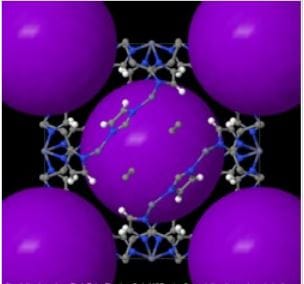
ZIF-8, 2-Methylimidazole zinc salt
View Product →Frequently Asked Questions
Metal-Organic Frameworks (MOFs) are advanced porous materials made of metal ions and organic linkers. Their importance in the paint industry stems from their high surface area and tunable properties, which allow them to be engineered for specific functions like anti-corrosion, self-healing, and controlled release of biocides, leading to highly durable and 'smart' coatings.
Yes, MOF-based paints are considered a sustainable alternative. They can be designed to be free of heavy metals and volatile organic compounds (VOCs). Furthermore, their ability to enhance durability and provide anti-corrosion properties reduces the need for frequent repainting, minimizing waste and environmental impact over the product's lifecycle.
The primary challenges include the high cost of synthesizing some MOFs, scaling up production from lab to industrial levels, and ensuring long-term stability and compatibility of MOFs within various paint formulations under real-world environmental conditions. Ongoing research in India and globally is focused on overcoming these hurdles.
Absolutely. This is one of the most exciting applications. By incorporating specific MOFs, paints can gain 'smart' functionalities. For example, a MOF could change color to indicate corrosion or mechanical stress, release anti-icing agents in cold weather, or absorb pollutants from the surrounding air, effectively turning a simple painted surface into a functional device.
Ready to Innovate with MOFs?
Advance your research and product development with high-purity MOFs. Explore our extensive catalog or contact us for custom synthesis requirements.
Browse MOF Products