
A Sustainable Solution to a Pressing Problem
India's rapid industrialization, while a cornerstone of its economic growth, has brought forth a significant environmental challenge: the management of industrial wastewater. From textile dyes and pharmaceutical residues to heavy metals from manufacturing, a complex cocktail of pollutants contaminates our precious water resources. Traditional treatment methods often struggle to keep pace, proving either too costly, energy-intensive, or inefficient at removing emerging micro-pollutants. This is where the science of advanced materials offers a beacon of hope.
Enter Metal-Organic Frameworks (MOFs), a revolutionary class of nanomaterials poised to transform wastewater treatment. Imagine a crystalline sponge with a surface area so vast that a single gram can cover an entire football field. This is the reality of MOFs. Their unique structure, built from metal ions linked by organic molecules, creates a highly porous and tunable framework. This makes MOF filtration technology one of the most promising sustainable materials for wastewater purification today. For the Indian R&D community and industries aligned with national missions like 'Make in India' and the 'Namami Gange Programme', the environmental applications of MOFs represent not just a scientific breakthrough, but a strategic opportunity for a cleaner, more sustainable future.
Why Should Indian Researchers Focus on MOFs?
For scientists and engineers in India, working with MOF technology opens up a frontier of innovation with tangible real-world impact. The unique properties of these materials offer distinct advantages over conventional adsorbents like activated carbon or zeolites.
Unprecedented Surface Area and Porosity
MOFs possess exceptionally high Brunauer-Emmett-Teller (BET) surface areas, often exceeding 7,000 m²/g. This vast internal surface provides an enormous number of active sites for capturing pollutants, leading to superior adsorption capacity and faster removal rates. Researchers can achieve better results with smaller quantities of material.
Tunable and Selective Design
Unlike monolithic materials, MOFs are designed at a molecular level. By carefully selecting the metal nodes and organic linkers, researchers can tune the pore size, shape, and chemical functionality of the framework. This allows for the creation of MOFs that are highly selective, targeting specific contaminants while ignoring benign molecules—a crucial factor in treating complex industrial effluents.
High Efficiency and Reusability
The strong yet reversible bonds in MOFs allow them to be regenerated and reused multiple times. After saturation, pollutants can be washed out using simple solvents or mild temperature changes, restoring the MOF's adsorption capacity. This feature significantly reduces operational costs and waste, making MOFs for wastewater treatment an economically and environmentally sustainable choice.
Versatility Across Applications
The potential of MOFs extends far beyond a single application. The same foundational knowledge can be applied to catalysis, chemical sensing, drug delivery, and gas separation. For Indian research institutions, building expertise in MOFs creates a hub of innovation with cross-disciplinary benefits.
Industrial Applications of MOF Technology in India
The versatility of Metal-Organic Frameworks in industry is vast. Several key sectors in India stand to benefit immensely from adopting this next-generation filtration solution.
Textile and Dye Industry
The textile sector is a major water consumer and polluter, with dye-laden effluents being a primary concern. MOFs, particularly those like ZIF-8 and Cu-BTC, have shown remarkable efficiency in adsorbing and degrading organic dyes, helping factories meet stringent pollution norms and enabling water recycling.
Pharmaceutical Industry
Active pharmaceutical ingredients (APIs) are persistent pollutants that are difficult to remove with conventional methods. The tailored pores of specific MOFs can selectively capture these complex molecules, preventing their release into the ecosystem and safeguarding public health.
Heavy Metal Contamination
Industries such as tanneries, battery manufacturing, and electronics contribute to heavy metal pollution (e.g., lead, cadmium, arsenic). MOFs functionalized with specific chemical groups can act as powerful chelating agents, trapping these toxic metals with high affinity and protecting both surface and groundwater sources.
Petrochemical and Chemical Plants
Wastewater from these plants often contains volatile organic compounds (VOCs) and phenols. MOFs can effectively adsorb these hazardous materials, improving water quality for discharge or reuse. Furthermore, this opens avenues for MOFs and chemical recycling, where captured compounds could potentially be recovered.
The Future is Now: Trends and Opportunities in India
The landscape for advanced wastewater treatment solutions in India is ripe with opportunity. The national emphasis on environmental stewardship, coupled with a vibrant scientific community, creates a fertile ground for MOF technology to flourish. Leading research institutions like the IITs, IISc, and CSIR labs are already producing world-class research on nanomaterials for water treatment.
A key trend is the development of MOF-based composite materials. By integrating MOFs into membranes, fibers, or hydrogels, researchers are creating robust, easy-to-handle filtration systems suitable for large-scale industrial use. This overcomes the challenge of handling fine powders and makes the industrial applications of nanotechnology more practical. There is a growing push towards "green synthesis" of MOFs, using water as a solvent and employing bio-derived organic linkers, which aligns perfectly with India's goals for sustainable development. For businesses, this translates into a chance to invest in and develop proprietary MOF materials for industrial wastewater treatment, creating a high-value domestic market and reducing reliance on imported technologies.
Featured MOFs for Your Research

Cu-BTC, Copper benzene-1,3,5-tricarboxilate
View Product →
ZIF-67, 2-Methylimidazole cobalt salt
View Product →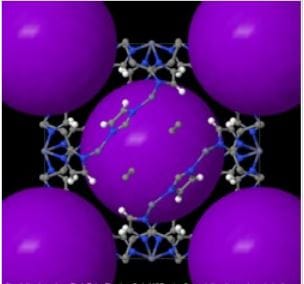
ZIF-8, 2-Methylimidazole zinc salt
View Product →
ALF, Aluminium fumarate
View Product →Frequently Asked Questions
Metal-Organic Frameworks (MOFs) are a class of porous, crystalline materials composed of metal ions or clusters coordinated to organic ligands. This unique structure results in an exceptionally high surface area and tunable porosity, making them ideal for applications like gas storage, catalysis, and, most notably, adsorbing pollutants from water.
MOFs treat wastewater primarily through adsorption. Their vast internal surface area acts like a sponge, trapping pollutant molecules such as heavy metals, dyes, pharmaceuticals, and organic compounds. The pore size and chemical nature of the MOF can be specifically designed to target and capture certain contaminants with high efficiency and selectivity.
While the initial synthesis of some MOFs can be complex, advancements in research are leading to more cost-effective and scalable production methods. Furthermore, their high efficiency, reusability over multiple cycles, and ability to operate under ambient conditions can lead to significant long-term operational savings compared to traditional methods like chemical precipitation or activated carbon, making them an increasingly viable economic solution.
The key challenges include scaling up production from laboratory to industrial levels, ensuring the stability of MOFs in harsh industrial wastewater conditions, and developing cost-effective regeneration processes. Bridging the gap between academic research and industrial application through pilot projects and government support is crucial for overcoming these hurdles.
For researchers and industrial R&D teams in India, sourcing high-purity, reliable MOFs is critical. Hiyka, a brand by Reinste, provides a wide range of well-characterized MOFs like Cu-BTC, ZIF-8, ZIF-67, and more, specifically to support advanced research and development in materials science and environmental technology.
Ready to Innovate with MOFs?
Advance your research on sustainable water solutions. Explore our comprehensive range of high-purity Metal-Organic Frameworks or consult our experts for your custom synthesis needs.
Browse MOF Products