
An Introduction to a Material Revolution
India stands at a critical juncture of rapid urbanization and industrial growth. As our cities expand, the demand for smarter, more sustainable infrastructure has never been greater. The construction industry, traditionally reliant on concrete and steel, is actively seeking next-generation materials that can deliver enhanced performance, energy efficiency, and environmental responsibility. Enter **Metal-Organic Frameworks (MOFs)**, a groundbreaking class of crystalline materials poised to redefine the concept of smart building technologies.
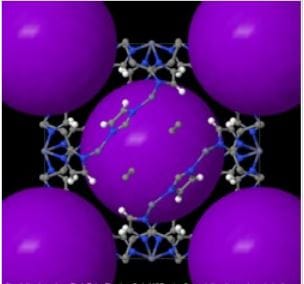
So, what are they? Imagine a set of building blocks at the nanoscale. MOFs are precisely that: highly ordered structures composed of metal ions (like zinc or copper) connected by organic molecules (linkers). This unique combination creates a material with a sponge-like structure, but with a level of precision and porosity that is unparalleled. A single gram of a MOF can have a surface area equivalent to a football field. This incredible characteristic, combined with the ability to "tune" their properties by changing the metal or organic components, makes **MOF materials** exceptionally versatile.
For Indian researchers, architects, and engineers, MOFs are not just a scientific curiosity; they represent a tangible opportunity. They offer a pathway to developing **sustainable building materials** that can actively improve our living and working environments. This article delves into the transformative potential of **MOF applications in construction**, exploring how these advanced materials can lead to buildings that are not just shelters, but active participants in creating a greener future.
Why Should Indian Researchers Focus on MOFs?
For the Indian R&D community, embracing MOFs offers a chance to leapfrog existing technologies and establish leadership in the field of **advanced materials for construction**. The key benefits include:
- Unprecedented Porosity and Surface Area: This allows for superior performance in applications like capturing CO2, filtering pollutants, and storing hydrogen, directly contributing to **green building solutions**.
- Tunable Structures: Researchers can design MOFs with specific pore sizes, shapes, and chemical functionalities. This "design-on-demand" capability is crucial for creating targeted solutions, from sensors that detect specific toxins to membranes that capture water from dry air.
- Radical Energy Efficiency: The use of MOFs in adsorption-based cooling systems can reduce electricity consumption by over 50% compared to traditional vapor-compression air conditioners, a game-changer for a tropical country like India. This positions them as leading **energy-efficient materials**.
- Alignment with National Missions: Developing indigenous MOF technology directly supports flagship programs like 'Make in India', 'Smart Cities Mission', and the 'National Mission on Advanced Materials', fostering innovation and self-reliance.
Core Applications of MOFs in Smart Building Technologies
Advanced Climate Control & Air Quality
MOFs can be integrated into a building's HVAC system to selectively capture carbon dioxide and harmful volatile organic compounds (VOCs) from the indoor air. Their vast internal surface area acts like a highly efficient trap, significantly improving air quality. Furthermore, certain MOFs are champions at atmospheric water harvesting, capable of pulling potable water directly from the air, even in arid conditions—a revolutionary concept for water-scarce regions in India.
Energy-Efficient Cooling Systems
One of the most promising **MOF applications in construction** is in adsorption chillers. These systems use waste heat (e.g., from solar panels or industrial processes) to power a cooling cycle, with MOFs acting as the adsorbent. This **smart construction technique** drastically cuts electricity demand for air conditioning, addressing one of the largest operational costs and carbon emission sources in modern buildings.
Smart Sensing & Environmental Monitoring
The properties of MOFs (like their color or electrical conductivity) can change in the presence of specific molecules. This allows for the creation of highly sensitive sensors that can be embedded into walls or ventilation systems. These sensors can detect gas leaks, humidity levels, or the presence of pollutants in real-time, feeding data to the building management system to trigger automated responses, like increasing ventilation.
Next-Generation Windows & Lighting
The field of **nanotechnology in architecture** is exploring MOFs for smart windows. A thin MOF coating could change its structure in response to temperature or light, altering its transparency to block heat in the summer while allowing it in during winter. Additionally, luminescent MOFs can be used to develop highly efficient, color-tunable LEDs for solid-state lighting, further reducing a building's energy footprint.
The Indian Opportunity: Localizing Advanced Materials
The push for **metal-organic frameworks** in India is not just about importing technology; it's about cultivating a domestic ecosystem of innovation. The 'Smart Cities Mission' provides a perfect testbed for deploying **smart building technologies**. By integrating MOF-based solutions into new urban projects, India can demonstrate their real-world viability and benefits. This creates a virtuous cycle: demand from smart city projects fuels R&D in our premier institutions like the IITs and CSIR laboratories, leading to new intellectual property and startups.
A key focus for Indian researchers is developing cost-effective synthesis routes for MOFs using locally available, abundant precursors. Success in this area would make **sustainable building materials** economically competitive with conventional options. This aligns perfectly with the 'Make in India' initiative, positioning the nation as a potential global hub for manufacturing **advanced materials for construction**. The development of these **energy-efficient materials** is a strategic imperative, promising to reduce our reliance on imported energy and build a more resilient and sustainable future.
Source High-Quality MOFs for Your Research



Frequently Asked Questions
What exactly are Metal-Organic Frameworks (MOFs)?
Metal-Organic Frameworks (MOFs) are a class of advanced porous materials composed of metal ions or clusters coordinated to organic ligands (or 'linkers') to form one-, two-, or three-dimensional structures. Their defining features are incredibly high surface areas and tunable pore sizes, making them ideal for applications like gas storage, separation, and catalysis.
Are MOFs commercially available and affordable for large-scale construction?
While many MOFs are still at the research and development stage, some types are becoming commercially available. The cost is currently a barrier for widespread, large-scale construction, but ongoing research, especially in India, is focused on developing cost-effective synthesis methods using abundant materials. Their high efficiency means even small quantities used in specialized applications (like HVAC filters or sensors) can provide significant value.
How do MOFs contribute to 'green building solutions'?
MOFs are central to green building solutions by drastically improving energy efficiency. They can be used in systems for carbon capture, reducing a building's carbon footprint. They enable highly efficient, low-energy cooling systems, reduce the need for traditional air conditioning, and can be used for atmospheric water harvesting, providing a sustainable source of water. Their role as advanced materials for construction helps create buildings that are more sustainable and responsive to their environment.
What are the main challenges in implementing MOF applications in construction?
The primary challenges include scaling up production to reduce costs, ensuring long-term stability in harsh building environments (e.g., resistance to moisture and pollutants), and integrating these nanomaterials into existing construction materials and practices. Overcoming these hurdles is a key focus of current research in nanotechnology in architecture and smart construction techniques.
Where can I source MOF materials for research in India?
Researchers and institutions in India can source high-quality MOF materials from specialized suppliers like Hiyka, which offers a range of products including Cu-BTC, ZIF-8, and HKUST-1. These platforms provide access to well-characterized materials essential for cutting-edge R&D in smart building technologies.
Ready to Innovate with MOFs?
Whether you are a researcher pushing the boundaries of material science or a company looking to build the next generation of smart infrastructure, we have the materials and expertise to help you succeed.
Contact Us Today